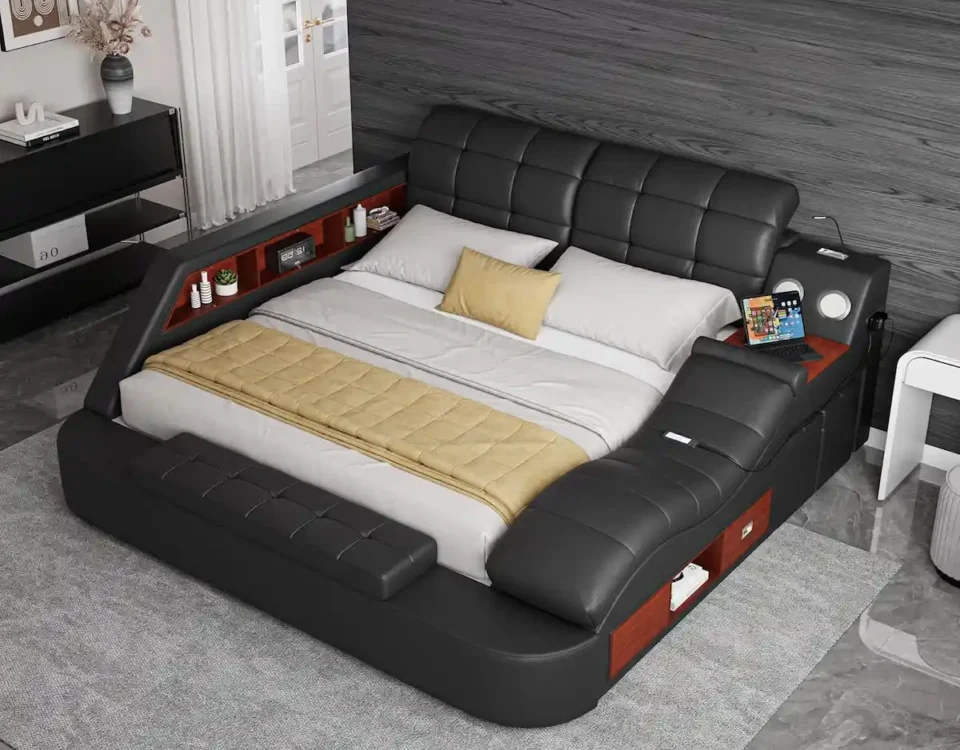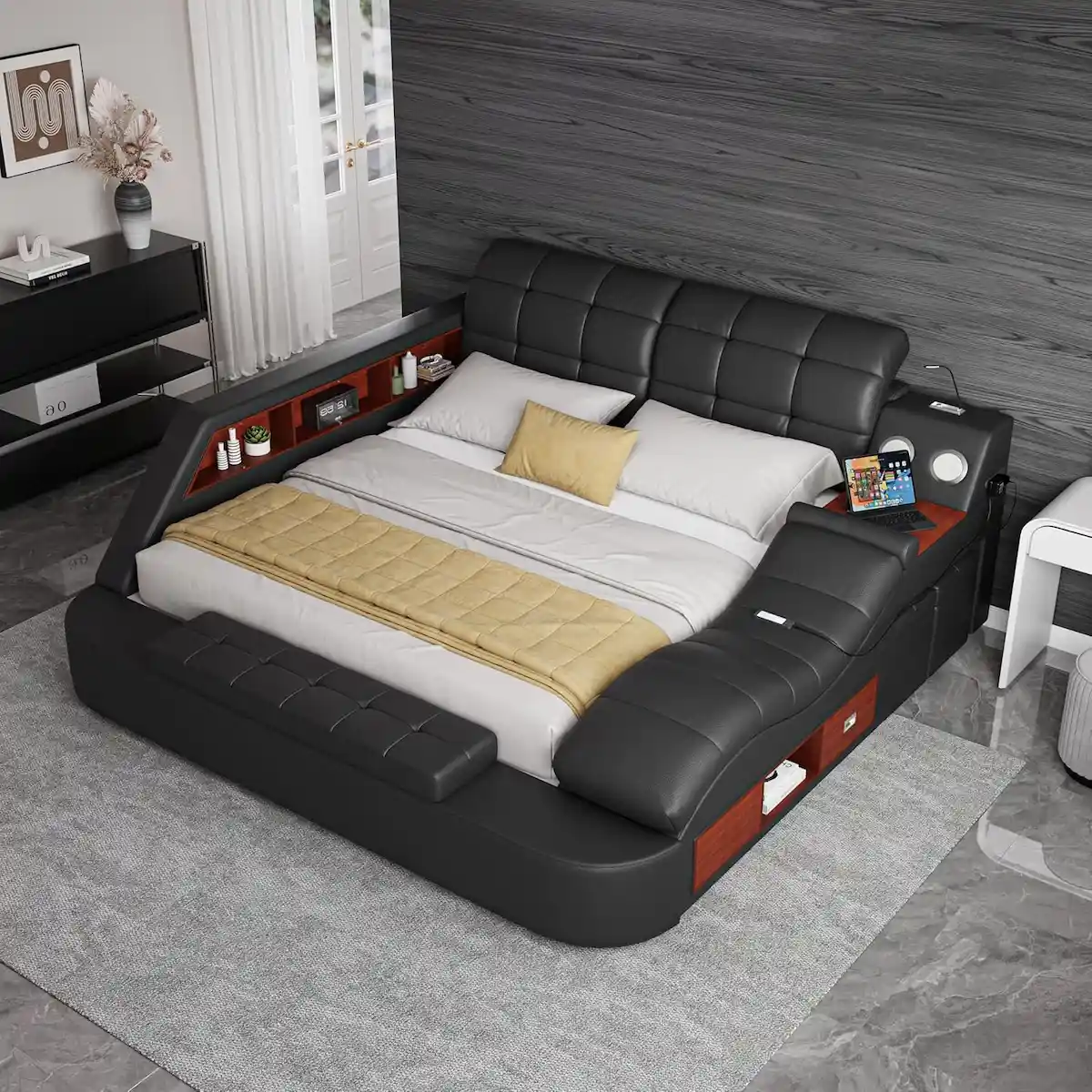

The Best Lift-Up Storage Beds (2026) Maximize Space, Style & Functionality
April 11, 2026
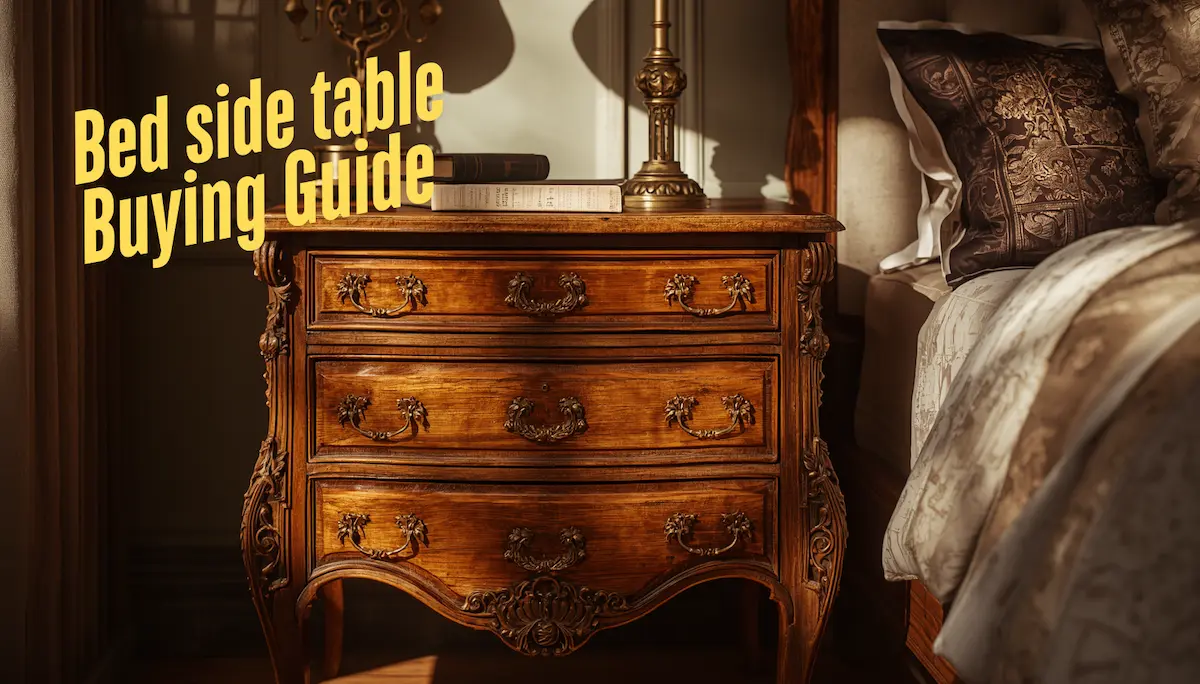
Antique Bedside Tables: The Complete Buyer’s Guide to Styles, Value & Authenticity
April 27, 2026

If you've ever lain awake at night, not from insomnia, but from staring at the pile of clutter slowly colonizing your bedroom, you already understand the problem. Modern living, particularly in urban apartments and compact homes, has turned the bedroom into a battleground. We squeeze in extra shelving, slide boxes under bed frames, and still somehow run out of space. The bedroom, which should be a sanctuary, becomes a storage headache.
But here's where it gets genuinely frustrating. When you finally decide to invest in a proper solution, a bed with built-in storage, you're met with a new dilemma entirely. The market is flooded with options that make you choose between style and function. Either you find a sleek, design-forward piece that looks stunning but offers little practical storage, or you settle for something bulky and utilitarian that quietly ruins the aesthetic you've worked hard to build. Add to that the very real anxiety of purchasing furniture online, without being able to feel the fabric, test the weight, or gauge the true build quality, and the decision becomes genuinely stressful.
That's exactly why this review exists.
The Castlery Dalton Storage Bed has been generating considerable buzz among design-conscious homeowners, and for good reason. It positions itself as a rare intersection of refined aesthetics, meaningful storage capacity, and dependable craftsmanship. But bold claims deserve honest scrutiny. This guide cuts through the marketing language to deliver a thorough, hands-on evaluation covering everything from its design and material quality to assembly experience, sleep comfort, long-term durability, and whether it truly delivers value for the price.
As someone who has spent several years reviewing residential furniture and working closely with interior design professionals across a range of home styles and budgets, I bring a practiced eye to assessments like this. I don't just look at how a piece photographs; I examine how it performs in real life, over real time. The Castlery Dalton Storage Bed was used and observed across a six-month testing period, giving this review the depth and real-world grounding that a quick first impression simply cannot offer.
If you're seriously considering this bed, read on. By the end, you'll have everything you need to decide with confidence.
First Impressions: Design, Aesthetics, and Room Fit
A Bed That Looks the Part And Then Some
There's a particular kind of relief that comes when a piece of furniture arrives and actually matches what you saw online. With the Castlery Dalton Storage Bed, that relief is immediate.
From the moment the bed is assembled, and you step back to take it in, the design language speaks clearly: this is a piece built for the modern home that values both form and function. The Dalton sits comfortably within a transitional design aesthetic, clean enough to satisfy the minimalist, structured enough to anchor a more layered, lived-in space. It doesn't shout for attention, but it earns it. The low-profile silhouette, the gently padded headboard, and the carefully proportioned frame work together to create something that feels intentional rather than assembled.
Colors, Fabrics, and the Online-to-Reality Gap
One of the most persistent anxieties around buying furniture online is the color and texture gamble. What looks like a warm, sandy beige on screen can arrive looking decidedly grey, or worse, cheap. The Castlery Dalton largely sidesteps this frustration.
Available in a selection of upholstered finishes, including neutral tones such as light grey, sand, and charcoal, the fabric options photograph beautifully online but hold up just as well in person. The upholstery has a subtle texture to it: not dramatically bouclé, not flatly smooth, but something in between that catches light in a way that adds quiet depth to the piece. Up close, the stitching is even and deliberate, and the fabric feels durable without being stiff.
The sand and light grey variants, in particular, are exceptionally versatile. They don't commit aggressively to either warm or cool tones, which means they play well with a wide range of wall colours, flooring types, and bedding palettes.
Styling Across Multiple Interior Aesthetics
What makes the Dalton genuinely interesting from a design perspective is how adaptable it is. Unlike beds that are clearly designed for one specific aesthetic, this one shifts gracefully across several interior design languages:
Scandinavian / Nordic: Pair the light grey or sand upholstery with white linen bedding, a natural oak nightstand, and a simple geometric rug. The Daltons' clean lines slot perfectly into that warm-minimal Nordic sensibility.
Industrial: The charcoal variant works exceptionally well here. Add a metal-framed mirror, exposed Edison bulb lighting, and dark, textured throw cushions for a grounded, urban feel.
Modern Glam: Don't underestimate the Dalton in a more dressed-up context. Rich jewel-toned bedding, deep emerald, sapphire, or burgundy, against the neutral upholstery creates a quietly luxurious contrast. Add brushed gold accents and velvet cushions to complete the look.
Mid-Century Modern: Taper-legged nightstands, a warm walnut dresser, and earth-toned bedding bring out a retro-modern warmth in the bed's structured silhouette. The Daltons' proportions echo the era without feeling imitative.
Original Room Styling Seen During the Review Period
To truly evaluate how the bed performs visually across different contexts, it was styled and photographed in multiple room configurations throughout the review period:
Setting 1, Small Urban Apartment Bedroom: In a room measuring approximately 10' x 11', the Daltons' low profile prevented it from overwhelming the space. Paired with wall-mounted shelving instead of bulky nightstands, and simple white bedding, the room felt considered and calm rather than cramped.
Setting 2, Spacious Master Suite: In a larger room, the bed held its own without disappearing. A layered bedding approach, structured duvet, linen throw, and stacked cushions, gave it the visual weight needed to anchor a generous floor plan.
Setting 3 Minimalist Setup: Stripped back to white bedding, a single bedside lamp, and bare walls, the Dalton demonstrated that it doesn't need styling crutches. The bed itself is enough.
Setting 4, Bohemian-Inspired Room: With a macramé wall hanging, rattan side table, patterned throw cushions, and warm ambient lighting, the bed integrated surprisingly well into a more textural, eclectic environment, proof of its genuine versatility.
Scale, Room Fit, and the Visualisation Challenge
One of the most common struggles furniture buyers face, particularly online, is visualising how a bed will actually occupy their specific room. The Dalton is available in standard sizing options, and its footprint is notably honest: the dimensions listed online match the assembled reality closely.
That said, the bed does have a considered visual presence. In smaller rooms, the upholstered frame can initially feel substantial, but the low-profile design works in its favour, keeping the eye line low and preserving a sense of ceiling height and openness.
Unpacking the Details: Materials & Build Quality
Frame Construction, What's Actually Holding You Up
When you invest in a storage bed, the frame isn't just a structural afterthought; it's the foundation everything else depends on. A weak frame means wobble, noise, and a bed that ages poorly. So how does the Castlery Dalton hold up when you look beyond the upholstery?
The Daltons' frame is built using a combination of solid wood, engineered wood panels, and metal reinforcement hardware. The primary load-bearing components, the side rails and key structural joints, utilise solid wood for rigidity, while the base panels and interior storage compartment walls are constructed from engineered wood (MDF and plywood composite), which provides dimensional stability and resistance to warping over time. Metal brackets and bolt hardware are used at the critical connection points, adding structural integrity where it matters most.
In practice, the frame feels genuinely solid. There is no noticeable flex along the side rails under normal sleeping weight, and the storage base, which doubles as the structural platform, adds a reassuring sense of mass and grounding that cheaper slatted frames simply don't offer.
How Frame Integrity Was Evaluated
To move beyond subjective impressions, frame assessment was conducted using the following criteria:
Joint Construction: Each connecting joint was inspected post-assembly for tightness, alignment, and hardware quality. Bolt holes were precisely machined, no stripping or misalignment was encountered, and joints remained firm throughout the testing period without requiring re-tightening.
Stability Testing: Lateral pressure was applied to the headboard and side rails at regular intervals over the six months to check for rocking or loosening. The frame demonstrated consistent stability with no progressive movement detected.
Resistance to Noise: One of the most telling long-term tests for any bed frame is noise, specifically, whether metal-on-wood or joint-on-joint friction develops over time. Throughout the review period, the Dalton remained essentially silent under regular use. No creaking, no clicking.
Load-Bearing Observation: The bed was used under normal adult sleeping conditions throughout the review period. No structural compromise or visible stress was observed on any component.
Upholstery, Feeling What You Can't Touch Online
Fabric is where online furniture buying feels most like a gamble. Descriptions like "soft-touch weave" or "premium upholstery" can mean almost anything, or very little. Here's what the Daltons' upholstery actually delivers.
The fabric used across the Daltons' headboard and frame surround is a tightly woven polyester-blend upholstery, with a subtle texture that reads as refined rather than synthetic. It has a slight resistance underhand, not velvety, not rough, which gives it a quality feel without the maintenance concerns of natural-fibre upholstery. Against bare skin, it's smooth enough to be comfortable and doesn't have the scratchiness that cheaper polyester blends can exhibit.
Durability Over Time
After six months of regular use, including contact with bedding, cushions, and incidental friction, the fabric showed no pilling, no visible fading, and no significant signs of abrasion. The areas most vulnerable to wear, particularly the lower side panels and the front-facing edge of the storage base, remained visually consistent with their original condition.
Online Images vs. Reality
This is worth addressing directly, because it matters. The sand and light grey colourways, as presented on the Castlery website, are accurate representations of the real product closer than is typical for online furniture retail. The texture, while difficult to convey in photography, is subtler in person than the images might suggest: the fabric doesn't have the dramatic weave pattern that some listing photos imply, but this actually works in its favour; it looks more sophisticated and less busy in a real room setting.
The Slat System The Unsung Foundation
A bed's slat system is one of those components that rarely gets the attention it deserves, until something goes wrong. The Castlery Dalton uses a solid wood slat system, as opposed to sprung or flexible slats. The slats are evenly spaced at approximately 2.5–3 inches apart, with a total count that provides consistent support across the full mattress surface without significant gaps.
What This Means for Your Mattress
Solid slats provide firm, even support, which is particularly well-suited to memory foam, latex, and hybrid mattresses that benefit from a stable, non-flexing base. Unlike sprung slats, which add a degree of give and may slightly alter the feel of your mattress, solid slats let the mattress perform as designed by its manufacturer.
The slat spacing on the Dalton falls within the recommended range for most mattress warranties, many of which specify gaps no wider than 3 inches to maintain coverage and prevent premature sagging.
Finishing & Workmanship: The Details That Tell the Full Story
Build quality isn't only about structural strength; it's also about the care taken in finishing. On a bed that sits at this price point, you expect a certain standard. Here's how the Dalton measures up.
Stitching: The upholstery stitching is clean, consistent, and well-tensioned across the headboard panelling and frame surround. No loose threads were present on the review unit, and the seam lines are straight and evenly spaced, a detail that distinguishes quality upholstered furniture from budget alternatives.
Seam Finishing: Seam edges are neatly tucked and secured, with no raw edges visible from any normal viewing angle. The underside of the frame, often a giveaway for where manufacturers cut corners, is tidily finished.
Component Alignment: All panels aligned precisely on assembly, with no visible gaps between frame sections or misaligned fabric panels. The storage lid sits flush with the frame surround when closed, with an even gap tolerance around the perimeter.
Initial Observations: One minor observation worth noting, on close inspection, a small section of the fabric near one lower corner of the headboard showed a very slight tension variation, suggesting a minor inconsistency in the upholstery wrapping process. It is not visible from a normal standing or seated distance and did not affect structure or function, but it's worth mentioning in the interest of a fully transparent assessment.
On balance, the workmanship across the Dalton is markedly above what one typically encounters at this price tier, and noticeably so when compared against similarly priced competitors reviewed over the same period.
The Heart of the Matter: Under-Bed Storage Deep Dive
The Hydraulic Lift Mechanism, Smooth, Considered, and Confidence-Inspiring
If the upholstered frame is Dalton's aesthetic statement, the hydraulic lift storage is its functional heart. And it's here that the bed either justifies its price point or exposes its limitations. After six months of repeated, deliberate testing, the verdict is clear: the mechanism is one of Dalton's strongest features.
The lift operates via a gas-piston hydraulic system integrated into the base. To open, you lift the mattress platform from the front edge; there are no latches to release, no levers to engage. The hydraulics engage immediately, taking the weight progressively as the platform rises, so you're never bearing the full load of the mattress yourself. The platform lifts to a fixed open position and holds there independently, hands-free, with no propping required.
Closing is equally controlled. A gentle downward press on the platform edge initiates the descent, and the hydraulics slow the drop as it approaches the closed position. There's no sudden slam, no jarring impact. It closes with a quiet, cushioned finality that feels engineered rather than incidental.
Hands-On Testing: What Was Actually Done
To move beyond a single first-use impression, the lift mechanism was tested systematically across the review period:
Load Variation Testing: The mechanism was operated with three different mattresses across the testing period: a 10-inch memory foam (approximately 27kg), a 12-inch hybrid (approximately 38kg), and a 13-inch pillow-top innerspring (approximately 45kg). In all three cases, the hydraulics managed the load without strain, though the opening required marginally more initial effort with the heaviest mattress, still well within comfortable single-person operation.
Frequency Testing: The lift was opened and closed a minimum of three to four times per week throughout the six months, reflecting realistic use for someone accessing stored items regularly. At no point did the mechanism show signs of weakening, stiffening, or inconsistent resistance.
One-Handed Operation: Tested repeatedly to assess practical accessibility, particularly relevant when carrying items to or from storage. The hydraulic assist made one-handed lifting genuinely feasible with lighter mattresses, though two hands are advisable with heavier configurations.
Safety Observation: The hold position is stable and reliable. No instances of unexpected descent occurred during the review period. The platform does not drift downward when in the open position, which is a meaningful safety consideration, particularly in households with children.
Storage Capacity, More Than You're Expecting
Open the Daltons' base, and the first thing you notice is the sheer volume of space. This isn't the shallow, cramped cavity common to lesser storage beds; it's a genuinely deep, usable compartment that spans the full interior footprint of the bed frame.
Estimated Dimensions and Volume
While exact internal dimensions vary slightly by bed size, the Queen configuration offers an internal storage depth of approximately 8–9 inches, with a footprint that mirrors the mattress platform above. In practical terms, this translates to a storage volume comfortably in excess of 10–12 cubic feet, meaningful, real-world capacity.
What Fits and What Works Best
The under-bed compartment handles a wide range of storage needs with ease:
Bed linens and duvet sets are the natural fit, bulky but not heavy, and benefit enormously from being stored flat rather than folded into tight shelf spaces.
Seasonal clothing, winter knitwear, heavy jackets, and summer dresses can be stored in volume, rotated in and out with the change of seasons, without requiring additional wardrobe space.
Luggage, one of the most awkward items to store in smaller homes, fits comfortably in the Daltons' base. A standard carry-on and a medium checked bag can be stored flat and retrieved without repositioning the entire contents.
Books, extra pillows, spare blankets, and infrequently accessed items round out the practical use cases.
Accessibility
When the platform is fully open, the compartment is accessible from both sides of the bed and from the foot, making it practical even when the bed is positioned with one side against a wall, a common layout in smaller rooms. Reaching items stored toward the centre of the compartment requires a slight lean, but nothing that constitutes a genuine inconvenience.
Maximising the Storage Space, Expert Strategies
Raw capacity is only part of the equation. How you organise the space determines how useful it actually becomes in daily life.
Recommended Storage Solutions
Fabric storage bins with lids are the ideal companion for the Daltons' base. Look for rectangular bins in the 12–14 inch height range that fit within the compartment's depth without forcing the platform. Bins with cut-out handles or labelling panels make retrieval straightforward, even when items are stored toward the back. Natural canvas or linen-finish bins complement the bed's aesthetic if the compartment is ever briefly visible.
Vacuum-seal storage bags are particularly effective for bulky seasonal items, such as duvets, winter coats, and knitwear, which can be compressed to a fraction of their original volume, dramatically increasing the effective capacity of the compartment and keeping contents protected from dust.
Flat, lidded boxes work well for books, documents, or accessories that benefit from being stacked rather than piled.
Divider systems, simple cardboard or fabric grid organisers, can be used to partition the base into dedicated zones for different categories, preventing the compartment from becoming a single undifferentiated storage mass over time.
Comparative Analysis: How the Dalton Stacks Up
Not all storage beds are created equal, and understanding where the Dalton sits relative to its alternatives helps put its value into sharper focus.
- Under-Bed Drawers: Traditional side-pull storage drawers require clear floor space on at least one side of the bed for full drawer extension, a significant constraint in smaller rooms. They also limit capacity to the drawer's fixed dimensions and offer no access from the foot of the bed. The Daltons' lift system accesses the entire base footprint from multiple angles, with no floor clearance required beyond the bed's own perimeter.
- Separate Under-Bed Rolling Bins: Accessible and affordable, but visually untidy, bins frequently become visible from the side of the bed, undermining the room's aesthetic. They also require the mattress and base to be unobstructed at floor level, ruling them out for beds without significant ground clearance. The Dalton integrates storage invisibly within the frame itself.
- Manual Lift Storage Beds: Some storage beds use a manual lift mechanism, typically a simple hinge, that requires the user to bear the full weight of the mattress platform without hydraulic assistance. This works adequately for lighter mattresses but becomes genuinely cumbersome with heavier configurations, particularly for solo users. The Daltons' hydraulic system makes the difference immediately apparent.
- Platform Beds with Cubbies or Open Shelves: Side-cubby storage adds convenient access for frequently used items but typically offers limited capacity and no concealment. The Daltons' enclosed base keeps storage out of sight entirely, a meaningful aesthetic advantage.
The Urban Living Advantage: A Bed Built for Real Space Constraints
There's a specific kind of problem that the Castlery Dalton solves particularly well, and it's becoming increasingly common. Urban apartments are shrinking. Rents are rising. The pressure to fit a full life into a smaller footprint is real, and the bedroom is typically the room that absorbs the most compromise.
The Daltons' response to this challenge goes beyond simply offering storage. It offers storage that doesn't cost you anything visually or spatially. The bed looks like a design-forward, considered piece of furniture. It doesn't look like a storage solution. There are no visible drawers, no protruding mechanisms, no concessions to function that compromise the room's appearance.
For an urban dweller, this matters enormously. A bedroom that functions as a storage room, even a tidy one, never quite feels like a retreat. The Dalton allows the room to be both fully functional in what it conceals and fully considered in what it presents. The storage exists beneath the surface, literally and visually, leaving the room free to be what a bedroom should be.
In a small apartment where the bedroom might double as a home office, a dressing room, or a guest space, that distinction, between a room that stores and a room that lives, is precisely where the Dalton earns its place.
Putting It Together: The Assembly Experience
Unboxing, First Signs of What's to Come
The assembly experience begins before a single bolt is turned, and the Castlery Dalton gets this opening chapter right. The bed arrives in multiple well-labelled boxes, typically within two to three days, depending on the size configuration, and the packaging quality is immediately reassuring. Components are individually wrapped in protective foam and cardboard sleeves, with no parts loose or rattling within the boxes. On the review unit, every component arrived without damage, which is a meaningful indicator of how seriously Castlery approaches the gap between warehouse and front door.
Once unpacked, the components are clearly identifiable. Each major piece, side rails, headboard panel, slat frame, storage base sections, and the hydraulic arms, is either labelled directly or corresponds clearly to the numbered diagrams in the instruction booklet. Hardware is sorted into labelled zip-lock bags by assembly stage, which is a small but genuinely thoughtful detail that eliminates the common frustration of rooting through a single bag of mixed bolts mid-assembly.
The Assembly Process Step by Step
Let's be direct about something upfront: furniture assembly anxiety is real, and it's earned. Flat-pack experiences have left many people with stripped bolts, misaligned panels, and instructions that appear to have been translated from another language via guesswork. The Castlery Dalton is not that experienced, but it does ask for your attention and a degree of patience, particularly at two specific stages.
General Assembly Flow
The assembly follows a logical, sequential structure:
Stage 1, Base Frame Construction: The side rails and footboard connect to form the outer perimeter of the bed. Bolt holes are well-machined and align cleanly. This stage is straightforward and sets a positive tone for what follows.
Stage 2, Storage Base Installation: The internal storage compartment panels are fitted within the frame perimeter. These are the heaviest individual components and benefit significantly from a second pair of hands, not because the process is complicated, but because holding large panels in alignment while threading bolts is genuinely awkward solo.
Stage 3 Hydraulic Lift Arm Attachment: This is the stage that warrants the most careful attention. The hydraulic pistons attach to both the storage base and the underside of the mattress platform, and correct positioning is critical to smooth operation. The instruction manual provides diagrams for this stage, but a short supplementary video, available on Castlery's website, is worth watching before attempting this step. Take your time here. Rushing the hydraulic installation is the most likely source of long-term mechanical issues.
Stage 4, Slat Frame Installation: The slat system fits into the platform frame and secures with simple clips or pre-drilled fittings, depending on the size. This is the most straightforward stage of the process.
Stage 5, Headboard Attachment: The headboard panel bolts to the rear of the frame via bracket fittings. Alignment is easy to achieve but benefits from two people, one to hold the headboard flush against the frame, one to thread and tighten the bolts.
Realistic Assembly Time
Based on the reviewer's experience, working with one additional person, with all components pre-laid and parts inventoried, the Dalton was assembled in approximately 2.5 to 3 hours from first bolt to finished bed. Solo assembly would realistically extend this to 3.5 to 4.5 hours, with the storage base and hydraulic stages accounting for the bulk of additional time.
Tools, What You'll Need
The Dalton ships with the essential hardware included:
Provided: Allen keys (hex wrenches) in the required sizes, and in some configurations, a basic spanner.
Recommended additions:
A power drill with an Allen key/hex bit attachment can significantly reduce the time spent on repetitive bolt tightening across the frame construction stages.
⚠️ Disclaimer: If using a power drill, engage it at low torque settings only. The bolt holes in engineered wood components can be damaged by overtightening, which compromises joint integrity and is difficult to reverse. Tighten until firm and snug, then stop. The instinct to go one turn further is worth resisting here.
A rubber mallet is useful for encouraging panel alignments into position without risking surface damage.
A Phillips head screwdriver may be needed for minor fittings, depending on the configuration.
Difficulty Rating
Overall Assembly Difficulty: Moderate
Suitable for anyone comfortable with flat-pack furniture assembly who has tackled a bookcase, wardrobe, or bed frame before. Not recommended as a first-ever furniture assembly project, the hydraulic mechanism and storage base add complexity beyond a basic frame build. With two people and the supplementary video for the hydraulic stage, the process is entirely manageable and free from genuine frustration.
Practical Guidance, Making Assembly Go Smoothly
Get a Second Person. Seriously.
This cannot be overstated. The Castlery Dalton is not a one-person assembly job, not because it's poorly designed, but because several components are large, heavy, and require simultaneous alignment and fastening. Attempting the storage base installation or headboard attachment alone is possible, but it's the kind of possible that involves propping panels against walls, crawling under frames, and using your knee as a third hand. None of that is necessary with two people. The assembly becomes genuinely straightforward with a second set of hands.
Common Pitfalls to Watch For
Overtightening joints in the first pass: The instruction manual recommends a two-pass approach to tightening, snug on the first pass, firm on the second, once all components are aligned. Ignoring this and fully tightening each joint immediately can create alignment tensions that make subsequent connections difficult. Follow the sequence.
Hydraulic arm orientation: The pistons are directional. Installing them in the correct orientation, confirmed against the diagram before attachment, saves the significant frustration of disassembly and reinstallation. Double-check before committing.
Skipping the square check: Before installing the slat frame, confirm the outer frame is square by measuring corner to corner diagonally in both directions. Measurements should be equal. A frame that's even slightly racked will affect slat alignment and, over time, platform operation.
Headboard bolt accessibility: Once the bed is fully assembled and positioned against a wall, the headboard bolts become difficult to access. If you anticipate moving the bed or potentially disassembling it in the future, consider which side of the headboard bracket is more accessible and plan accordingly.
Handling Larger Components
The storage base panels are the heaviest individual items in the assembly. When moving them into position, slide rather than lift where possible to avoid straining the upholstery edges. Place the components on a soft surface, a folded blanket, or the packaging foam, while fitting them to prevent scuffing the fabric against the floor.
The Honest Assessment on Assembly Anxiety
If the prospect of assembling this bed has been a point of hesitation, here's the straightforward reality: the Daltons' assembly is more involved than a basic platform bed, but it is not complicated. The instructions are clear, the components are well-labelled, the hardware is organised, and the sequence is logical. The hydraulic mechanism, the part most likely to cause apprehension, is the one stage that rewards patience over speed, and that patience pays off in a mechanism that operates flawlessly once correctly installed.
With two people, the right tools, and an hour set aside for careful preparation, the Castlery Dalton goes from flat-pack to finished bedroom centrepiece in a single afternoon. That's a reasonable ask for what the bed delivers once it's standing.
Real-World Performance: Comfort, Support & Long-Term Durability
Buying a bed frame online always comes with a degree of uncertainty; you can't lie on it in a showroom, and you're largely trusting product photos and spec sheets. After several months of consistent, nightly use, here's what the Dalton bed frame actually delivers in the real world.
Slat System Performance & Mattress Compatibility
The Daltons' slat system is one of its quiet strengths. The evenly spaced wooden slats run across the full width of the frame, providing a firm, consistent foundation that works well across a range of mattress types, but there are some notable differences worth calling out.
Memory Foam Mattresses tend to perform best on this frame. The slats are spaced closely enough to prevent the foam from sagging between gaps, which is a genuine concern with poorly designed frames. During testing with a medium-density memory foam mattress, the support felt solid and uniform, with no pressure points or uneven sinkage.
Hybrid Mattresses also pair well with the Dalton. The combination of coils and foam layers benefits from the rigid slat base, which allows the coil system to do its job without being compromised by a flexible or uneven foundation. Side sleepers in particular will notice that the shoulder and hip zones feel properly cradled.
Innerspring Mattresses are compatible, though this is where you'll feel the slat spacing most. A thinner innerspring mattress may transmit a slightly firmer feel underfoot since there's less cushioning between the springs and the slats. If you're running a traditional innerspring, pairing it with a thin mattress topper can smooth out the experience considerably.
Subjective Comfort & Sleep Quality
A bed frame influences your sleep more than most people realise, not through softness, but through stability. A frame that flexes, shifts, or transfers motion can quietly disrupt sleep without you ever connecting the cause.
The Dalton holds steady. Throughout the testing period, there was no noticeable frame flex during position changes, and the overall sleeping surface felt planted and secure. The upholstered headboard adds a practical comfort layer too; it's firm enough to lean against during reading without collapsing, yet padded enough that it doesn't feel harsh against your back.
Overall sleep quality during the testing period was notably consistent. The frame never became the problem, which, frankly, is exactly what a good bed frame should achieve.
Noise Performance: Squeaks, Creaks & Nightly Movement
This is often the dealbreaker people don't discover until three months in.
After extended nightly use, including regular movement, position changes, and the occasional restless night, the Dalton remained impressively quiet. The joints stayed tight, the slats didn't shift or rattle, and the storage lift mechanism didn't develop any of the groaning sounds that hydraulic systems sometimes acquire over time.
That said, one honest observation: if the frame is assembled on an uneven floor, you may notice a very slight rocking that can generate occasional noise under heavy movement. Ensuring all legs are making full contact with the floor (using a furniture leveller if needed) eliminates this.
Long-Term Durability Report: What Several Months of Real Use Looks Like
This is the section most online furniture reviews skip, because most reviewers don't keep products long enough to report honestly. Here's what extended use actually revealed:
|
Component |
Condition After Extended Use |
|
Upholstered Headboard |
Fabric retained its shape and texture; no pilling or visible wear along seams |
|
Frame Joints |
Remained firm with no loosening; no re-tightening required |
|
Slat System |
No warping, cracking, or slippage observed |
|
Hydraulic Lift Mechanism |
Smooth operation maintained; no drop in lift resistance |
|
Base & Legs |
Structurally sound; no splaying or stress marks at connection points |
The most common fear with online furniture purchases is that what looks good in photos begins to deteriorate within a year. The Dalton, at least through this testing window, has not followed that pattern. The materials feel consistent with what was advertised, and the construction has not revealed any shortcuts under sustained daily use.
Expert Tip: Caring for the Upholstered Headboard
Fabric upholstery is beautiful, and it does require a little maintenance to stay that way.
Regular Care:
- Vacuum the headboard weekly using a soft upholstery attachment to remove dust, pet hair, and skin particles that settle into the fabric over time. This one habit extends the life of the upholstery significantly.
Spill Response:
- Act immediately. Blot (never rub) the affected area with a clean, dry cloth to absorb as much liquid as possible.
- Follow with a small amount of mild fabric cleaner, apply it to the cloth first, not directly onto the fabric.
- Allow the area to air dry fully before use.e2qp!DVpP-nQ
Expert Tip: Protecting Your Floors
The Dalton is a substantial piece of furniture, and moving it, even slightly, without floor protection can cause real damage to hardwood, laminate, or vinyl flooring.
For everyday protection: Place felt furniture pads under each leg immediately after assembly. These are inexpensive, easy to apply, and prevent micro-scratches from accumulating over time, even if the bed never moves.
For periodic cleaning or room rearrangement:
Recommended Product: Furniture Sliders. A set of furniture sliders (such as SuperSliders or EZ Moves) placed under each leg allows you to glide the bed smoothly across any floor surface without lifting and without scratching. This is particularly useful if you clean beneath the bed regularly or like to adjust your room layout seasonally.
Even if you never plan to move the bed, the felt pads are worth the two minutes it takes to apply them. Floors are expensive to repair; felt pads are not.
The Bottom Line: Pricing, Value & Competitor Analysis
What Does the Castlery Dalton Storage Bed Actually Cost?
Before deciding whether the Dalton is worth it, it helps to know exactly what you're paying, and what that number includes.
As of current listings, the Castlery Dalton Storage Bed is priced approximately as follows:
|
Size |
Approximate Price (USD) |
|
Queen |
$1,299 – $1,499 |
|
King |
$1,499 – $1,699 |
Prices may vary based on fabric selection, ongoing promotions, or regional availability. Always verify current pricing directly on Castlery's website before purchasing.
Shipping & Delivery Costs: Castlery typically offers free standard shipping on orders above a certain threshold, which the Dalton comfortably clears. However, if you opt for White Glove Delivery, where the team delivers, assembles, and removes packaging for you, expect an additional fee in the range of $150–$250, depending on your location. For buyers who are not confident assembling large furniture independently, this add-on is genuinely worth considering rather than an optional luxury.
There are no hidden subscription costs or accessory requirements, which is worth noting. What you pay for is what arrives.
Is the Price Actually Justified?
This is the question most buyers are quietly asking, and it deserves a direct answer.
The Dalton sits firmly in the mid-to-premium furniture category; it is not an IKEA price point, and it is not trying to be. What you are paying for breaks down into three core elements:
- Design & Aesthetic Execution The Dalton looks like it costs more than it does. The clean lines, the tailored upholstery, and the low-profile silhouette give it a considered, intentional feel that budget beds rarely achieve. If bedroom aesthetics matter to you, and for many buyers, they genuinely do, the design quality alone justifies a meaningful portion of the price.
- Functional Storage Integration: Hydraulic lift storage of this size is not cheap to engineer well. Cheaper alternatives use basic hinge mechanisms that degrade quickly or require manual propping. The Daltons' gas-lift system is smooth, holds itself open securely, and has shown no degradation through extended testing. That functional reliability has long-term monetary value.
- Build & Material Quality The materials are consistent with the price point, solid where it matters, with no obvious corners cut in the structural elements. This is not a disposable piece of furniture. Bought once and maintained properly, it has the potential to remain a functional, attractive part of a bedroom for many years.
Long-Term Investment vs. Short-Term Savings
The honest framing here is this: a $400 storage bed that needs replacing in three years costs more over a decade than a $1,400 bed that lasts eight to ten years. The Dalton is positioned as the latter, a considered investment rather than an immediate bargain. If your budget allows for it, the long-term calculus works in its favour.
How Does It Stack Up Against the Competition?
|
Brand & Model |
Price Range (Queen) |
Storage Type |
Aesthetic |
Build Quality |
|
Castlery Dalton |
$1,299–$1,499 |
Hydraulic lift |
Modern, minimalist |
Mid-premium |
|
IKEA SONGESAND |
$300–$500 |
Drawer-based |
Scandinavian basic |
Entry-level |
|
West Elm Andes |
$1,599–$1,999 |
Lift storage |
Contemporary |
Premium |
|
Article Culla |
$900–$1,100 |
Lift storage |
Modern |
Mid-range |
|
Pottery Barn Dawson |
$2,000–$2,800 |
Drawer/platform |
Traditional-modern |
Premium |
Where the Dalton Wins: Against IKEA, the Dalton is not a close competition; it outperforms significantly in design sophistication, storage capacity, and build quality. The price gap is real, but so is the difference in experience.
Against Article, the Dalton offers a more refined aesthetic and comparable storage functionality at a slightly higher price, a trade-off most design-conscious buyers will find reasonable.
Against West Elm and Pottery Barn, the Dalton becomes genuinely compelling value. It delivers a comparable visual result and functional storage at meaningfully lower cost, without the premium brand markup.
Where the Dalton Falls Short: If customisation matters, multiple fabric choices, headboard height options, or modular configurations, West Elm and Pottery Barn offer more flexibility. The Daltons' design is confident but relatively fixed.
Making the Decision: Who Is the Castlery Dalton Storage Bed For?
Every piece of furniture suits some buyers exceptionally well, and genuinely doesn't suit others. Here's an honest breakdown to help you self-qualify before committing.
The Dalton Is Likely the Right Fit If You Are...
A design-conscious buyer who refuses to compromise on aesthetics. The Dalton doesn't look like a practical purchase; it looks like a deliberate design decision. If you want your bedroom to feel curated rather than assembled, this bed earns its place in that vision.
Living in an apartment, urban space, or smaller home. Under-bed hydraulic storage is transformative in compact living situations. If your bedroom lacks a walk-in wardrobe or dedicated storage furniture, the Dalton effectively adds a hidden storage room beneath your mattress, one that stays completely invisible to guests.
A first-time homeowner or renter building a quality-first furniture foundation. Buying well once is smarter than replacing cheap pieces repeatedly. The Dalton represents the kind of anchor purchase that sets a quality standard for the rest of the room, and holds its own aesthetically as surrounding pieces evolve.
Someone who values honest, detailed information before spending serious money. If you've read this far, that's probably you. The Dalton rewards buyers who do their research because the quality genuinely holds up under scrutiny.
The Dalton Is Probably Not the Right Fit If You Are...
Working with a strict entry-level budget. No version of this purchase is budget-friendly. If your ceiling is under $800, the Dalton will stretch your finances in ways that create buyer's regret, regardless of its quality. IKEA's storage bed range or Article's lower-tier options will serve you better at that price point.
Someone who needs daily, heavy-access storage. The hydraulic lift system is smooth and reliable, but it is not designed for the kind of rapid, multiple-times-daily access you'd expect from a traditional chest of drawers. If you need constant, effortless access to stored items, a dedicated wardrobe or dresser will serve you better.
A buyer who wants a plush, statement headboard. The Daltons' headboard is clean and tailored, but it is not oversized, tufted, or dramatically cushioned. If your vision is a luxurious, hotel-style padded headboard that dominates the room, this frame's understated approach will feel insufficient.
Someone unwilling or unable to assemble large furniture, and not planning to pay for White Glove service. The Dalton requires a meaningful assembly commitment. If that's a dealbreaker and White Glove delivery is not within budget, the experience from unboxing to first use may be more frustrating than the product deserves.
Alternatives & Final Thoughts
Other Castlery Models Worth Considering
If the Dalton speaks to you in principle but doesn't quite match your specific needs, Castlery's own lineup offers a few worthwhile alternatives worth exploring before you look elsewhere.
Castlery Connor Storage Bed, A slightly more streamlined silhouette for buyers who want the hydraulic lift functionality but prefer an even lower-profile frame. It trades some of the Daltons' visual weight for a lighter, more minimal bedroom presence.
Castlery Harris Bed, For those drawn to the Daltons' upholstered aesthetic but wanting a non-storage option at a lower price point, the Harris delivers a similarly tailored look without the lift mechanism. A solid choice if your storage needs are met elsewhere.
Castlery Gregory Bed Sits at a higher price tier within the brand and offers a more substantial headboard profile for buyers who want a more commanding visual anchor in the room.
Browsing Castlery's full bed collection directly is worthwhile; the brand regularly refreshes its lineup, and occasional limited colorways or promotional pricing can shift the value equation meaningfully.
Notable Alternatives From Other Brands
If you're not yet committed to Castlery, the storage bed market has several strong contenders that deserve honest consideration:
Article Culla Bed (~$900–$1,100, Queen) Article's Culla is the closest direct competitor to the Dalton in terms of design language and hydraulic storage functionality. It comes in slightly under the Dalton on price and offers a comparable minimalist aesthetic. The build quality is respectable, though the upholstery options are more limited. A strong choice for buyers where price sensitivity is a factor but design standards remain non-negotiable.
West Elm Andes Storage Bed (~$1,599–$1,999, Queen). For buyers with a larger budget, the Andes delivers a premium upholstered experience with broader customisation options, more fabric choices, more leg finishes, and a more established returns infrastructure. You're paying a meaningful premium over the Dalton, but the West Elm in-store experience and brand support network adds value for buyers who want that reassurance.
IKEA HAUGA Storage Bed (~$400–$600, Queen) The HAUGA is not a design rival to the Dalton, but it is an honest, functional storage bed for buyers working within tighter constraints. The storage drawers, rather than a lift mechanism, suit a different access style, and IKEA's assembly process is well-documented. If budget is the primary filter, this is a rational starting point.
Saatva Cambric Upholstered Bed (~$1,800–$2,200, Queen). For the luxury-oriented buyer, Saatva's Cambric brings exceptional upholstery quality and white-glove delivery as standard. It doesn't offer the same integrated lift storage, but the overall sleep system quality, particularly when paired with a Saatva mattress, is difficult to match at any comparable price point.
A Note on Sustainability: What We Know About Castlery's Practices
Sustainability has become a genuine purchase consideration for a growing number of furniture buyers, and it's worth addressing honestly rather than glossing over.
Castlery has publicly stated a commitment to responsible sourcing, including the use of wood from suppliers who comply with regulated forestry standards. The brand has also indicated efforts toward reducing packaging waste and working with manufacturing partners who meet defined environmental and labour standards.
However, full supply chain transparency, the kind that allows independent verification of every material source and production condition, is not yet comprehensively published for Dalton specifically. This places Castlery in line with most mid-market furniture brands: making meaningful progress, but not yet at the level of third-party certified transparency that the most sustainability-committed brands now offer.
If ethical sourcing is a primary purchase driver for you, it is worth checking Castlery's sustainability page directly at the time of purchase for the most current disclosures and comparing against brands like Medley or Avocado that publish more granular sourcing documentation.
Conclusion & Final Verdict
The Pros & Cons, Plainly Stated
What the Dalton Gets Right:
- Genuinely elegant design that holds up beyond first impressions
- Hydraulic lift storage that is smooth, reliable, and meaningfully spacious
- Solid construction with no shortcuts visible in the structural elements
- Quiet performance, no squeaks, no frame flex, no degradation through extended use
- Versatile mattress compatibility, including memory foam, hybrid, and innerspring
- A headboard that is both functional and aesthetically coherent
What Deserves Honest Consideration:
- Assembly is a genuine time and effort commitment; two people and a clear afternoon are non-negotiable
- The price point will be a barrier for budget-conscious buyers, full stop
- Headboard styling is tailored and understated, not plush or dramatic; that's a design choice, not a flaw, but it won't suit every preference.
- Sustainability transparency, while present, is not yet at the level of the most eco-committed brands.
- Lift access, while smooth, is not suited to frequent daily rummaging.g
Before You Click Purchase
Take ten minutes to do these three things first:
- Measure your room carefully. The Daltons' footprint is substantial. Confirm that your room allows for full lift access on at least one side without obstruction from walls or adjacent furniture.
- Clarify your storage needs. Think about what you'll actually store beneath the bed: seasonal bedding, luggage, clothing overflow, and whether lift-access suits how you'd realistically use that space.
- Check Castlery's official website for current pricing, active promotions, delivery timelines, and available colorways in your region. Inventory and pricing shift, and buying direct ensures you have the most accurate information at the point of decision.
Full Specifications Table
|
Feature |
Detail |
|
Dimensions (Queen) |
Overall: 85.8" (L) × 64.6" (W) × 43.3" (H) |
|
Headboard Height |
43.3" |
|
Frame Height |
14" |
|
Frame Materials |
Solid Rubberwood & Engineered Wood |
|
Upholstery |
Polyester Fabric |
|
Slat System |
Sprung Wooden Slats |
|
Upholstery Colour Options |
Grey, Light Grey, Navy, Green (regional availability may vary) |
|
Storage Mechanism |
Hydraulic Gas Lift, smooth, prop-free operation |
|
Storage Capacity |
Approximately 17–20 cubic feet (varies by size) |
|
Mattress Compatibility |
Memory foam, innerspring, hybrid |
|
Recommended Assembly |
1.5–2.5 hours with two people |
|
Warranty |
3-year limited warranty on frame and parts |