
The Ultimate Loveseat Sleeper Sofa Buyer’s Guide: Top Picks & Expert Tips for Small Spaces
May 18, 2026
Cozey Ciello Review: 90 Days of Real Renter Testing
June 4, 2026
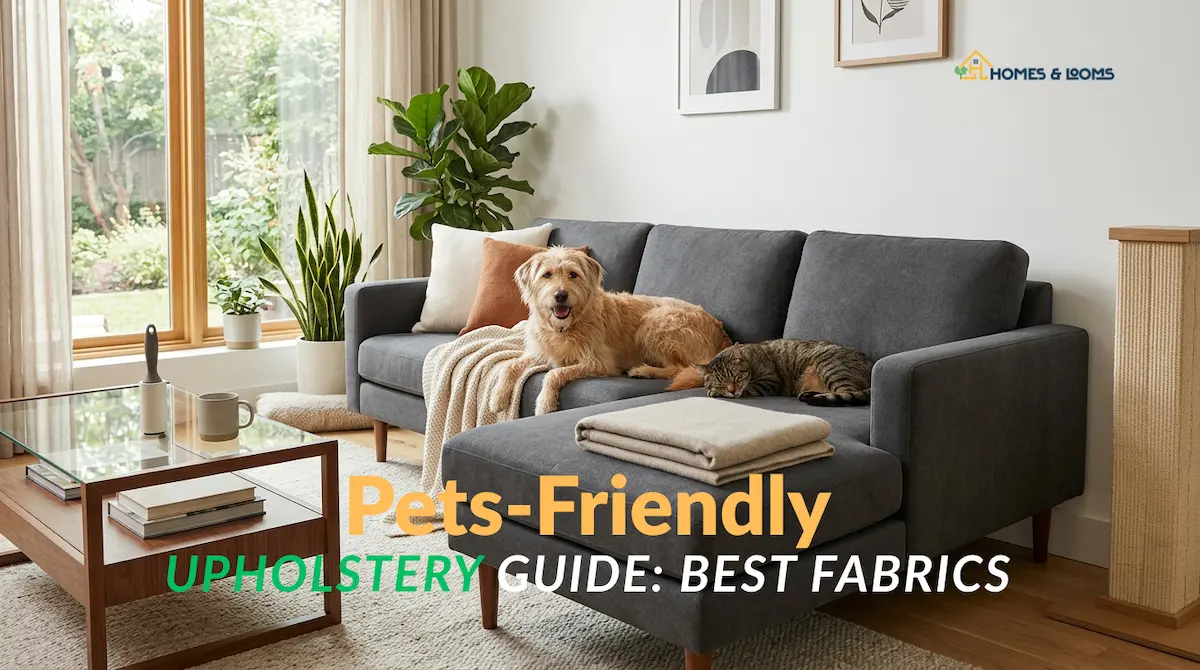
Living with pets brings joy, companionship, and unforgettable moments, but it also brings fur-covered cushions, scratched armrests, muddy paw prints, and the occasional unexpected mess. Many pet owners know the frustration of investing in beautiful furniture only to watch it slowly lose its appearance under the daily wear and tear of active pets. Constant cleaning, stubborn odors, and damaged upholstery can make maintaining a stylish home feel almost impossible.
For years, people believed they had to make a difficult choice: keep a sophisticated, well-designed home or create a comfortable space for their pets. Traditional furniture fabrics often fail under the pressure of claws, shedding, spills, and stains, while some so-called “pet-friendly” options sacrifice comfort and style entirely. The result is a home that either feels restrictive for pets or disappointing for homeowners. But the reality is that you no longer have to compromise between durability and design.
With the right upholstery choices, you can create a home that looks elegant while standing up to everyday pet activity. Modern fabrics, smarter furniture materials, and easy-maintenance solutions now make it possible to enjoy both comfort and practicality without constantly worrying about damage or cleanup. Choosing the right upholstery can dramatically reduce stress, extend the life of your furniture, and help your living spaces stay cleaner and fresher for years.
This guide is designed to remove the confusion from the process. You’ll discover how to choose durable, stain-resistant, and easy-to-clean upholstery that works with your lifestyle and your pets. From understanding which fabrics resist scratches and odors to learning how color, texture, and maintenance affect long-term performance, you’ll gain the knowledge needed to make confident decisions. By the end, you’ll be able to create a stylish, pet-friendly sanctuary where both you and your furry companions can truly relax.
The Pet Owner’s Upholstery Challenge
Sharing a home with pets is rewarding, but it also creates daily challenges that most furniture simply is not designed to handle. No matter how well-trained or careful a pet may be, normal behavior like shedding, scratching, jumping, and occasional accidents can quickly turn beautiful upholstery into a constant source of stress. For many homeowners, keeping furniture clean and protected becomes an exhausting routine rather than a simple part of home maintenance.
One of the biggest frustrations pet owners face is the endless accumulation of pet hair. Certain fabrics seem to attract fur like magnets, trapping it deep within the material and making removal difficult even after repeated vacuuming. Dark upholstery can quickly become covered in visible hair, while textured fabrics hold onto shedding so tightly that cleaning feels never-ending. Over time, this constant buildup makes furniture look worn and neglected, even when it is relatively new.
Mud, dirt, and spills create another ongoing struggle. Pets running inside after walks or outdoor play can leave paw prints across sofas, chairs, and cushions within seconds. Add in occasional spills, drool, or accidents, and many traditional fabrics begin to stain permanently. The problem becomes even worse when upholstery absorbs moisture quickly, allowing stains and odors to settle deep into the material before cleaning can even begin.
Claw damage is another issue that destroys furniture faster than many people expect. Cats naturally scratch surfaces, while dogs often dig or reposition themselves on cushions before lying down. Delicate fabrics, loose weaves, and soft textured materials can easily snag, tear, or pull apart under repeated contact. What starts as a small scratch can rapidly become visible damage that affects the entire appearance of the furniture.
Lingering pet odors create a more subtle but equally frustrating problem. Some upholstery materials absorb smells from fur, accidents, and everyday pet activity, causing furniture to lose its fresh feel over time. Even after cleaning, certain fabrics continue trapping odors beneath the surface, making the home feel less clean, no matter how often it is maintained.
Traditional upholstery often fails because it was never designed for the realities of pet ownership. Fragile materials wear down quickly, absorb stains easily, and require constant maintenance to preserve their appearance. Many homeowners end up replacing furniture far sooner than expected simply because the fabric cannot withstand everyday use from pets.
This is why smart upholstery choices matter. Pet owners need furniture that combines durability with style instead of forcing them to sacrifice one for the other. The ideal upholstery should resist stains, minimize hair buildup, handle scratching more effectively, and remain easy to clean without losing comfort or visual appeal. Investing in the right materials not only protects furniture but also makes daily life with pets far less stressful. When upholstery is chosen strategically, homeowners can enjoy a space that feels welcoming, stylish, and built to last.
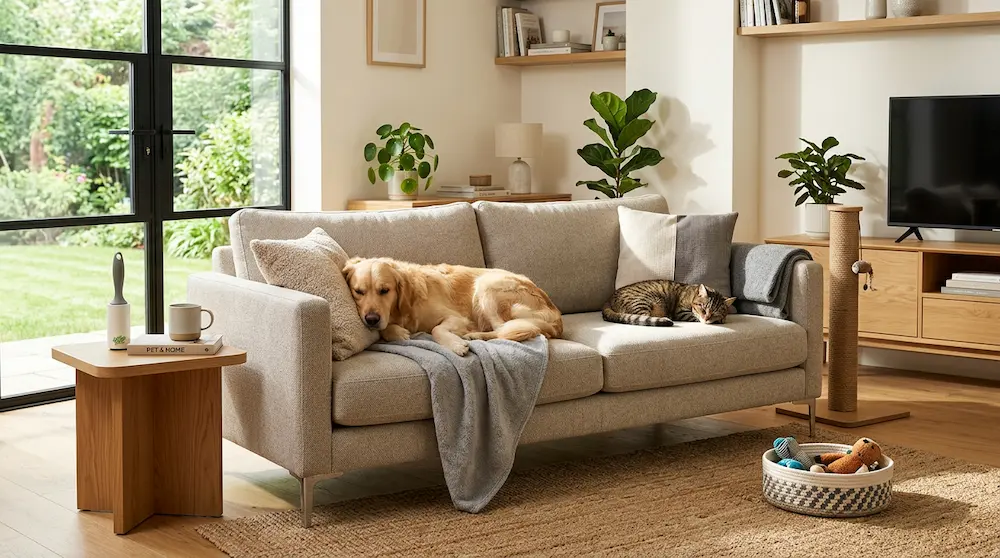
Pet-Friendly Upholstery Fabric
Decoding Pet-Friendly Fabric Essentials
Choosing pet-friendly upholstery is not about picking the most expensive fabric or blindly trusting marketing labels like “durable” or “performance-grade.” Many homeowners make the mistake of focusing only on appearance, then regret it once the fabric starts trapping fur, snagging from claws, or absorbing odors within months. The reality is that truly pet-friendly furniture depends on understanding how fabrics perform under real-world conditions.
To choose upholstery that lasts, you need to evaluate several key qualities: durability, stain resistance, scratch resistance, ease of cleaning, odor resistance, and pet hair behavior. Each factor plays a direct role in how well your furniture survives daily life with pets.
Durability (Rub Count)
Durability is one of the most important factors in pet-friendly upholstery. A fabric may look attractive in a showroom, but if it cannot handle repeated friction, movement, and pressure, it will wear down quickly in a home with pets.
Furniture durability is commonly measured using industry-standard abrasion tests such as the Wyzenbeek Test and the Martindale Test. These tests simulate repeated rubbing against fabric to determine how much wear a material can tolerate before showing damage.
- The Wyzenbeek Test, commonly used in North America, measures durability through “double rubs.” One double rub equals one back-and-forth motion against the fabric.
- The Martindale Test, more common in Europe, uses circular rubbing motions to evaluate abrasion resistance.
For pet-friendly residential furniture, experts generally recommend fabrics with a minimum rating of 15,000 double rubs. However, for homes with large dogs, multiple pets, or heavy daily use, fabrics rated at 30,000 double rubs or higher offer far better long-term performance.
Low-rub-count fabrics may initially feel soft and luxurious, but they often deteriorate quickly under scratching, jumping, and constant movement. Durability matters more than appearance alone.
Stain Resistance
Pets create messes. That is unavoidable. The real question is whether your upholstery can prevent those messes from becoming permanent.
Stain-resistant fabrics work by either repelling liquids on the surface or slowing absorption long enough for cleanup. Some materials achieve this through specialized protective coatings, while others naturally resist moisture because of their fiber structure.
Synthetic fibers such as polyester, nylon, and olefin generally outperform highly absorbent natural fibers when it comes to stain resistance. Many modern performance fabrics are also engineered with built-in protective technology rather than temporary surface treatments that wear off over time.
The goal is not to make furniture completely stain-proof. That is unrealistic. The goal is to buy yourself time before spills soak into the fabric and become difficult to remove.
Scratch Resistance
One of the fastest ways pets destroy upholstery is through claw damage. Cats scratch instinctively, while dogs unintentionally snag fabrics when climbing or repositioning themselves.
Scratch resistance depends heavily on fabric construction.
- Tight weaves are far more resistant to claw damage because there are fewer loose threads for claws to catch.
- Loose weaves and heavily textured fabrics are risky because they snag easily and unravel over time.
Smooth, tightly woven synthetic fabrics generally perform better than delicate decorative materials. Microfiber, canvas-style weaves, and tightly constructed performance fabrics are often more resistant to scratching than chenille, silk blends, or loosely woven linen.
No fabric is fully claw-proof. Anyone claiming otherwise is selling marketing, not reality. But some fabrics dramatically reduce visible damage compared to others.
Ease of Cleaning
Pet-friendly furniture should simplify maintenance, not create more work.
Some fabrics absorb liquids immediately, require special cleaning products, or retain water long after cleaning. Others can be wiped clean within minutes with minimal effort.
Easy-clean upholstery typically includes features such as:
- Water-repellent surfaces
- Spot-clean compatibility
- Machine-washable cushion covers
- Fast-drying fibers
- Resistance to deep stain penetration
Performance fabrics are especially popular because they are engineered for repeated cleaning without losing color or texture. Quick-drying properties are also important because damp upholstery can trap odors and encourage bacterial growth.
If maintaining the fabric feels like a full-time job, it is not pet-friendly, regardless of how attractive it looks.
Odor Resistance
Many homeowners focus on visible messes but underestimate how quickly fabrics absorb smells. Pet odors often settle deep inside upholstery long before stains appear.
Certain materials naturally trap odors because they absorb moisture, oils, and bacteria more easily. Dense natural fibers and heavily textured fabrics can hold smells for extended periods, especially in humid environments.
Odor-resistant upholstery usually relies on:
- Non-absorbent synthetic fibers
- Moisture-resistant construction
- Machine-washable cushion covers
- Antimicrobial treatments
- Breathable fabric technology
Modern performance fabrics often include antimicrobial properties designed to reduce bacterial buildup and minimize lingering smells. While no upholstery remains odor-free forever, the right fabric significantly reduces the problem.
Pet Hair Adherence
Pet hair is one of the most underestimated upholstery problems. Some fabrics practically attract fur, while others allow it to slide off with minimal effort.
Textured fabrics, loose weaves, velvet-like surfaces, and heavily woven materials tend to trap hair deeply within the fibers. This makes cleaning frustrating and time-consuming.
Smooth fabrics with tighter surfaces usually perform much better because hair remains on the surface instead of embedding itself into the weave. Materials like microfiber and tightly woven synthetics are often easier to vacuum or brush clean.
Color also matters. Choosing upholstery that closely matches your pet’s fur can make shedding far less noticeable between cleanings.
How Pet-Friendly Fabrics Should Actually Be Evaluated
Many furniture brands use vague labels like “family-friendly” or “pet-safe” without explaining what those claims mean. A smarter approach is to evaluate fabrics using practical performance criteria.
How Scratch Resistance Is Assessed
Scratch resistance depends on:
- Tight weave construction
- Smooth surface texture
- Strong synthetic fiber composition
- Antimicrobial treatments
- Resistance to snagging and thread pulling
Fabrics with visible loops, raised textures, or loose threading are generally poor choices for pets.
What Makes a Fabric Easy to Clean
Easy-clean fabrics usually include:
- Water-resistant or water-repellent properties
- Spot-clean capability
- Machine-washable covers
- Antimicrobial treatments
- Quick-drying performance
- Resistance to deep stain absorption
How Odor Resistance Is Evaluated
- Low moisture absorption
- Non-porous or tightly woven fibers
- Antimicrobial technology
- Resistance to bacterial buildup
- Highly absorbent fabrics tend to hold smells longer, especially after repeated exposure to pets.
How Pet Hair Performance Is Judged
- Pet hair behaviour depends on:
- Surface smoothness
- Fiber texture
- Fabric density
- Static resistance
Top Fabrics That Stand Up to Pets
Not all upholstery fabrics are built for homes with pets. Some materials may look beautiful at first, but quickly become covered in scratches, stains, and trapped fur. Others are engineered specifically to handle heavy use while still maintaining comfort and style. The difference usually comes down to fabric construction, fiber strength, stain resistance, and long-term durability.
Choosing the right upholstery means understanding how each material performs under real everyday conditions, not just how it looks in a showroom.
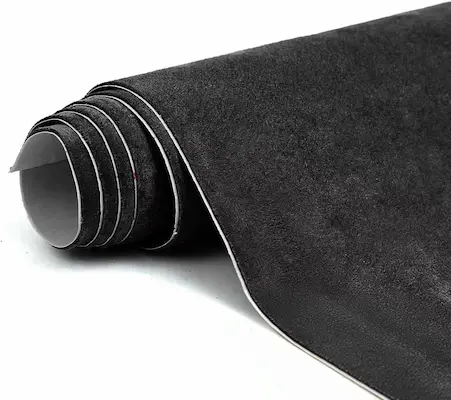
Performance Microfiber (UltraSuede, Microsuede)
Performance microfiber remains one of the most practical choices for pet owners because it combines comfort, durability, and low maintenance in a way few fabrics can match.
Made from tightly woven synthetic fibers, microfiber creates a smooth surface that naturally resists claw snags, dirt penetration, and spills. The dense weave also prevents pet hair from embedding deeply into the material, making cleanup significantly easier than with textured fabrics.
Pros
- Soft and comfortable with a plush feel
- Extremely durable for daily use
- Highly stain-resistant
- Tight weave improves scratch resistance
- Easy to clean and maintain
Cons
- Can generate static that attracts hair
- May show seating impressions
- Lower-quality versions can pill over time
Texture & Appearance
Microfiber typically has a suede-like texture with a matte finish. It comes in a wide range of colors and works well in both modern and traditional interiors.
Best Use
Ideal for high-traffic living rooms, family spaces, and homes with active pets or children.
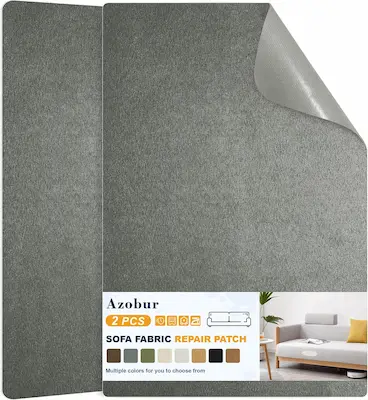
Crypton Fabric
Crypton is considered one of the strongest performance upholstery fabrics available for pet-friendly homes. Unlike temporary stain sprays or surface coatings, Crypton fabrics are engineered with integrated protection designed to resist moisture, bacteria, stains, and odors at the fiber level.
This makes it particularly valuable for homes with pets prone to accidents or heavy shedding.
Pros
- Exceptional stain and moisture resistance
- Strong odor protection
- Extremely durable
- Easy spot cleaning
- Integrated performance technology that lasts
Cons
- More expensive than standard upholstery
- Some styles have limited texture variety, although newer collections are improving.
Texture & Appearance
Available in multiple finishes ranging from linen-inspired weaves to soft velvets and textured contemporary styles.
Best Use
Excellent for homes with puppies, senior pets, multiple animals, or households where spills happen frequently.
Many premium Crypton fabrics also carry certifications such as GreenGuard, which indicates lower chemical emissions and improved indoor air quality standards.
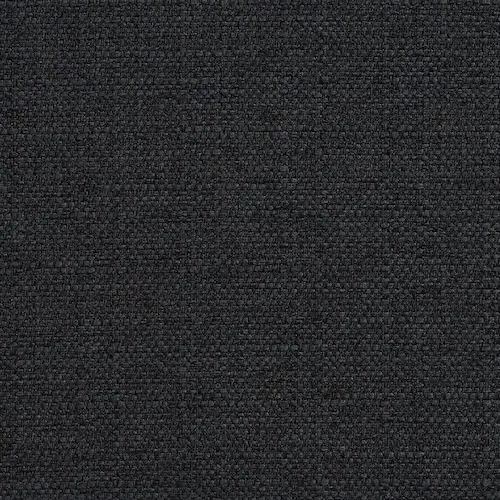
Sunbrella Fabric
Originally designed for outdoor furniture, Sunbrella has become increasingly popular indoors because of its exceptional resistance to stains, fading, mildew, and heavy wear.
This is one of the few upholstery materials capable of handling extreme use without quickly deteriorating.
Pros
- Outstanding durability
- Resistant to stains, moisture, mildew, and fading
- Simple cleaning process
- Many versions tolerate bleach-based cleaning
- Long-lasting color performance
Cons
- Some varieties feel stiffer than traditional indoor fabrics
- Softer luxury textures are more limited
Performance Velvet
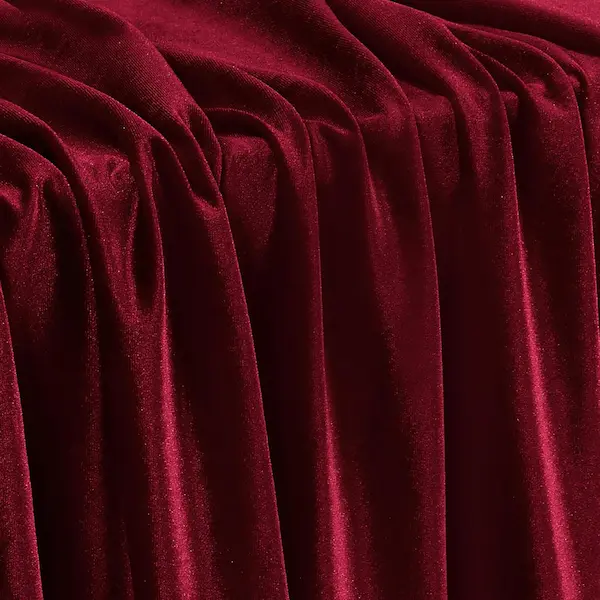
Traditional velvet and pets usually create problems. But modern synthetic performance velvet changes that equation significantly.
Unlike delicate natural velvet, performance velvet uses tightly packed synthetic fibers that make snagging less visible and improve stain resistance.
Pros
- Luxurious and elegant appearance
- Tight weave helps hide minor scratches
- Often treated for stain resistance
- Soft and comfortable texture
Cons
- Can attract pet hair
- May show crushing or shading patterns
- Some versions require specialized cleaning methods
Texture & Appearance
Rich, plush, and visually sophisticated with a subtle sheen.
Best Use
Perfect for homeowners who want a more upscale aesthetic without completely sacrificing practicality.
Olefin (Polypropylene) Fabric
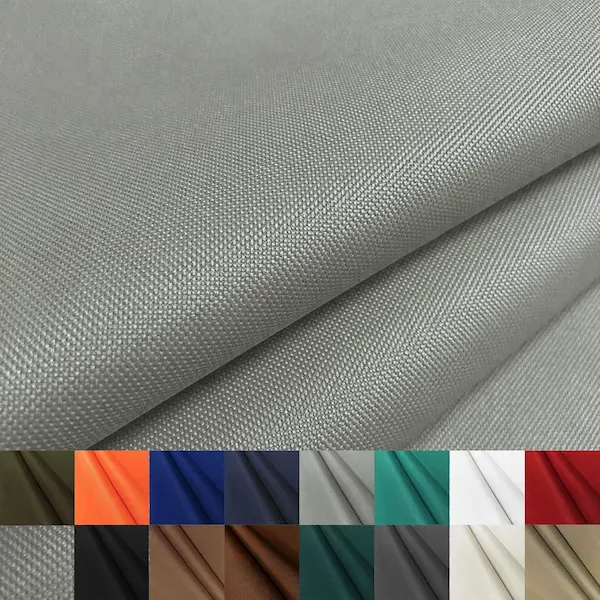
Olefin is one of the most underrated fabrics for pet owners. It offers excellent moisture resistance, abrasion resistance, and color durability while remaining relatively affordable.
Because olefin resists water absorption naturally, it performs especially well in humid climates or homes with pets prone to accidents.
Pros
- Strong moisture and mildew resistance
- Highly durable against abrasion
- Good stain resistance
- Colorfast and fade-resistant
- Performs well in humid environments
Cons
- Sensitive to excessive heat
- Texture may feel less luxurious compared to premium fabrics
Texture & Appearance
Usually features a matte finish and can imitate the appearance of natural woven fibers.
Best Use
Excellent for highly active homes, humid regions, and spaces that connect indoor and outdoor living areas.
The biggest mistake pet owners make is choosing upholstery based only on appearance. A fabric may look stylish on day one and become a maintenance nightmare within months. Smart furniture choices focus on how materials behave under pressure: scratching, shedding, spills, moisture, and constant movement.
The right fabric does not just protect furniture. It reduces cleaning time, lowers replacement costs, and makes daily life with pets dramatically easier.
Fabric Comparison: Choosing Your Perfect Pet-Proof Upholstery
Selecting the right upholstery becomes much easier when you compare fabrics side by side. Every material has strengths and trade-offs, and the best option depends on your pets, lifestyle, cleaning habits, and design preferences. Some fabrics prioritize luxury and softness, while others focus entirely on durability and stain resistance.
The comparison below highlights how the most pet-friendly upholstery fabrics perform in real-world conditions.
|
Fabric Type |
Durability (Rub Count) |
Stain Resistance |
Scratch Resistance |
Pet Hair Adherence |
Ease of Cleaning |
Best For... |
|
Performance Microfiber |
High (30,000+) |
Excellent |
Very Good |
Low-Medium |
Excellent |
Homes with energetic pets where comfort, softness, and easy maintenance matter equally. |
|
Crypton Fabric |
Excellent (50,000+) |
Superior |
Excellent |
Low |
Superior |
Households needing maximum protection against accidents, odors, stains, and heavy daily wear. |
|
Sunbrella Fabric |
Excellent (50,000+) |
Superior |
Excellent |
Low |
Superior |
Bright sunrooms, indoor-outdoor spaces, and homes where extreme durability is non-negotiable. |
|
Leather / Faux Leather |
High |
Very Good |
Good (surface can scratch) |
Low |
Excellent |
Modern spaces require fast cleanup, odor resistance, and minimal hair buildup, which are top priorities. |
|
Heavy-Duty Denim / Canvas |
High (20,000+) |
Good |
Excellent |
Medium-High |
Good |
Busy family rooms and casual spaces need affordable, rugged upholstery that handles abuse well. |
|
Performance Velvet |
High (20,000+) |
Very Good |
Good |
Medium-High |
Good |
Stylish homes want a luxurious look without completely sacrificing pet-friendly durability. |
|
Olefin (Polypropylene) |
High (30,000+) |
Excellent |
Very Good |
Low |
Excellent |
Humid climates, active households, and spaces exposed to moisture or constant activity. |
How to Use This Comparison Effectively
Many people focus too heavily on a single feature, like softness or appearance, and ignore how the fabric performs long-term. That usually leads to regret. A beautiful sofa becomes frustrating very quickly when it constantly traps fur, absorbs odors, or shows claw damage after a few months.
Instead, prioritize based on your actual lifestyle:
- If your pets shed heavily, focus on low hair adherence.
- If accidents are common, prioritize stain and odor resistance.
- If your pets scratch furniture frequently, choose tight weaves with strong abrasion resistance.
- If you want minimal maintenance, focus on easy-clean performance fabrics.
There is no universally perfect fabric. There is only the fabric that best matches how your household actually functions. The smartest upholstery decisions happen when practicality and design are balanced together instead of competing against each other.
Fabrics to Avoid (and Why)
Choosing the right upholstery is only half the battle. Knowing which fabrics to avoid can save you from expensive mistakes, constant maintenance, and furniture that looks worn far too quickly. Many popular upholstery materials simply are not designed to survive daily life with pets, no matter how attractive they appear in a showroom.
Some fabrics fail because they snag too easily. Others absorb odors, trap fur, or become permanently stained after minor accidents. The goal is not just to buy beautiful furniture, but to buy furniture that still looks good after years of real use.
Delicate Weaves (Silk, Linen, Chenille, Loose Weaves)
Delicate fabrics may create a luxurious appearance, but they rarely hold up well in pet-friendly homes. Materials like silk, loosely woven linen, and chenille are especially vulnerable to claws, pulling, and repeated friction.
Their softer construction makes them easy to snag, while their absorbent fibers quickly trap stains and odors. Even minor scratching can leave visible damage that is difficult or impossible to repair.
Why These Fabrics Struggle
- Easily snagged by claws
- Prone to tearing and fraying
- Absorb odors and moisture quickly
- Difficult to clean without damaging the material
- Show wear rapidly in high-traffic areas
Chenille, in particular, may feel soft and inviting, but its raised texture can unravel quickly under repeated pet activity.
Textiles with Open Loops or Raised Loops (Bouclé, Certain Tweeds)
Looped fabrics are one of the worst choices for homes with cats. Open-loop construction naturally attracts claws because pets can easily hook and pull at the loops during scratching or climbing.
Once a loop catches, the fabric can unravel surprisingly fast.
Why These Fabrics Cause Problems
- Loops catch claws easily
- Fabric pulls and unravels under scratching
- Difficult to repair once damaged
- Trap pet hair deep within the texture
Bouclé may currently be trendy in interior design, but in a pet-heavy household, it often becomes a maintenance disaster rather than a long-term investment.
Traditional Velvet (Non-Performance Velvet)
Standard velvet delivers elegance and softness, but traditional versions are not ideal for homes with active pets. The dense pile attracts fur, highlights pressure marks, and can become difficult to clean properly.
Unlike modern performance velvet, traditional velvet absorbs spills more easily and often develops visible watermarks after spot cleaning.
Why Traditional Velvet Falls Short
- Attracts pet hair heavily
- Difficult to clean evenly
- Shows crushing and wear patterns
- Spot cleaning may leave marks or discoloration
- More vulnerable to staining
If velvet is important for your design style, performance velvet is usually a far safer alternative.
Fragile or High-Maintenance Fabrics (Rayon, Viscose)
Rayon and viscose are commonly used because they mimic the appearance of more expensive natural fabrics. However, they are notoriously weak when exposed to moisture or aggressive cleaning.
In homes with pets, these materials often become damaged quickly because they are not designed for repeated stress or heavy cleaning routines.
Why These Fabrics Underperform
- Prone to shrinking
- Easily stained
- Water-sensitive
- Can weaken after cleaning
- Poor resistance to heavy daily use
Many homeowners unknowingly choose these fabrics based on appearance alone and regret the decision once maintenance becomes difficult.
Light-Colored or Untreated Fabrics
Color matters more than many people realize. Extremely light upholstery may look fresh and modern, but it exposes every paw print, fur strand, stain, and spill almost immediately.
Untreated fabrics make the problem even worse because liquids penetrate quickly before cleanup can begin.
Why These Fabrics Become High Maintenance
- Show pet hair clearly
- Highlight stains and dirt instantly
- Require frequent cleaning
- Absorb spills faster without protective treatments
This does not mean light furniture is impossible in a pet-friendly home. It simply means performance protection becomes essential if you want to maintain the appearance long-term.
Keeping Your Pet-Friendly Furniture Pristine
Even the best upholstery will not survive long without proper care. Pet-friendly fabrics reduce maintenance, but they do not eliminate it. The difference is that quality materials make cleaning easier, faster, and less stressful.
Consistent maintenance is what keeps furniture looking fresh for years instead of months.
Routine Care: The First Line of Defense
Small habits prevent larger problems from developing over time. Most upholstery damage comes from accumulated dirt, oils, hair, and stains that are ignored until they become difficult to remove.
Daily Hair Removal
Quick daily maintenance makes a major difference.
Useful tools include:
- Rubber gloves for lifting hair
- Lint rollers
- Fabric-safe pet hair brushes
- Handheld vacuums for quick cleanup
The longer hair remains embedded in upholstery, the harder it becomes to remove completely.
Rotate Cushions Frequently
Rotating cushions helps distribute wear evenly across the furniture. Without rotation, certain seating areas compress and fade faster, especially in homes with large pets that favor specific spots.
Tackling Stains Effectively
Pet stains become permanent mainly because people react incorrectly. Scrubbing aggressively or delaying cleanup often causes more serious damage than the stain itself.
Expert Tip: Treat Stains Immediately
The faster a spill or accident is addressed, the better the outcome. Liquids that remain on upholstery for long periods soak deeper into fibers and become significantly harder to remove.
Blot, Never Rub
For liquid spills:
- Use a clean cloth or paper towel
- Blot gently to absorb moisture
- Avoid rubbing, which spreads the stain deeper into the fibers
Aggressive scrubbing can permanently damage fabric texture.
Use the Correct Cleaning Products
Not all upholstery responds to the same cleaning methods.
- Water-safe fabrics tolerate mild water-based cleaners
- Solvent-clean-only fabrics require specialized products
- Performance fabrics may allow stronger stain treatment options
Using the wrong cleaner can permanently discolor or weaken upholstery.
Conquering Pet Odors
Odors are often harder to eliminate than visible stains because they settle deep into upholstery fibers and padding.
Surface cleaning alone usually is not enough.
Expert Tip: Combine Cleaning with Odor Control
Effective odor management often requires multiple strategies working together.
Baking Soda for Everyday Freshness
Baking soda remains one of the simplest natural odor absorbers available.
- Sprinkle lightly across dry upholstery
- Leave for 15–30 minutes
- Vacuum thoroughly afterward
This helps neutralize mild everyday smells without harsh chemicals.
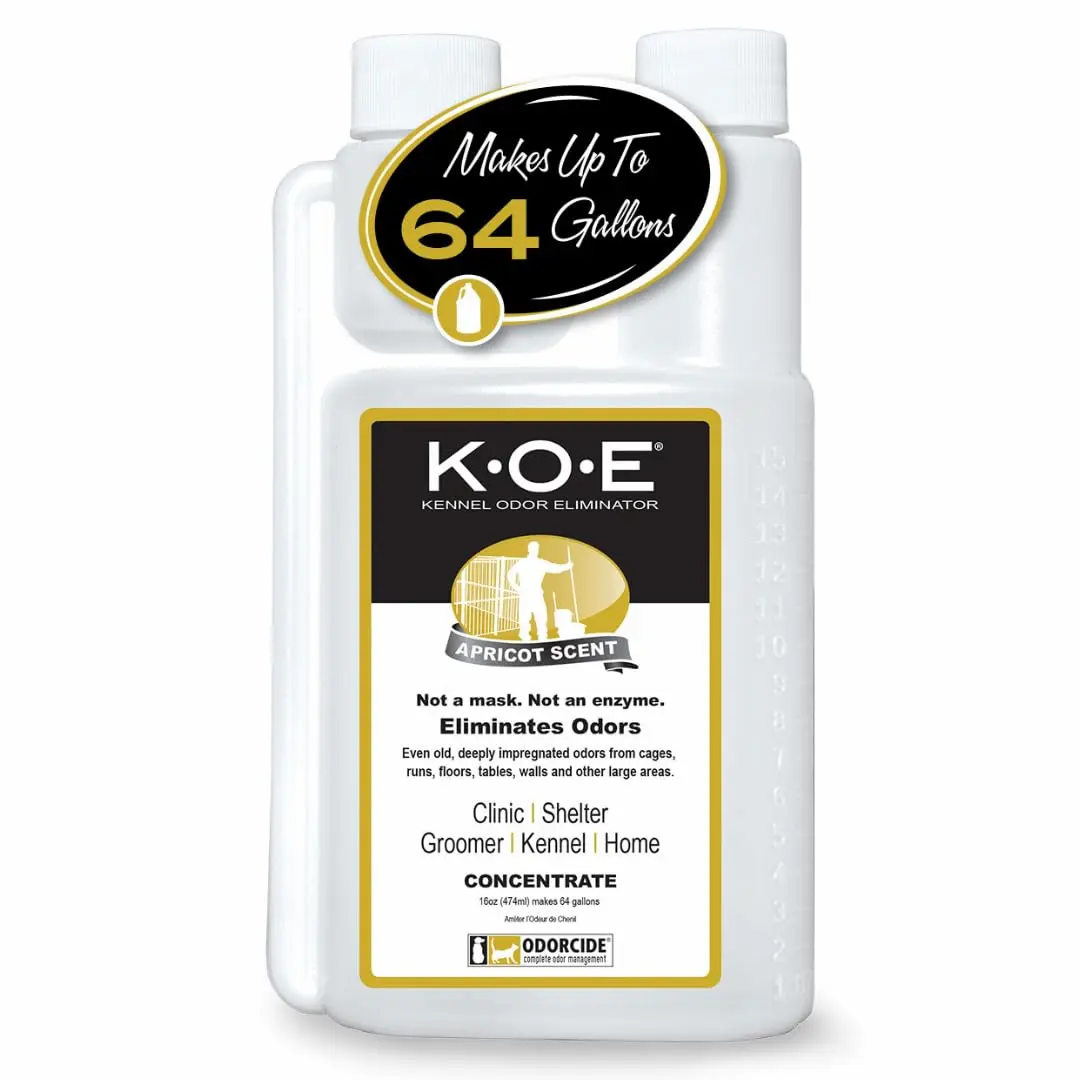
Enzymatic Cleaners for Organic Stains
Urine, vomit, and other organic pet stains require enzymatic cleaners specifically designed to break down odor-causing bacteria.
Standard cleaners often mask smells temporarily rather than removing the source.
Improve Air Circulation
Air purifiers and proper ventilation reduce lingering odors significantly, especially in homes with multiple pets.
Humidity control also matters because damp environments intensify trapped smells within upholstery fibers.

Making the Right Choice: Factors Beyond Fabric
Choosing pet-friendly upholstery is not only about selecting the strongest fabric. Many homeowners focus entirely on material performance while ignoring the bigger picture: how their pets actually behave, how the furniture is used daily, and whether the investment makes sense long term.
A fabric that works perfectly for one household may fail in another. The smartest decisions happen when durability, lifestyle, comfort, design, and maintenance are considered together instead of separately.
Your Pet’s Personality & Habits Matter More Than You Think
One of the biggest mistakes people make is treating all pets the same. Different animals create completely different types of wear on furniture. A calm senior dog lounging quietly all day places far less stress on upholstery than an energetic puppy constantly jumping, digging, and chewing.
Instead of shopping based only on appearance, match the fabric to your pet’s actual behavior.
The Lounger
Some pets mainly sleep, relax, and shed lightly across furniture without causing major physical damage.
Best Fabric Priorities
- Softness and comfort
- Moderate durability
- Easy hair removal
- Warm, inviting texture
Good options include:
- Performance microfiber
- Performance velvet
- Certain leather finishes
These fabrics balance comfort with enough durability for everyday lounging without feeling overly stiff or industrial.
The Digger or Scratcher
This category includes pets that scratch, paw, dig cushions, or repeatedly reposition themselves aggressively before settling down.
These behaviors destroy delicate upholstery surprisingly fast.
Best Fabric Priorities
- Tight weaves
- High abrasion resistance
- Minimal snag potential
- Strong synthetic fibers
Recommended options include:
- Crypton fabric
- Sunbrella
- Heavy-duty canvas
- Tightly woven microfiber
The Shedder
Heavy shedders create a different challenge entirely. Hair accumulation becomes more frustrating than scratching or stains.
Textured fabrics often turn into fur traps.
Best Fabric Priorities
- Smooth surfaces
- Low static buildup
- Easy vacuuming
- Minimal hair cling
Recommended options include:
- Leather
- Faux leather
- Olefin
- Some tightly woven performance velvets
Matching upholstery color to your pet’s fur also reduces the appearance of shedding between cleanings.
The Accident-Prone Pet
Puppies, senior pets, and certain medical conditions create a much higher risk of accidents, spills, and moisture damage.
In these cases, stain resistance becomes more important than softness or luxury appearance.
Best Fabric Priorities
- Moisture resistance
- Odor protection
- Fast cleanup capability
- Antimicrobial performance
Top choices include:
- Crypton
- Sunbrella
- Olefin
- High-end performance microfiber
These materials provide critical extra time to clean accidents before permanent staining or odor absorption occurs.
Multiple Pets Multiply the Damage
Many people underestimate how much wear increases with multiple pets. Shedding doubles, scratching increases, and cleaning demands rise quickly.
A fabric that performs well for one small pet may fail under the pressure of several active animals.
In multi-pet households, prioritize:
- Higher rub counts
- Tight weaves
- Strong stain resistance
- Easy-clean performance finishes
This is where premium performance fabrics usually justify their higher price.
Household Lifestyle & Daily Usage
Furniture should match how your home actually functions, not how you wish it functioned.
A decorative chair used occasionally faces completely different demands than a sofa used daily by children, pets, and guests.
High-Traffic vs. Low-Traffic Areas
For heavily used furniture:
- Prioritize durability over delicate textures
- Choose high rub-count fabrics
- Focus on easy cleaning
For rarely used accent furniture:
- You may have more flexibility with softer or more decorative fabrics
Many people overspend on luxury upholstery for furniture that gets abused daily, then become frustrated when it wears prematurely.
Children and Pets Together Increase Wear
Homes with both children and pets require even tougher upholstery because furniture faces:
- Food spills
- Paw prints
- Scratching
- Jumping
- Frequent cleaning
- Constant movement
Performance fabrics become far more valuable in these households because they reduce maintenance stress significantly.
Dining Areas vs. Living Rooms
Furniture location matters.
Dining chairs face:
- Food stains
- Liquid spills
- Frequent wiping
Living room furniture faces:
- Shedding
- Scratching
- Long-term lounging wear
The same fabric may not perform equally well in every space.
Balancing Style with Practicality
Many homeowners fear that pet-friendly furniture means sacrificing style. That assumption is outdated.
Modern performance fabrics now come in sophisticated textures, colors, and finishes that look far more refined than older “durable-only” upholstery options.
The real challenge is balancing aesthetics with realistic expectations.
Color Choices Matter
Color can either hide problems or constantly expose them.
Dark Colors
Pros:
- Hide stains better
- Conceal dirt longer
Cons:
- Light pet hair becomes highly visible
Light Colors
Pros:
- Bright, airy appearance
- Hide lighter fur better
Cons:
- Show stains quickly
Medium tones and textured neutrals often provide the best balance for pet-friendly homes.
Texture Choices Matter Too
Soft textures feel luxurious but often trap hair and show wear faster.
Rugged textures handle abuse better but may feel less cozy.
The ideal balance depends on:
- Your pets
- Your cleaning habits
- Your design goals
- Your tolerance for maintenance
Budget vs. Long-Term Value
One of the biggest financial mistakes homeowners make is focusing only on initial cost.
Cheap upholstery often becomes expensive because it:
- Wears out faster
- Requires more cleaning
- Holds odors
- Stains permanently
- Needs earlier replacement
Premium performance fabrics cost more upfront but often save money long term.
Cost-Benefit Thinking Changes the Decision
A lower-priced sofa that lasts three years before looking damaged is rarely a better value than a durable performance sofa lasting ten years with fewer cleaning costs.
When evaluating upholstery, consider:
- Expected lifespan
- Cleaning frequency
- Professional maintenance costs
- Potential replacement costs
- Daily convenience
This is where higher-end fabrics like Crypton or Sunbrella often justify their price.
You are not only buying fabric. You are buying reduced stress, lower maintenance, and longer furniture life.
Reupholstery vs. Buying New
Sometimes replacing fabric is smarter than replacing furniture entirely.
If the frame and structure remain solid:
- Reupholstery can extend furniture's life
- Upgrading to performance fabric improves durability dramatically
- Custom upholstery may cost less than premium new furniture
However, cheaply made furniture often is not worth reupholstering because the frame itself deteriorates over time.
Real-World Pet Owner Experiences
Real-life results often reveal more than showroom marketing.
Many pet owners who switch to performance upholstery report the same benefits repeatedly:
- Less stress about accidents
- Easier cleaning routines
- Reduced odor buildup
- Longer-lasting appearance
- Fewer worries about scratches and shedding
One dog owner described switching from linen upholstery to performance microfiber as “the difference between constantly protecting furniture and finally being able to relax.”
Another cat owner noted that tightly woven Crypton fabric dramatically reduced visible claw damage compared to previous textured upholstery.
These experiences matter because they reflect everyday reality rather than ideal showroom conditions.
The truth is simple: there is no completely pet-proof fabric. Marketing often exaggerates what upholstery can survive. But there are absolutely smarter choices that dramatically reduce frustration, cleaning time, and replacement costs.
The best upholstery decision is not the softest, trendiest, or cheapest option. It is the one that fits how your household truly lives every day.
Beyond Fabrics: A Holistic Approach to Pet-Proofing
Even the best upholstery cannot solve every problem on its own. Many homeowners spend heavily on “pet-friendly” fabrics while ignoring the other factors that actually determine how well furniture survives over time. Furniture design, pet habits, cleaning routines, and home layout all matter just as much as the fabric itself.
A truly pet-friendly home is built through smart systems, not just smart materials.
Furniture Design Choices Matter More Than Most People Realize
Some furniture designs naturally handle pets better than others. The problem is that many modern furniture trends prioritize appearance over durability.
Delicate furniture may look elegant in a showroom, but it often performs poorly in real homes with active pets.
Avoid Fragile Legs and Exposed Wood
Thin wooden legs, exposed corners, and decorative trim create easy targets for chewing, scratching, and impact damage.
Pets repeatedly brushing against fragile components can loosen or damage them over time.
More durable choices include:
- Metal or reinforced legs
- Thick solid bases
- Minimal exposed wood detailing
- Rounded edges instead of sharp corners
Furniture should survive daily use, not require constant protection from normal pet behavior.
Consider Skirted Furniture
Skirted sofas and chairs can actually be surprisingly practical in pet-friendly homes.
Benefits include:
- Hiding pet hair accumulation underneath furniture
- Protecting exposed legs from scratches or chewing
- Reducing visible dust buildup
- Creating a cleaner visual appearance
The downside is that skirts may collect fur along the lower edges, so washable materials are important.
Tight Upholstery Performs Better Than Loose Cushions
Loose cushions shift constantly, trap debris between gaps, and create more opportunities for claw damage.
Tightly upholstered furniture often:
- Maintains its shape longer
- Reduces trapped hair and dirt
- Limits fabric movement and stretching
- Simplifies cleaning
Minimal seams and tighter construction usually lead to easier long-term maintenance.
Protective Layers & Accessories Make a Huge Difference
One of the smartest ways to extend upholstery life is to reduce direct wear altogether.
Protective accessories are not glamorous, but they work.
Stylish Washable Throws and Blankets
Throws provide a removable barrier between pets and upholstery.
They help:
- Catch shedding
- Protect against scratches
- Absorb dirt and oils
- Simplify cleaning routines
The advantage is flexibility. You can wash or replace throws far more easily than deep-cleaning an entire sofa.
Choose machine-washable fabrics that complement the room instead of making the furniture look temporarily covered or neglected.
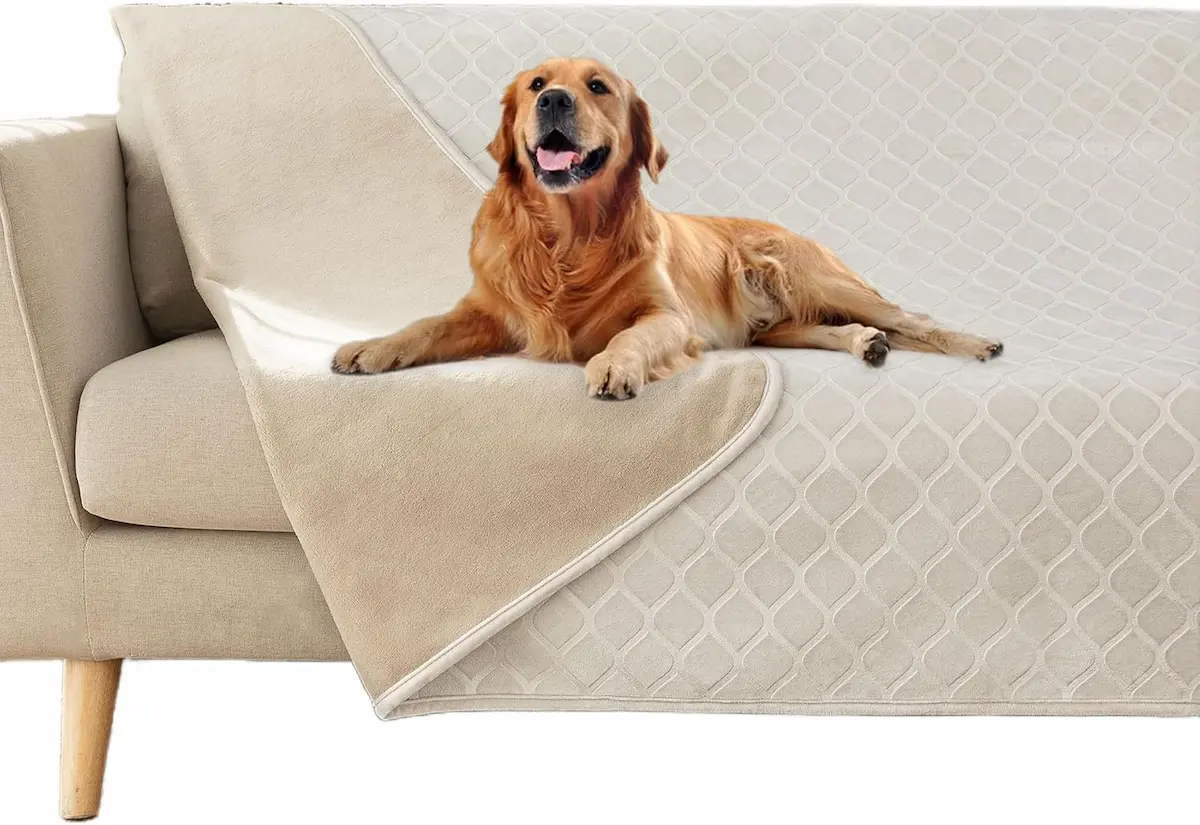
Pet-Specific Furniture Covers
Modern pet furniture covers are far more attractive than older plastic-style protectors.
Quality options now offer:
- Waterproof layers
- Non-slip backing
- Quilted comfort
- Washable construction
- Neutral modern designs
They are especially useful for:
- Puppies
- Senior pets
- Heavy shedders
- High-traffic seating areas
Give Pets Their Own Comfortable Space
Many people unintentionally encourage pets onto furniture because the alternative sleeping areas are uncomfortable or poorly positioned.
A good pet bed should feel more attractive than the floor.
Strategic placement matters:
- Near family activity
- In warm or cozy corners
- Away from excessive noise
- Large enough for full comfort
When pets have inviting designated spaces, furniture often receives less constant use.
Training & Behavioral Strategies Protect Furniture Long Term
Many upholstery problems are behavioral before they are material-related.
People often expect furniture alone to survive habits that should be redirected through training.
Expert Tip: Nail Trimming & Scratch Alternatives Matter
Regular nail trimming dramatically reduces upholstery damage.
For cats, especially, scratching is instinctive, not misbehavior. If appropriate alternatives are unavailable, furniture becomes the default target.
Effective alternatives include:
- Cat trees
- Scratching posts
- Cardboard scratchers
- Wall-mounted scratching panels
Placement matters. Scratch posts hidden in empty corners rarely work well. They should be placed near the furniture that pets already target.
Teach Clear Furniture Boundaries
Inconsistent rules confuse pets.
If furniture access is allowed sometimes but discouraged other times, pets will continue testing boundaries.
Training works better when:
- Rules stay consistent
- Commands are reinforced calmly
- Positive reinforcement is used regularly
- Comfortable alternatives are available
Punishment without redirection usually fails long-term.
Reward Good Behavior
Positive reinforcement remains one of the most effective long-term behavioral tools.
Rewarding pets for:
- Using their own beds
- Scratching approved surfaces
- Avoiding restricted furniture
creates stronger habits than constant correction alone.
Strategic Placement & Zoning
Not every room requires the same level of durability.
One of the smartest approaches is using stronger materials where pets spend the most time while allowing more decorative flexibility elsewhere.
Expert Tip: Use Durable Fabrics Strategically
High-traffic pet areas should prioritize:
- Tight weaves
- Performance fabrics
- Easy-clean materials
Lower-traffic formal spaces may allow softer or more delicate upholstery if pets rarely access those rooms.
This approach creates balance instead of forcing every piece of furniture to feel industrial or overly utilitarian.
Create Dedicated Pet Zones
Designated pet-friendly areas reduce random wear across the entire home.
Pet zones might include:
- Specific lounging furniture
- Washable rugs
- Feeding stations
- Sleeping areas
- Play spaces
When pets consistently use designated spaces, cleaning and maintenance become more manageable overall.
The Eco-Conscious Pet Owner’s Guide
Many homeowners now want pet-friendly furniture that is also environmentally responsible.
The good news is that sustainability and durability are no longer mutually exclusive.
Eco-Friendly Upholstery Options
Some modern performance fabrics now include:
- Recycled synthetic fibers
- Low-toxin manufacturing
- Sustainable production methods
- Reduced chemical treatments
Look for certifications such as:
- OEKO-TEX
- GreenGuard
- Recycled material labeling
These certifications help identify fabrics with lower chemical emissions and safer indoor air quality standards.
Natural Fibers Require Caution
Natural materials are often marketed as eco-friendly, but not all perform well with pets.
For example:
- Organic cotton may still stain easily
- Linen wrinkles and snags quickly
- Untreated wool can absorb odors
Sustainable blends combining recycled synthetics with natural fibers often provide a better balance between environmental responsibility and durability.
DIY & Budget-Friendly Reupholstery for Pet Owners
Replacing furniture completely is not always necessary.
Many older sofas and chairs still have strong frames but outdated or damaged upholstery.
Reupholstering with pet-friendly fabric can:
- Extend furniture lifespan
- Costs less than buying premium new furniture
- Allow full fabric customization
- Upgrade durability significantly
Performance microfiber, canvas, and synthetic blends are often excellent reupholstery choices for pet owners working within a budget.
This approach also reduces waste by keeping structurally sound furniture out of landfills.
The reality is that pet-proofing a home is not about finding one magical fabric that solves everything. That mindset leads to disappointment.
The homes that function best with pets combine:
- Smart fabric choices
- Durable furniture design
- Consistent cleaning habits
- Behavioral training
- Protective accessories
- Practical home layouts
When these elements work together, the result is a home that feels comfortable, stylish, and genuinely livable for both people and pets.
Frequently Asked Questions (FAQs) About Pet-Friendly Upholstery

Conclusion: Enjoying Your Home with Pets, Stress-Free
Creating a home that works for both you and your pets is not about compromise; it’s about smarter decisions. The right upholstery choices, combined with realistic expectations and consistent care, can completely change how your living space holds up over time.
The key takeaway is simple: fabric matters more than most people realize. Durability, stain resistance, scratch resistance, odor control, and ease of cleaning are not optional features in a pet-friendly home; they are essential requirements. Performance synthetics, tightly woven textiles, and treated leathers consistently outperform delicate natural fabrics when pets are part of everyday life.
But fabric alone is not enough. Long-term success comes from maintenance habits and lifestyle choices. Regular cleaning, quick response to spills, protective covers, and simple behavioral training all work together to extend the life of your furniture and reduce daily stress.
The real goal is not perfection, it is practicality. A home that stays clean longer, feels comfortable to live in, and does not create constant anxiety every time your pet jumps on the sofa is already a major win.