

The Whole-Home Care System: A Room-by-Room Guide for Busy Homeowners
July 3, 2026
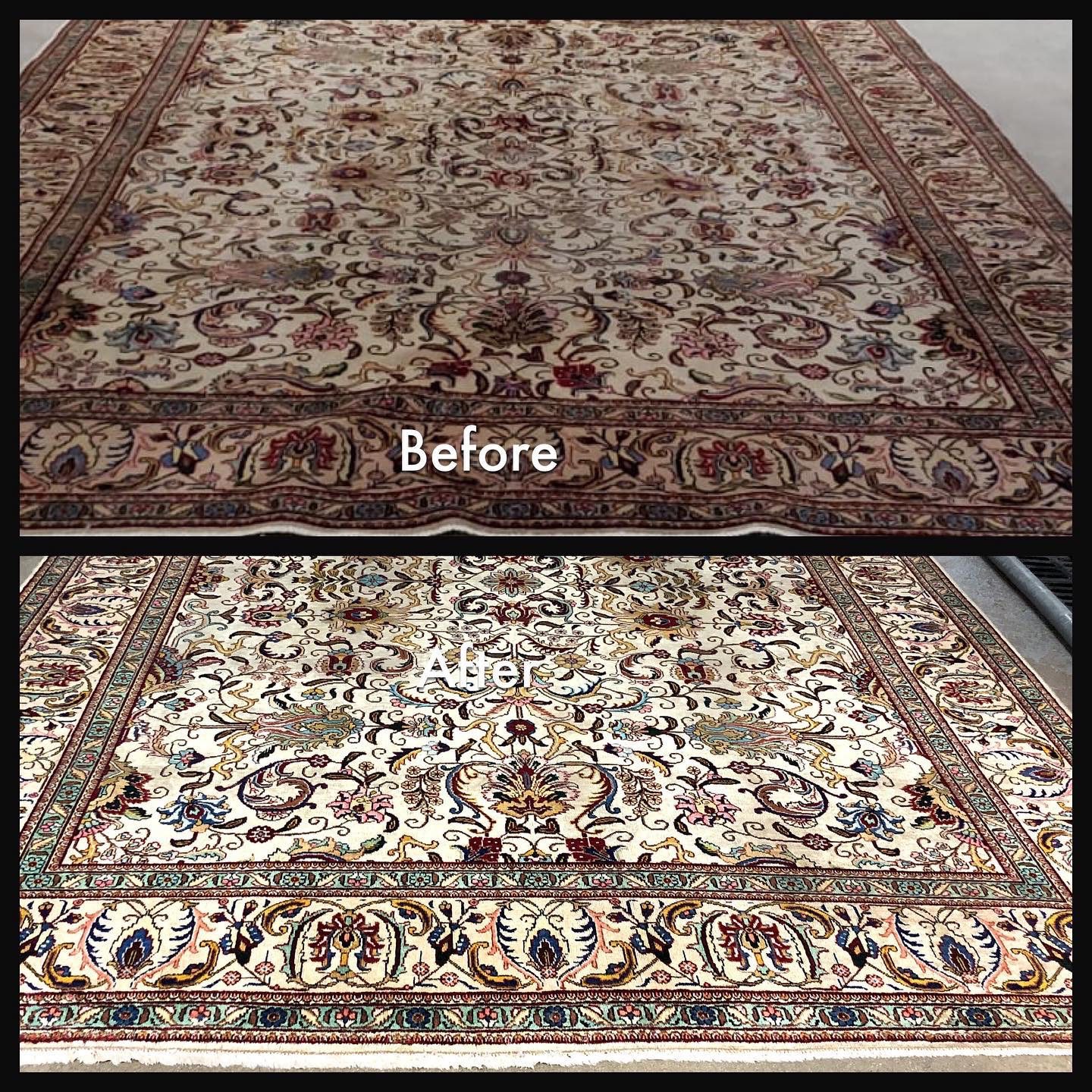
A new wall-to-wall carpet can cost $1,500 or more for a single room. A handmade wool rug passed down through the family cannot be replaced at any price. Yet most carpet damage happens quietly. One coffee spill. One muddy set of footprints. One pet accident that sits a little too long. By the time stains and wear become obvious, the fibers underneath are often already damaged.
That is exactly why carpet protector sprays exist.
The problem is that shopping for one has become surprisingly complicated. Some products promise invisible shields that seem too good to be true. Others rely on old formulas that many homeowners are actively trying to avoid. Meanwhile, changing regulations around PFAS chemicals have pushed manufacturers to rethink what goes into their sprays and coatings.
The good news is that carpet protectors in 2026 are better than they were even a few years ago. The best modern options use water-based, fluorine-free formulas that are safer to use around children and pets while still doing the job that matters most: they buy you time. Time to blot a spill before it becomes a stain. Time to clean up muddy paw prints before they work their way deep into the fibers.
And yes, some of them actually repel liquids remarkably well.
I spilled red wine on a protected wool rug and watched it bead up like mercury before I blotted it away in seconds. I've also tested products that claimed the same protection and failed during the first real-world spill. Marketing claims are cheap. Replacement carpets are not.
This guide separates the products that work from the ones that simply have good packaging. You'll learn how modern carpet protectors work, which sprays are worth the money, and how to apply them properly so you get the results you're paying for.
By the end, you'll have a clear recommendation for the right protector for your home, a practical application plan you can follow in an afternoon, and enough confidence to stop second-guessing your decision. Whether you're protecting a wool heirloom, a busy hallway runner, a playroom carpet, or a rug that spends every afternoon in direct sunlight, there's a solution that fits the job.
How Carpet and Rug Protector Sprays Work
The Science Behind the Spray
A good carpet protector does one simple thing very well: it makes spills hesitate.
When you spray a protector onto carpet or rug fibers, it leaves behind an invisible coating that bonds to the surface of each strand. You won't see it. You won't feel it under your feet. But it changes how liquids behave when they hit the carpet.
Instead of soaking straight into the fibers, water-based spills bead up and stay on the surface longer.
Think of it like a raincoat for your carpet.
Coffee sits on top. Juice stays pooled instead of disappearing instantly into the pile. Even many oily spills slow down enough to give you time to grab a clean towel and start blotting.
That extra minute matters.
I have tested this on wool rugs, synthetic hallway runners, and family-room carpets that see daily traffic from kids and pets. The difference between a protected carpet and an unprotected one is often the difference between a quick cleanup and a permanent stain.
The coating helps in another way, too.
Dirt damages carpet in two stages. First, it lands on the fibers. Then the shoes grind it deeper with every step. That grit acts like sandpaper inside the pile. Over time, fibers fray, flatten, and lose their texture.
A quality protector reduces that friction and makes dry soil easier to vacuum away before it causes wear. In busy hallways and entryways, that benefit can be just as valuable as stain resistance.
The Most Important Thing to Understand
No spray makes carpet stain-proof.
If a product claims your carpet can survive unlimited spills with no maintenance, keep walking.
What a quality protector actually does is buy you time.
More time to blot the spill.
More time to lift away the liquid before it reaches the backing.
More time to save a rug that otherwise would have been headed for professional cleaning.
You still need to act quickly. The spray simply makes your cleanup efforts far more effective.
Why Modern Formulas Look Different
If you used carpet protector sprays fifteen or twenty years ago, today's products are a different category altogether.
Many older stain protectors relied on long-chain PFAS chemicals, often called "forever chemicals" because they break down extremely slowly in the environment. These compounds were effective at repelling water and oil, but growing concerns about their persistence and potential health impacts pushed regulators and manufacturers to move away from them.
California's Department of Toxic Substances Control was one of the major forces behind that change. Through its Safer Consumer Products program, carpets, rugs, and textile treatments containing PFAS came under increasing regulatory pressure, accelerating an industry-wide shift toward alternative chemistries. By late 2024, California testing found widespread compliance and little evidence of continued PFAS use in carpets and rugs sold in the state.
That sounds technical, but the practical takeaway is simple.
Most of the better products you'll find in 2026 are water-based and clearly labeled as fluorine-free or PFAS-free.
Instead of relying on traditional fluorochemicals, many now use siloxanes, silicone derivatives, or plant-based polymers to create the protective coating. Some perform extremely well. Others do not.
The good ones still make liquids bead up impressively.
The bad ones disappear after a few vacuum sessions.
That's why the label alone is not enough. "PFAS-free" tells you what a product avoids. It doesn't tell you how well it protects.
Performance still matters.
Fortunately, you no longer have to choose between protection and safety. For most homes, the best modern sprays deliver both.
Key Benefits of Using a Protector Spray
Stains Become Cleanup Jobs Instead of Replacement Projects
This is the reason most people buy a protective spray.
Without protection, spilled coffee starts soaking into carpet fibers immediately. Red wine follows quickly behind. Pet accidents can reach the backing before you even find a towel.
A good coating changes that timeline. Liquids bead up instead of disappearing into the pile. You blot instead of scrub. In many cases, the stain never gets the chance to set in.
I have watched grape juice sit on a treated synthetic rug for nearly a minute before cleanup. On an untreated section of the same rug, the liquid vanished into the fibers almost immediately.
That extra time is what you're paying for.
Your Carpet Lasts Longer
Most carpet doesn't die from old age. It dies from abrasion. Dust, sand, and grit settle into the fibers. Every footstep grinds those particles deeper, slowly wearing down the pile from the inside out. Hallways, stairs, and the path between the sofa and the kitchen usually show it first.
A protector helps in two ways.
It makes dry soil easier to remove during vacuuming, and it reduces the friction that causes fibers to fray and mat down over time. Industry guidance from cleaning professionals has long recognized soil resistance as one of the biggest benefits of modern protectors, particularly on nylon and wool carpets.
If you have a busy household, this matters more than most stain claims on the bottle.
Vacuuming Gets Easier
Anyone who owns a thick plush carpet knows the feeling.
You vacuum. The carpet looks clean. Then sunlight hits the floor the next morning, and somehow there is dust everywhere again.
Protected fibers release dry soil more easily than unprotected fibers. That means your vacuum can remove more debris before it becomes embedded in the pile.
You are not vacuuming less often. You are vacuuming more effectively. There is a difference.
Some Sprays Help Slow Sun Damage
Sunlight is surprisingly hard on rugs. The rug under the living room window fades while the section under the coffee table stays dark. Rotate the rug six months later, and suddenly you have two different colors.
Some premium protector sprays include UV inhibitors designed to slow this process.
They will not stop fading entirely.
Nothing will.
But if you have a rug in a sunroom, near patio doors, or under south-facing windows, the extra protection can be worth the money.
Odors Have Less Chance to Take Hold
Most stubborn carpet odors are not living in the fibers.
They are hiding underneath them.
When liquids soak through to the backing and pad, drying becomes much slower. Moisture trapped below the surface creates conditions where mold, mildew, and bacteria can thrive.
A protector helps by keeping more of that liquid near the surface, where you can remove it before it travels deeper into the carpet system.
For homes with pets or young children, this benefit often goes unnoticed until the first accident happens.
Then it becomes very important.
The Math Usually Works in Your Favor
A quality protector spray typically costs about the same as a takeout dinner for two.
Professional spot removal can cost more than the bottle.
Professional rug cleaning costs considerably more.
Replacing carpet costs dramatically more.
If a $20 to $30 spray prevents even one permanent stain or delays replacement by a year or two, it has already paid for itself.
That does not mean every carpet needs protection.
A rarely used guest room probably does not.
A busy family room with kids, pets, and a direct path to the backyard almost certainly does.
That is where these products earn their keep.
Types of Carpet Protectors: Water-Based, Solvent-Based, and PFAS-Free Options
Not all carpet protectors work the same way.
Some are designed for family homes with pets and children. Others are built for hotel lobbies, office corridors, and commercial spaces that see thousands of footsteps every week.
Choosing the wrong type is one of the easiest ways to waste money.
Water-Based Protectors
For most homes, this is where I would start.
Water-based sprays use water as the carrier instead of petroleum solvents. That means lower odor during application, faster drying times, and fewer complaints from anyone sensitive to chemical smells.
They also tend to play nicely with both synthetic carpets and natural fibers.
Most modern water-based products are either PFAS-free or use newer chemistries designed to reduce environmental concerns associated with older stain treatments.
The biggest advantage is simple: people actually use them.
You can spray a living room rug on a Saturday morning, open a few windows, and usually have the room back in service later that day.
That matters in real homes.
Best for:
- Family rooms
- Bedrooms
- Playrooms
- Wool area rugs
- Homes with children or pets
- Anyone sensitive to strong odors
Solvent-Based Protectors
These are the old-school heavy hitters. Solvent-based products use petroleum carriers to deliver the protective coating deeper into the fibers, often creating a tougher and longer-lasting bond. That durability is one reason they remained popular in commercial carpet maintenance for years.
There is a tradeoff. The fumes are stronger. Drying takes longer.
Ventilation becomes important instead of optional.
Some formulations may also contain fluorochemicals or other ingredients facing increasing regulatory scrutiny in North America and Europe.
That does not automatically make them bad products.
It does mean you should know exactly what you're buying before spraying it inside your home.
Personally, I leave most solvent-based treatments to professional cleaners working in commercial spaces with the right equipment and ventilation.
For a family living room, there are usually better options available.
Best for:
- Commercial buildings
- Offices
- Hospitality settings
- Professional applications
- Extremely high-traffic environments
PFAS-Free and Fluorine-Free Protectors
This is where most of the innovation is happening right now.
Growing consumer demand and new state regulations have pushed manufacturers to move away from traditional PFAS chemistry and toward alternative approaches. California has been one of the biggest drivers of that shift, and the rest of the market is following quickly.
Instead of relying on fluorochemicals, many newer sprays use silicone compounds, siloxanes, or plant-based polymers to create a protective barrier. Some perform remarkably well.
Others struggle once cooking oil, salad dressing, or greasy fingerprints enter the picture. Water repellency is relatively easy.
Oil repellency is where products separate themselves.
That does not mean PFAS-free products are ineffective. It means you should match your expectations to your household.
A home with toddlers spilling juice boxes has different needs than a dining room where olive oil and pasta sauce are regular visitors.
Look for Independent Certifications
Marketing language costs nothing.
Third-party testing does.
If a manufacturer is making big safety claims, I like to see outside verification backing them up.
Three labels are worth paying attention to:
- GREENGUARD Gold for low chemical emissions and indoor air quality.
- OEKO-TEX certification for testing against harmful substances in textile-related products.
- EPA Safer Choice for products that meet stringent ingredient and safety standards without giving up performance.
No certification guarantees that a product is perfect.
But they do provide far more information than vague words like "green," "natural," or "non-toxic."
Those terms are marketing. Certifications are evidence.
A Special Note About Wool Rugs
Wool is wonderful. Wool is also unforgiving.
Its fibers absorb liquids quickly, which is one reason untreated wool rugs can stain so dramatically from coffee, wine, or pet accidents.
Protection matters more on wool than on almost any other material.
The catch is that wool also reacts more strongly to the wrong chemistry.
Never assume a protector that works beautifully on nylon wall-to-wall carpet is automatically safe for wool.
If the bottle does not clearly state that it is suitable for wool fibers, keep looking.
The right spray can add years to the life of a wool rug. The wrong one can become a very expensive experiment.
How to Choose the Right Protector: A Buyer's Guide
Buying the wrong protector is surprisingly easy. Most failures happen because the spray was matched to the wrong fiber, the wrong household, or the wrong expectations.
Step 1: Identify Your Carpet or Rug Material
Your carpet material matters more than the brand name on the bottle.
Nylon
This is the workhorse of wall-to-wall carpet. It handles foot traffic well, responds nicely to most protectors, and is forgiving if your application technique is less than perfect.
For nylon, I usually recommend a quality water-based spray.
It gives you strong stain resistance without introducing unnecessary chemicals into the house.
Polyester and Olefin
These fibers already do a decent job resisting water-based stains.
The problem is grease. Cooking oils, lotions, makeup, and food spills can bond to these fibers surprisingly fast. If you have polyester or olefin carpet, pay attention to oil repellency claims rather than water repellency claims.
Almost every spray can bead water.
Oil is the real test.
Wool
Wool looks incredible. Wool also stains with alarming speed. Coffee, wine, and pet accidents disappear into untreated wool fibers almost instantly. That is exactly why protection matters so much here.
Choose a pH-neutral protector that explicitly states it is safe for wool.
Avoid solvent-based products entirely. Saving money on the spray is not worth risking a four-figure rug.
Silk and Antique Rugs
Proceed carefully. These rugs often have delicate dyes, hand-finished fibers, and restoration value that exceeds their replacement value.
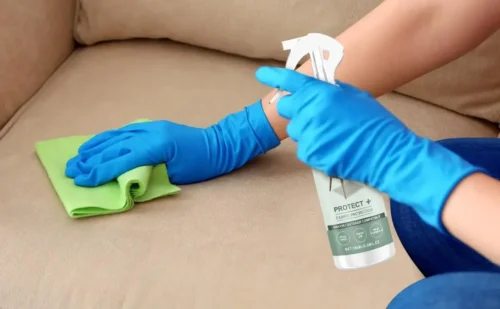
Only use products specifically designed for fine fabrics and specialty textiles. Always test first in an inconspicuous area.
Step 2: Assess Your Household Traffic and Risks
The best protector for a formal sitting room may be the wrong choice for a house with two dogs and three children.
Your lifestyle matters as much as your carpet.
High-Traffic Areas
Hallways.
Stairs.
Family rooms.
The stretch of carpet between the sofa and the refrigerator. These areas take a beating.
Prioritize durability and easy reapplication. Spending more on a higher-solids or professional-grade product often makes financial sense here because these are the spaces that wear out first.
Homes with Kids and Pets
This is where I lean heavily toward water-based, PFAS-free products with low VOC levels.
Children crawl on carpets.
Pets nap on rugs.
Those realities should influence what you spray onto the fibers.
Look for clear safety information rather than vague marketing language.
Sun-Exposed Rugs
Sunlight fades rugs slowly enough that most people do not notice until the damage is already done.
If your rug spends every afternoon under direct sunlight, consider a protector that includes UV inhibitors.
They will not stop fading completely.
They can slow it down.
That matters if replacing the rug would be expensive.
Rental Properties
For rentals, simplicity wins.
An affordable consumer spray that can be reapplied between tenants usually provides a better return than a premium system that requires specialized equipment.
Perfection is not the goal.
Durability and easy maintenance are.
Step 3: Check Safety Certifications and Regulations
This is where labels matter.
Several states have tightened restrictions around PFAS chemicals in consumer products, and manufacturers are responding quickly. Programs from organizations such as the California Department of Toxic Substances Control and guidance from the United States Environmental Protection Agency continue to push the market toward safer alternatives.
Three certifications are worth looking for:
- GREENGUARD Gold for low indoor chemical emissions.
- OEKO-TEX Standard 100 for testing against harmful substances.
- EPA Safer Choice for safer ingredient standards.
If a manufacturer clearly states that a product is fluorine-free or PFAS-free, that makes comparison easier.
If the label says nothing at all, do a little more digging before you buy.
Silence is not proof either way.
Step 4: Consider Application Method and Coverage
Application method affects results more than most people realize.
Aerosol Cans
Convenient.
Fast.
Perfect for stairs, entry rugs, and spot treatment.
Less ideal for an entire living room.
Coverage can become uneven, and overspray adds up quickly.
Pump Sprayers
This is my preferred option for most homeowners.
You get better control, more consistent coverage, and lower cost per square foot compared with aerosol cans.
Use a fine-mist setting and work methodically.
The results look far more professional.
Battery-Powered Sprayers
If you are treating an entire house, your forearm will thank you.
These sprayers deliver a very consistent mist pattern and reduce hand fatigue dramatically during larger projects.
Professional Application
Professional equipment generally delivers the most even coverage and often uses formulas unavailable to retail customers.
For valuable wool rugs or whole-home treatment, paying for professional application can make sense.
Especially if replacement would be painful.
My Favorite DIY Upgrade
A dedicated pump-up garden sprayer with a fine-mist nozzle costs less than twenty dollars and produces results that are surprisingly close to professional equipment.
Just make sure it is dedicated to carpet products only.
The tomatoes can have their own sprayer.
Step 5: Think in Cost Per Year, Not Cost Per Bottle
Cheap products often look expensive later.
Consumer sprays generally cost less upfront but may need more frequent reapplication.
Premium products cost more initially but can maintain performance longer under heavy use.
The better question is not:
"How much does this bottle cost?"
It is:
"How much protection am I getting per year?"
Those are very different calculations.
Top 7 Carpet & Rug Protector Sprays of 2026: Reviews & Comparison
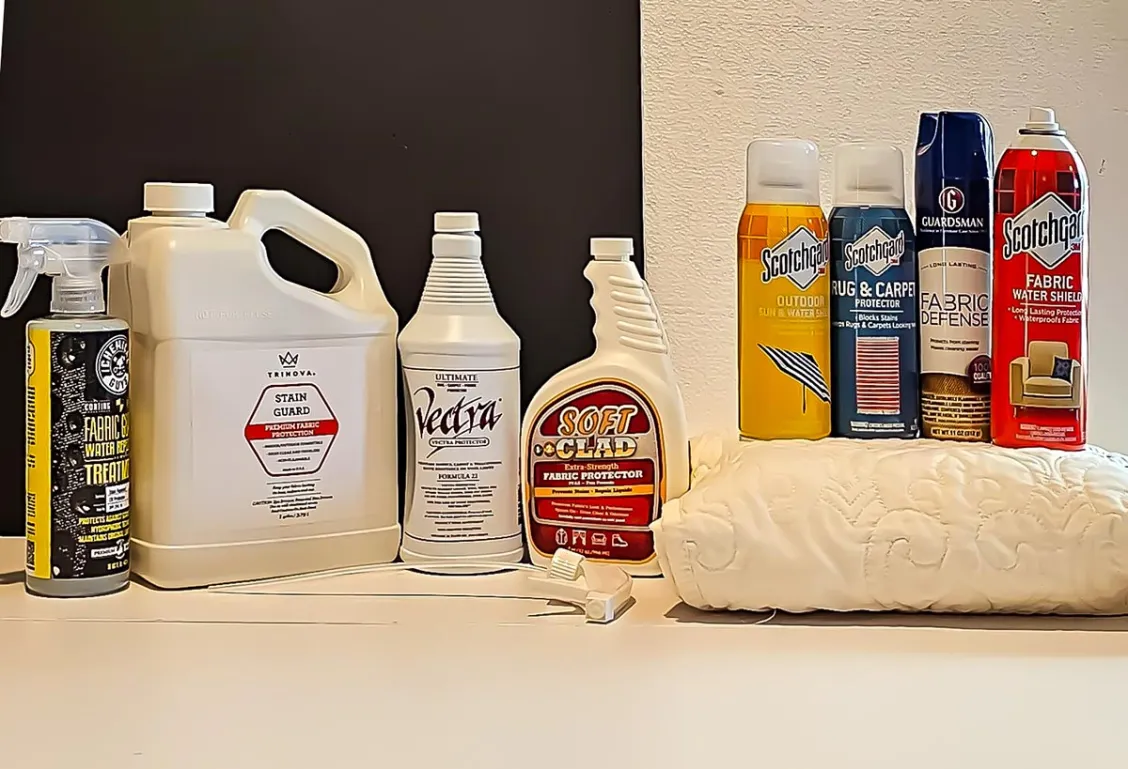
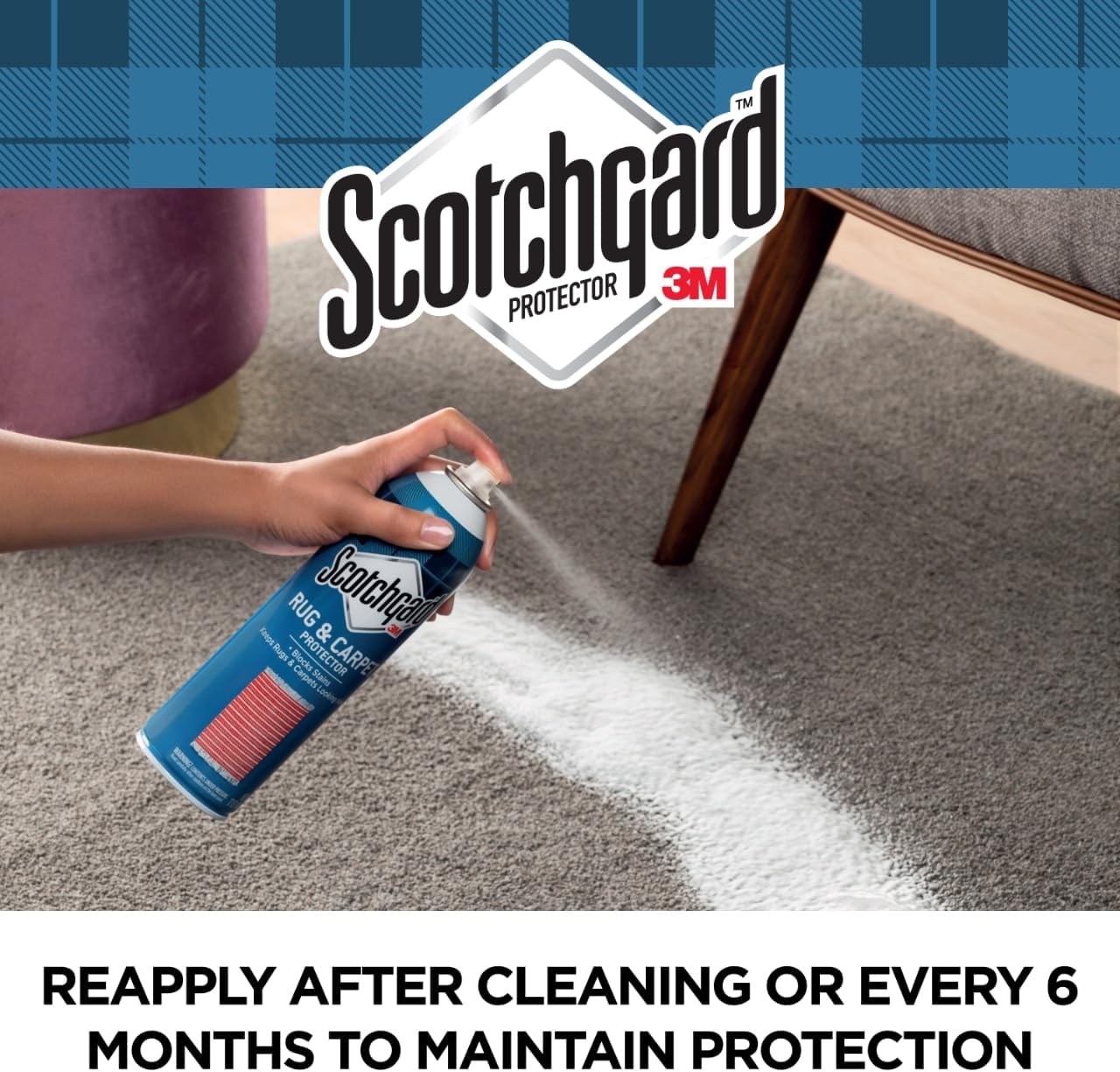
1. Scotchgard Carpet & Upholstery Protector
This is still the product most homeowners think of first.
There is a reason for that. It works, it is affordable, and you can find it almost anywhere, from hardware stores to supermarkets.
The current formulations are noticeably lower in odor than the old versions many people remember, and they perform well against coffee, soda, juice, and everyday household spills.
Where it struggles is with grease.
Cooking oil, salad dressing, and oily food stains are still its weak spots.
High-traffic areas also tend to need more frequent reapplication than the
Pros
- Easy to find locally
- Fast drying
- Affordable
- Strong performance on water-based spills
Cons
- Moderate oil repellency
- More frequent reapplication in busy areas
- PFAS status varies by market and formulation, so check the current SDS before buying
ForceField Fabric Protector
This is one of the products that surprised me.
It does not have the brand recognition of Scotchgard, but its real-world performance is excellent. Water beads. Oils resist longer than expected. It also performs well on fibers that make me nervous, including wool and silk.
That alone earns attention. The downside is availability. You are unlikely to stumble across it at your local hardware store. You usually have to go looking for it.
Pros
- Excellent water repellency
- Strong oil resistance
- Suitable for wool, silk, and delicate fabrics
- Fast drying
Cons
- Higher price
- Limited retail availability
- Mild petroleum odor during application
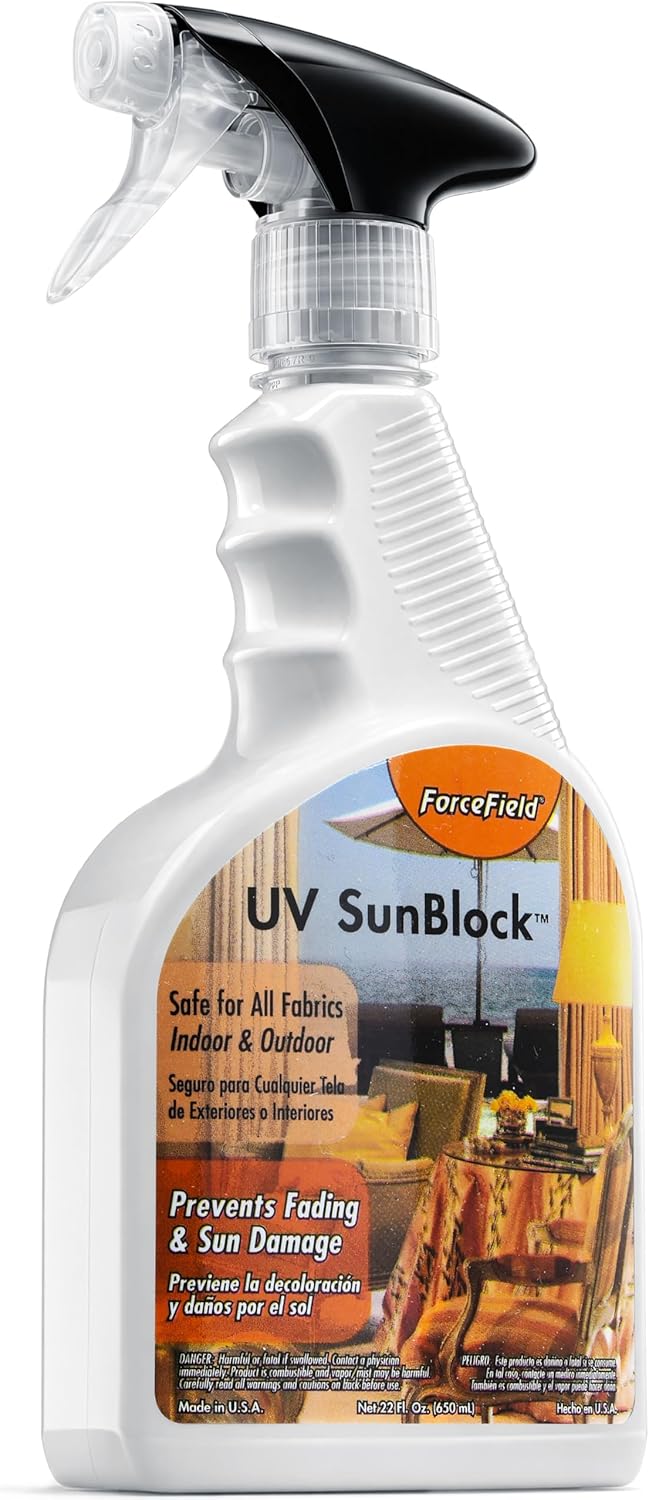
Guardsman Fabric Defense
This product has earned a loyal following among furniture retailers and professional cleaners for one reason:
Durability.
Once cured, it creates a tougher barrier than many consumer sprays.
The tradeoff is the application experience.
Ventilation matters.
The smell is stronger than water-based competitors, and this is not something I would casually spray around a toddler's playroom on a rainy afternoon.
Pros
- Long-lasting protection
- Excellent stain resistance
- Trusted by furniture professionals
Cons
- Stronger odor during application
- Longer drying time
- Ingredient profile may not appeal to shoppers specifically avoiding fluorochemicals.
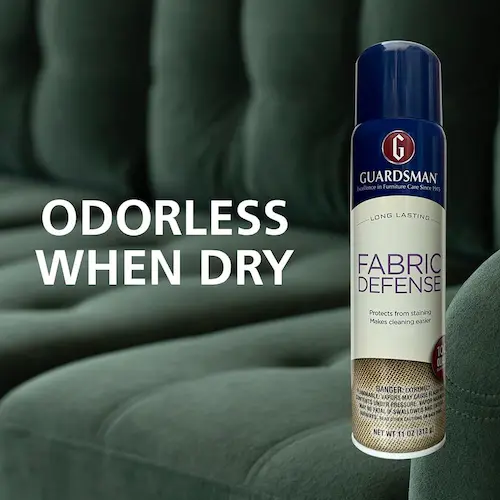
protectME Fabric Protector
This product is aimed directly at the low-toxicity market.
Parents buy it.
Pet owners buy it.
People who read ingredient labels buy it.
The formula is easy to apply, nearly odorless, and simple to live with.
Its biggest weakness is heavy grease protection.
Water spills are handled well. Pizza grease is a tougher assignment.
Pros
- PFAS-free positioning
- Low odor
- Easy pump-spray application
- Suitable for children and pets
Cons
- Less impressive with oil-based stains
- Lower coverage per bottle
- Premium pricing
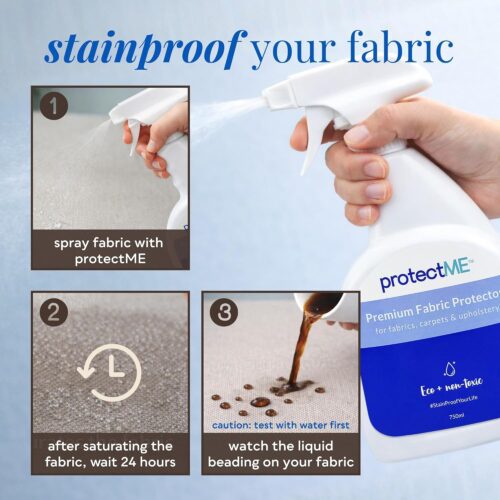
Solar Seal Anti-Fading Spray
This product solves a different problem.
Sunlight.
If your rug sits beside a south-facing window, you already know the damage UV can do. No spray stops fading completely. This one can slow it down.
Think of it as sunscreen for textiles.
Just do not expect it to replace a stain protector. It works best alongside one.
Pros
- Adds UV protection
- Low odor
- Safe for most fabrics
Cons
- Limited stain protection
- Requires pairing with a dedicated protector
- Best For: Sunrooms, large windows, and expensive rugs exposed to daily sunlight.
Zerorez Premium Fiber Protector
This is the set-it-and-forget-it option.
You cannot buy it in a store. You hire professionals, they apply it, and you move on with your life.
For homeowners who dislike DIY projects, there is value in that simplicity. The downside is obvious. You pay for convenience.
Professional application
Long-lasting results
Often backed by service guarantees
Low-odor formulation
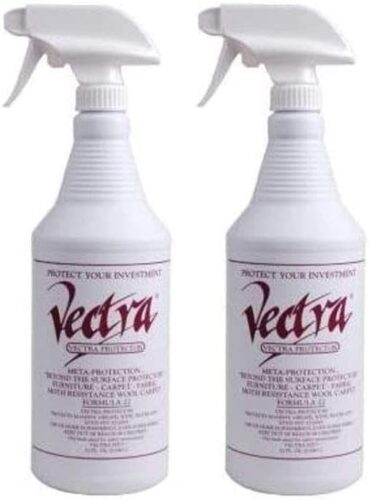
Vectra Carpet Protector
Ask enough carpet cleaners what they trust for maximum longevity, and this name appears repeatedly.
Vectra is built for durability. This is professional territory. Application equipment matters.
Ventilation matters.
The average homeowner probably does not need this level of treatment for a spare bedroom rug.
A busy household with expensive wall-to-wall carpet is a different conversation.
Pros:
Outstanding stain resistance
Excellent soil resistance
Long service life
Stronger application odor
Comparison Table
|
Product |
Type |
PFAS-Free |
Best For |
Typical Dry Time |
Coverage |
Certifications |
|
Scotchgard Carpet & Upholstery Protector |
Water-based |
Check the current SDS |
Budget synthetic carpet |
2-6 hrs |
Moderate |
None |
|
ForceField Fabric Protector |
Solvent carrier polymer blend |
Verify current formulation |
Wool, silk, heirloom rugs |
2-4 hrs |
High |
Varies by retailer |
|
Guardsman Fabric Defense |
Solvent-based |
No indication of PFAS-free status |
High-traffic homes |
4-6 hrs |
High |
None |
|
protectME Fabric Protector |
Water-based |
Yes |
Kids, pets, nurseries |
2-3 hrs |
Moderate |
Varies by formulation |
|
Solar Seal Anti-Fading Spray |
Water-based |
Yes |
UV protection |
1-2 hrs |
Moderate |
None |
|
Zerorez Premium Fiber Protector |
Professional proprietary formula |
Reported as non-toxic |
Whole-home service |
4-6 hrs |
Professional application |
Service-backed |
|
Vectra Carpet Protector |
Professional-grade |
Verify current SDS |
Maximum longevity |
6-8 hrs |
Professional application |
None |
One recommendation if you want the shortest possible answer:
- Best overall for most homes: ForceField.
- Best budget option: Scotchgard.
- Best for families focused on chemical exposure: protectME.
- Best for expensive wool rugs: ForceField again.
- Best professional option: Zerorez.
- Best for pure durability: Vectra.
Maintenance & Reapplication: How to Make Protection Last
Applying the spray is the easy part.
Keeping it working is where the value comes from. The good news is that modern protectors do not require much attention. The bad news is that many homeowners unknowingly wear them away months earlier than necessary.
Daily and Weekly Care
Vacuum More Than You Think You Need To
- Dirt is the enemy.
- No spills.
- Not pets.
- Not muddy shoes.
- Dirt.
Tiny particles of grit work their way into the pile and act like sandpaper every time someone walks across the room. Protection helps, but it cannot stop abrasion entirely. In busy areas, vacuum at least twice a week.
Hallways, stairs, entryways, and family rooms deserve the most attention.
If your vacuum has a rotating brush or beater bar and your carpet manufacturer allows its use, use it. Those brushes do a better job of lifting soil from protected fibers before it settles deeper into the pile.
The exception is delicate rugs.
On wool, silk, and antique pieces, aggressive brush rolls can do more harm than good.
Blot Spills Immediately
A protector buys you time.
It does not buy you permission to wait until tomorrow morning.
Use a clean white cloth or paper towel and blot gently from the outside of the spill toward the center.
Never rub.
Rubbing spreads the stain and pushes liquid deeper into the fibers.
I have watched people turn a small coffee spill into a carpet-cleaning appointment simply by scrubbing too hard.
Use Walk-Off Mats
This may be the least glamorous advice in this guide.
It is also one of the most effective.
A quality mat at every entrance can dramatically reduce the amount of dirt, sand, and moisture reaching your carpet in the first place.
The best stain is the one that never enters the room.
When Should You Reapply?
This is where manufacturers tend to become optimistic.
Real homes are harder on protectors than laboratory tests.
High-Traffic Areas
Hallways.
Entryways.
The route from the kitchen to the sofa.
These areas usually need fresh protection every 12 to 18 months.
Sometimes sooner if you have pets or a large family.
Moderate-Traffic Rooms
Bedrooms, home offices, and formal living rooms can often go two to three years before needing another treatment.
The fibers simply do not experience the same level of abuse.
Low-Traffic Rugs
Guest room rugs and decorative pieces may hold protection for three to five years.
Sometimes longer.
The less wear they experience, the longer the coating survives.
After Professional Cleaning
This catches people by surprise.
Professional hot water extraction removes dirt very effectively.
It also removes much of your protection.
If you pay for deep cleaning and skip reapplication afterward, you have essentially reset the clock to zero.
Most professional cleaners offer protector application immediately after cleaning for exactly this reason.
The Easiest Way to Know if It's Time
Ignore the calendar.
Test the carpet.
Place a few drops of water on an inconspicuous section.
Watch what happens.
If the water beads up and sits on the surface, the coating is still doing its job.
If the water disappears into the fibers within a few seconds, the protection is largely gone.
Time to reapply.
It takes less than a minute and tells you more than any manufacturer's timeline ever will.
What About Oil Resistance?
For dining rooms, breakfast areas, and kitchens, oil protection matters almost as much as water protection.
A tiny drop of mineral oil placed in an inconspicuous area can give you a rough idea of how the coating is performing.
If the oil sits on the surface briefly, protection remains.
If it disappears immediately, your oil repellency is probably fading.
Just remember to clean the test spot afterward.
One Final Warning
More is not better.
Overapplying protector is one of the most common DIY mistakes.
Too much product can leave the carpet feeling stiff, looking dull, or, in some cases, becoming slightly tacky and attracting more dirt rather than less.
If your carpet feels crunchy after drying, something went wrong.
A proper application should be invisible.
You should notice the results during the next spill, not every time you walk across the room.
FAQ
Conclusion
Carpet protector sprays are one of those products that seem optional until the first major spill happens.
A single bottle costs less than a professional stain removal visit and dramatically less than replacing carpet or an expensive area rug. That math is easy.
The bigger change in 2026 is that homeowners no longer have to choose between protection and safety. Modern water-based, PFAS-free formulas have closed much of the performance gap while avoiding many of the concerns associated with older chemistries.
The right product depends on your floors and your household.