

Castlery Dalton Storage Bed Review: Stylish Solution or Just Another Bed?
April 14, 2026
The Ultimate Guide to Lounging Sofas Find Your Perfect Deep-Seat Comfort & Style
May 5, 2026
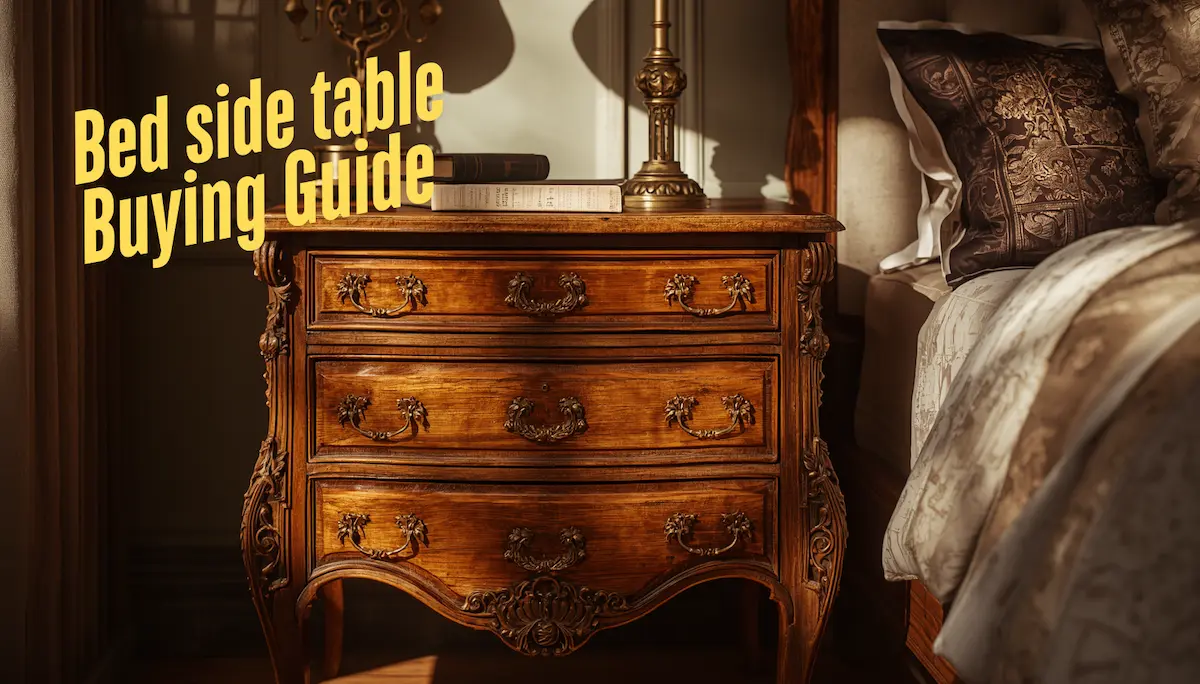
Walk into most bedrooms today, and you’ll see the same thing: clean lines, neutral colors, and furniture that could belong to anyone. It looks fine at first glance, but that’s the problem. It’s forgettable. Mass-produced bedside tables are built for speed and cost, not for character or longevity. They chip, loosen, and lose appeal faster than you expect. And no matter how much you try to style them, they rarely feel personal.
That’s the gap you’ve probably felt without fully naming it. Your space works, but it doesn’t say anything. It doesn’t reflect taste, history, or intention. Modern furniture promises convenience, but what it often delivers is uniformity. If you’re trying to create a bedroom that actually feels like yours, this approach quietly fails.
An antique bedside table changes that dynamic completely. Instead of filling space, it adds meaning. You’re not just placing an object next to your bed; you’re introducing craftsmanship from a time when furniture was built to last generations, not product cycles. Every detail, from the joinery to the finish, reflects patience and skill that’s largely absent in contemporary production.
There’s also something most people underestimate: presence. An antique piece doesn’t blend in; it anchors the room. It gives your space a focal point without trying too hard. Whether it’s a Victorian-era design with ornate carvings or a simpler early 20th-century table with clean, solid lines, it carries a quiet authority that modern furniture struggles to replicate.
And then there’s the story. You can’t fake history. An antique bedside table has lived somewhere, been used, cared for, maybe even restored. That layered past adds depth to your space in a way no brand-new item can. You’re not buying furniture, you’re continuing a narrative.
This guide is built to remove the guesswork from that process. Because let’s be clear, most people like the idea of antiques, but they hesitate when it comes to actually buying one. They don’t know how to tell what’s real, what’s overpriced, or what will hold up over time. That uncertainty is what keeps them stuck with safe, generic choices.
By the time you’re done here, that won’t be your problem. You’ll know how to spot authentic pieces, evaluate their condition without relying on a seller’s word, understand what actually drives value, and choose a bedside table that fits your space without clashing with it. More importantly, you’ll stop thinking like a casual buyer and start thinking like someone who knows exactly what they’re looking at.
If your goal is just to fill a gap next to your bed, stick with modern furniture. But if you want a piece that holds its ground, tells a story, and still works decades from now, then you’re in the right place.
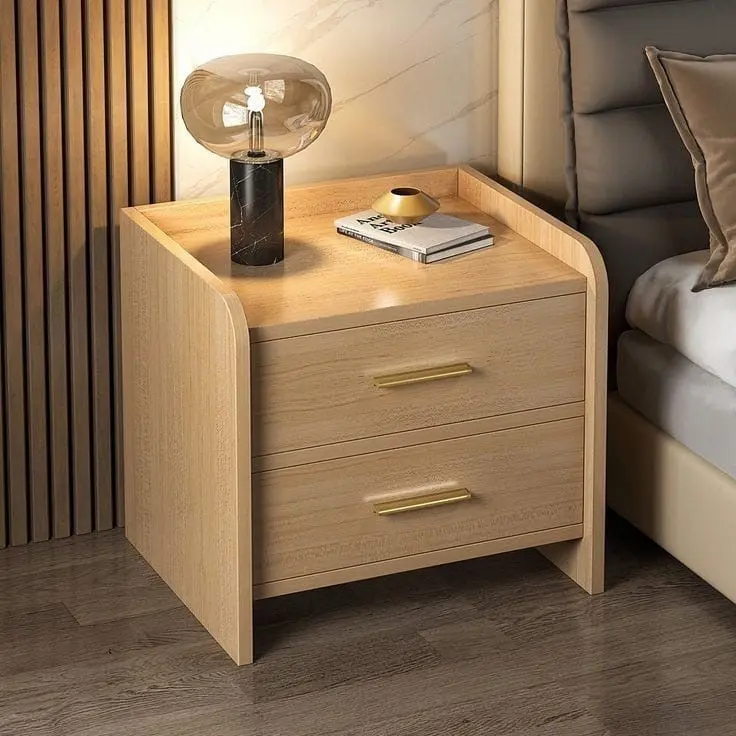
Bedside Table
Defining “Antique”: Age, Significance & Legalities
Most people think “antique” just means old. That’s lazy thinkingan d it’s exactly why buyers get misled.
An item doesn’t qualify as an antique just because it looks aged or has a distressed finish. In most markets, the baseline definition is clear: an object must be at least 100 years old to be officially classified as an antique. That’s not a stylistic label; it’s a time-based threshold used by collectors, dealers, and even customs authorities.
But age alone isn’t enough to make something valuable or desirable. A poorly made table from 1920 is still an antique, but it’s not automatically worth your money. What separates a true antique from just “old furniture” is a mix of craftsmanship, rarity, and historical or cultural relevance. The more a piece reflects the design, materials, and techniques of its era, the more meaningful, and often more valuable, it becomes.
Here’s where people get it wrong: they assume anything that looks traditional must be antique. That’s exactly how reproductions sell so easily.
There are also legal and commercial implications tied to the term. In many countries, labeling something as “antique” can affect import duties, insurance valuation, and resale classification. Mislabelingg, whether intentional or not, can distort pricing and mislead buyers. So if you’re relying purely on a seller’s description without understanding the criteria, you’re setting yourself up to overpay.
Antique vs. Vintage vs. Reproduction: Stop Confusing Them
If you don’t understand this distinction, you’re not ready to buy. Here’s the breakdown that actually matters:
|
Feature |
Antique |
Vintage |
Reproduction |
|
Age |
100+ years old |
Typically 20–99 years old |
Newly made (any age) |
|
Historical Value |
High – tied to a specific era and craftsmanship tradition |
Moderate – reflects a past style but is not historically significant |
None – designed to imitate older styles |
|
Craftsmanship |
Handcrafted, traditional joinery (e.g., dovetail joints, solid wood) |
A mix of handcrafted and early machine production |
Machine-made, often mass-produced |
|
Materials |
Solid, high-quality natural materials (hardwoods, original hardware) |
Varie can include both solid wood and early synthetic materials |
Of the ten cheaper woods, veneers, MDF, and modern finishes |
|
Wear & Patina |
Natural aging, uneven wear, authentic patina |
Some signs of age, but less depth than antiques |
Artificial distressing or a perfectly “new” finish |
|
Uniqueness |
One-of-a-kind or limited production |
Less rare, but still distinct from modern mass production |
Highly uniform, identical copies |
|
Price Range |
Typically higher due to rarity and authenticity |
Mid-range, depending on condition and demand |
Lower to mid-range, depending on brand and quality |
|
Example |
A handcrafted oak bedside table from the 1800s with original brass handles |
A mid-century bedside table from the 1960s |
A newly manufactured table designed to look Victorian |
What You Should Actually Look For
If you’re serious about buying,n ot just bro wsingstart paying attention to physical evidence, not labels.
- Joinery: Real antiques use techniques like hand-cut dovetail joints. Perfectly uniform joints often signal machine production.
- Wear patterns: Genuine aging is inconsistent. If every edge looks evenly “distressed,” it’s staged.
- Materials: Solid wood has weight and variation. Veneers and MDF feel lighter and more uniform.
- Hardware: Original handles and hinges often show oxidation and slight irregularities. Replacements look too clean or overly polished.
Key Antique Bedside Table Styles & Periods
If you can’t recognize styles, you’re guessing, and guessing is how people overpay for the wrong piece. Each period has distinct signals. Once you train your eye, most of the market becomes easier to filter.
Victorian (c. 1837–1901)
This is where excess becomes the point. Victorian bedside tables are unapologetically heavy, visually and physically.
- Key traits: Thick proportions, deep carvings, curved silhouettes
- Materials: Mahogany, walnut, rosewood
- Details: Turned legs, floral carvings, sometimes marble tops
- What to watch: Over-restoration. If it looks too polished, you may be looking at a stripped and refinished piece that lost character
Reality check: This style dominates a room. If your space is small or modern-minimal, it can look out of place fast.
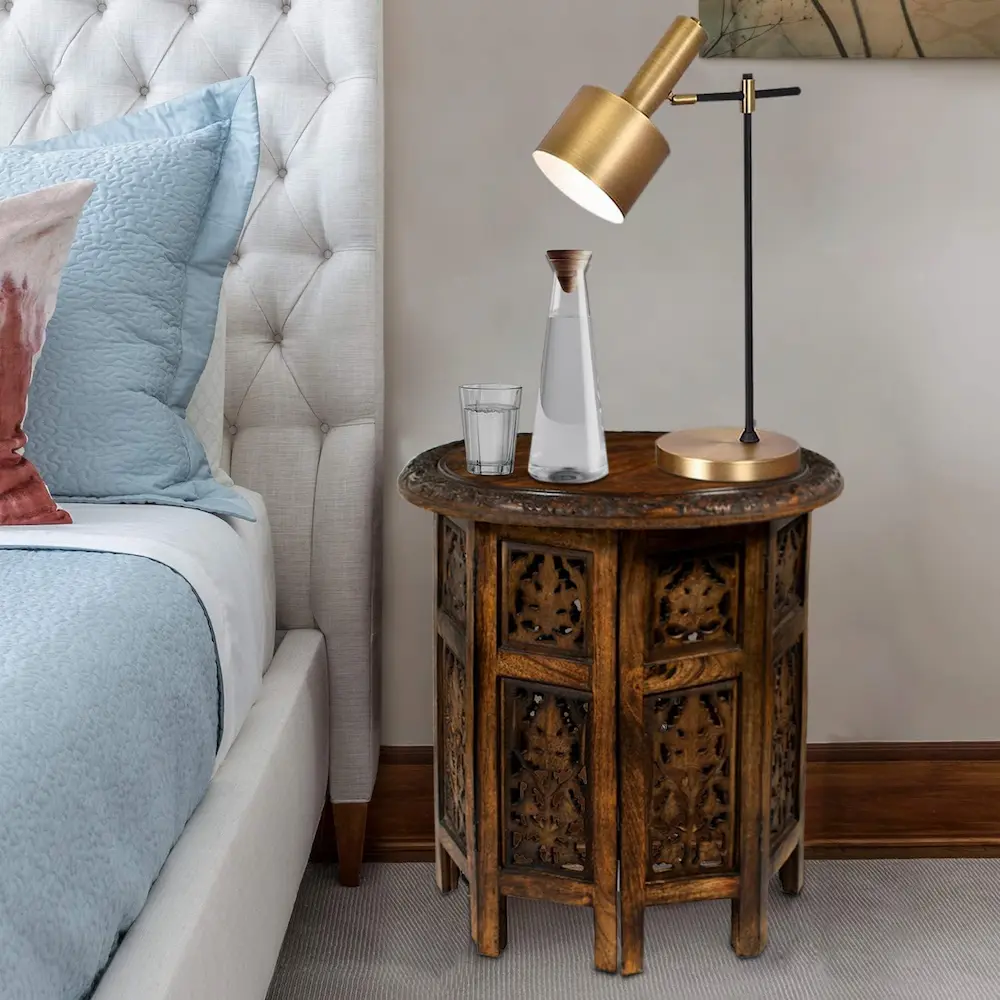
Art Deco (c. 1920–1939)
Art Deco is controlled, confident, sharp, symmetrical, and intentional.
- Key traits: Geometric shapes, bold symmetry, smooth surfaces
- Materials: Exotic veneers like burl walnut or amboyna
- Details: Chrome handles, bakelite accents, high-gloss finishes
- What to watch: Veneer damage. Repairs here are expensive and often poorly done refinished piece that lost character
Reality check: This is style over sentiment. If you’re drawn to clean luxury, this fits. If you want “warm and rustic,” it doesn’t.
Mid-Century Modern (c. 1945–1969)
This is where most people think they’re buying antiques, but often aren’t. A lot of what’s sold here is vintage, not antique.
- Key traits: Clean lines, functional design, minimal ornamentation
- Materials:Teak, walnut, oak
- Details: Tapered legs, flat fronts, subtle handles, or cut-outs
- What to watch: Mass-produced versions. Not all mid-century pieces are valuable
Reality check: Easy to integrate into modern homes, but don’t confuse popularity with rarity.
Rococo (c. 1730–1760)
Rococo is theatrical. It’s decorative for the sake of expression, not restraint.
- Key traits: Asymmetry, flowing curves, ornate detailing
- Materials:Lighter woods, often painted or gilded
- Details: Shell motifs, cabriole legs, intricate carvings
- What to watch: Reproductions. This style is heavily copied because it’s visually striking
Reality check: This isn’t subtle. If the rest of your room is neutral and modern, this piece will either elevate it or clash hard.
Federal (c. 1780–1820)
Understated and disciplined. Federal style is about proportion and refinement, not decoration.
- Key traits: Straight lines, balanced proportions
- Materials:Mahogany, cherry, satinwood
- Details: Inlay work (often contrasting wood), tapered legs
- What to watch: Fake inlays. Printed or glued designs are a red flag
Reality check: If you don’t appreciate subtlety, you’ll overlook this style, and that’s exactly why smart buyers find value here.
Other Notable Styles (Quick Breakdown)
- Georgian (1714–1830): Symmetry, classical influence, heavier than Federal but less ornate than Victorian
- French Provincial: Rustic elegance, curved legs, often distressed or painted finishes
- Shaker: Pure function. Zero ornament. Built for utility, not display b>Inlay work (often contrasting wood), tapered legs
- Colonial: Solid, practical, often handmade with local woods
Each of these styles reflects a different mindset, status, function, or regional identity. If you don’t align the piece with your taste and space, even a valuable table becomes a bad buy.
Differentiation Tool: Stop Guessing, Train Your Eye
If you’re serious, don’t rely on descriptions; use a system.
A simple way to sharpen your judgment is to build (or use) a visual identification checklist:
- Leg shape: Straight (Federal) vs. curved (Rococo/Victorian)
- Surface detail: Plain (Shaker) vs. carved (Victorian) vs. geometric (Art Deco)
- Materials & finish: Matte wood (Mid-Century) vs. glossy veneer (Art Deco)
- Symmetry: Balanced (Georgian/Federal) vs. asymmetrical (Rococo)
Turn this into a quick self-test whenever you evaluate a piece:
- If it’s heavy, carved, and dark → likely Victorian
- If it’s sleek and geometric → Art Deco
- If it’s minimal with tapered legs → Mid-Century
- If it’s curved and decorative → Rococo
No tool replaces experience, but this forces you to observe, not assume.
Common Materials & Construction Techniques
If you ignore materials and construction, you’re buying blind. Style can be faked. Age can be faked. Build quality is much harder to fake convincingly. This is where you separate real antiques from clever imitations.
Woods of the Past
The type of wood isn’t just about appearance; it tells you when, where, and how the piece was made.
Mahogany
Dense, rich, and expensive. Widely used in the 18th and 19th centuries for high-end furniture.
- Deep reddish-brown tone that darkens with age
- Smooth grain, often polished to a high finish
- Signal: If it feels light or looks overly uniform, it’s probably veneer or a modern substitute
Walnut
Versatile and widely used across periods.
- Fine, straight grain with occasional figuring
- Strong but easier to carve than oak
- Signal: Often seen in both structural and decorative elements
Oak
- Prominent grain, heavier feel
- Common in Victorian and Arts & Crafts furniture
- Signal: If the grain looks too perfect or repetitive, it may be engineered wood
Cherry
- Warm reddish tone that deepens over time
- Smooth, consistent grain
- Signal: Genuine cherry ages unevenly; perfect color consistency is suspicious
Pine
- Softer, lighter wood
- Often used for drawer bottoms, backs, or painted finishes
- Signal: Rarely used alone in high-end antiques
Exotic Woods & Veneers
- Burl walnut, rosewood, and satinwood are used for visual impact
- Thin layers applied over solid wood
- Signal: Real veneers are thin and aged naturally; modern ones are thicker and too flawless
Best Side table
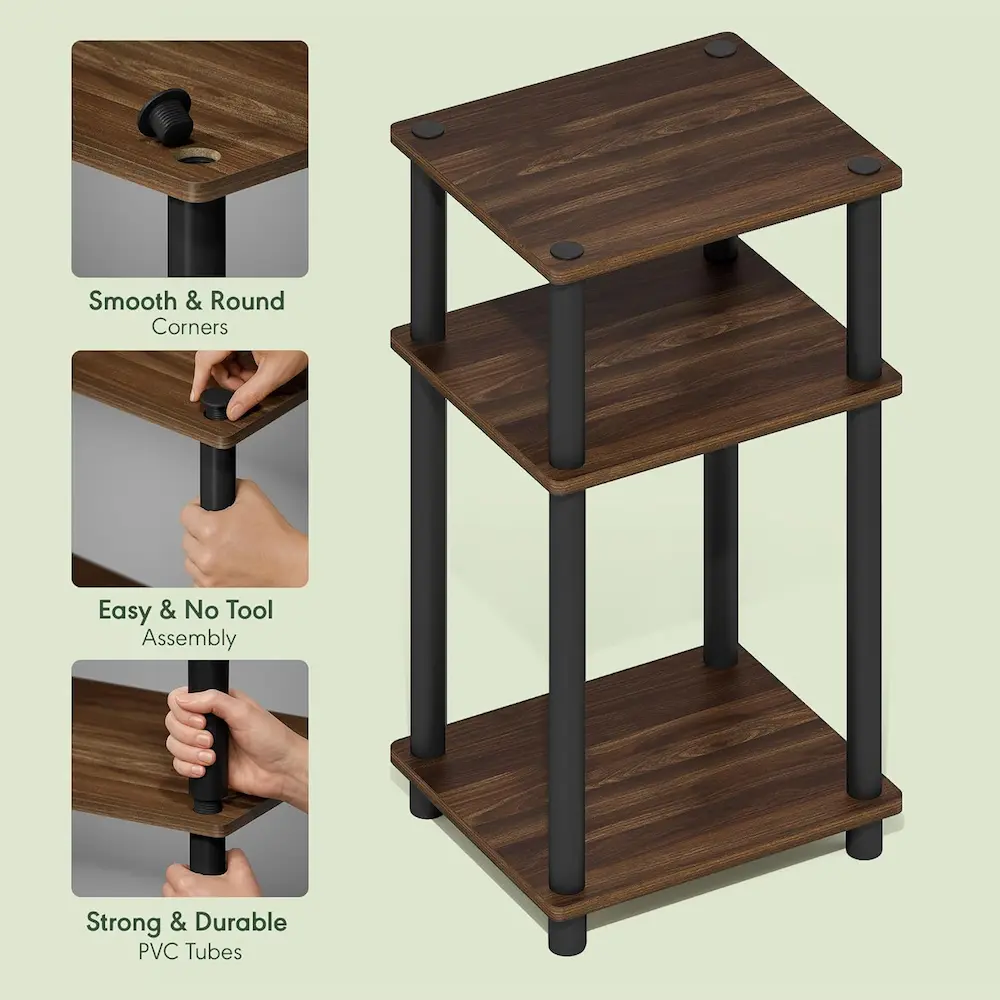
Struggling with Clutter in a Small Space?
If you’re living in a compact apartment or dealing with a tight bedroom layout, finding furniture that doesn’t overcrowd your space can feel impossible. Traditional side tables are often bulky, leaving you with less room to move and more visual clutter. And when storage is limited, everyday essentials like books, chargers, or bedside items quickly turn into a messy pile. A Simple Fix That Actually Works The Furinno JUST 3-Tier Side Table is designed specifically for small-space living. With its slim footprint and vertical storage design, it helps you organize more without taking up extra floor space.
Why This Side Table Stands Out
✔ Space-Saving, Modern Design
✔ 3-Tier Open Storage for Easy Access
✔ Surprisingly Strong for Its Size
✔ Tool-Free Assembly (Beginner Friendly)
✔ Eco-Friendly & Durable Build
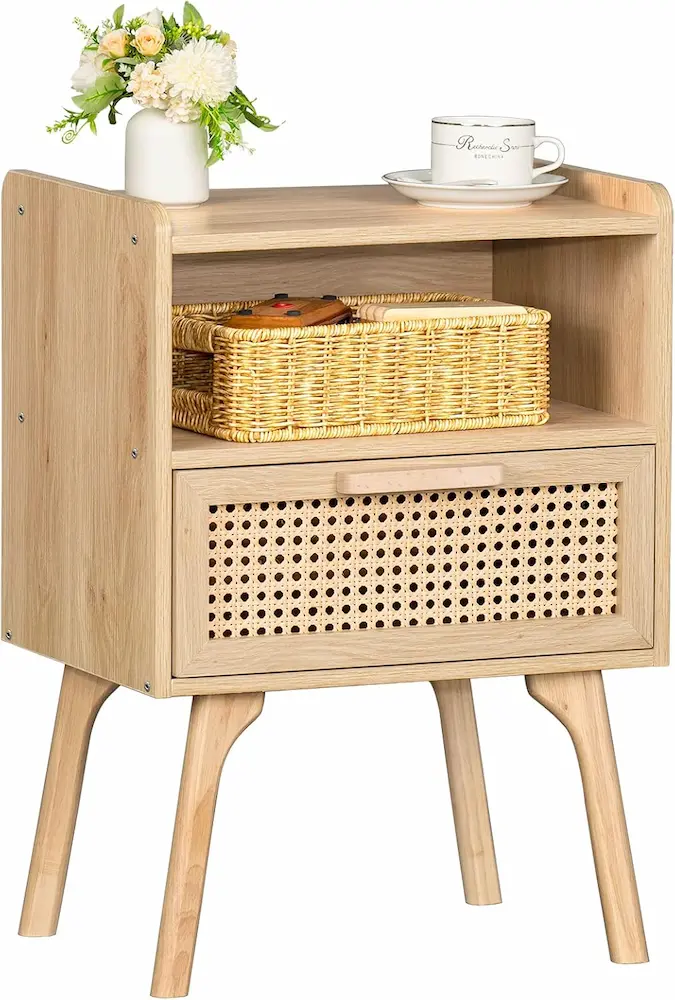
Tired of Boring, Bulky Nightstands?
Most nightstands either look too plain… or take up too much space. If you’re trying to create a cozy, aesthetic bedroom (especially in a small room), bulky furniture can instantly ruin the vibe. Even worse? Closed, stuffy storage that traps dust and makes your essentials harder to access.
A Stylish Upgrade That Solves Both Problems
Why This Nightstand is a Smart Pick
✔ Boho Rattan Design That Instantly Upgrades Your Space
✔ Smart Storage: Drawer + Open Shelf Combo
✔ Breathable Rattan = Less Dust Build-Up
✔ Compact but Functional
✔ Strong, Durable Build (Not Just Looks)
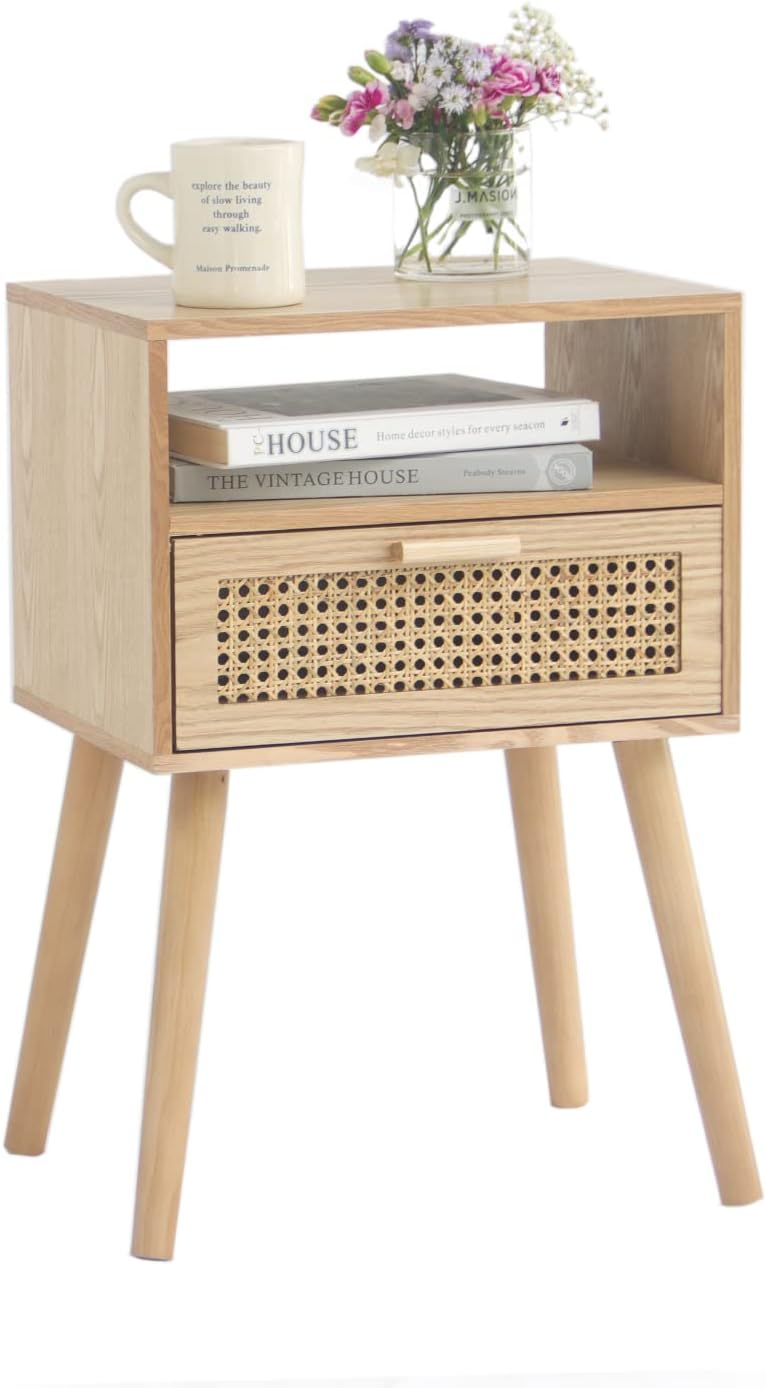
MaxSmeo Modern Rattan Nightstand Review: A Perfect Blend of Style, Storage & Function
Not Enough Storage… or Just Bad Design?
A lot of nightstands either look good but lack storage, or offer storage but ruin your room’s aesthetic with bulky, outdated designs.
If you’re dealing with a small bedroom or limited space, this becomes even more frustrating because every inch matters.
A Smarter, More Stylish Solution
The MaxSmeo Modern Rattan Nightstand is designed to solve both problems at once. It combines multi-level storage with a modern farmhouse look, helping you stay organized without sacrificing style.
A Stylish Upgrade That Solves Both Problems
Why This Nightstand is a Smart Pick
✔ Unique 2-Tier + Top Shelf Design
✔ Stylish Mid-Century + Farmhouse Appeal
✔ Compact & Multi-Purpose
✔ Compact but Functional
✔ Easy Assembly
Authentic Construction Methods
This is where most buyers fail; they don’t look closely enough.
Dovetail Joints (Your First Reality Check)
Dovetail joints connect drawer sides. They’re one of the clearest indicators of age.
- Hand-cut dovetails:
- Uneven spacing
- Slight size variation
- Visible craftsmanship
- Machine-cut dovetails:
- Perfectly uniform
- Too clean, too consistent
If it looks mechanically perfect, it probably is,and that means newer.
Mortise & Tenon Joints
The traditional method is used to connect frames and legs.
- One piece (tenon) fits into a carved slot (mortise)
- Extremely strong, designed to last decades or centuries
What to watch:
Loose joints can indicate wear, but perfectly tight joints on a “200-year-old” piece should raise questions.
Pegged Construction
- Wooden pegs are used instead of metal fasteners
- Common in older furniture, where nails and screws were limited
Signal:
If you see round wooden pegs securing joints, you’re likely looking at older craftsmanship.
Screws & Nails
Small detail, big giveaway.
- Early screws:
- Irregular threads
- Slightly off-center heads
- Hand-filed appearance
- Modern screws:
- Perfect symmetry
- Machine precision
Blunt truth: If every screw looks identical, the piece isn’t as old as claimed.
Secondary Woods
Antique furniture often uses different woods internally.
- Drawer bottoms, backs, and hidden parts made from cheaper wood (like pine)
- Exterior uses premium wood
Why it matters:
Modern reproductions often skip this logic and use uniform materials throughout.
Drawer Construction (Underrated but Critical)
- Older drawers use wooden runners and guides
- Movement is rarely perfectly smooth; it has resistance
- Hand-cut joints visible at the corners
Red flag:
Metal drawer slides = modern addition or reproduction.
Hardware (Where Most Buyers Get Fooled)
Handles and pulls are often replaced, sometimes legitimately, sometimes to fake age.
- Original hardware:
- Brass, bronze, or wood
- Shows natural wear (not artificial distressing)
- Slight irregularities
- Replacements:
- Too shiny or too “perfectly aged.”
- Screws don’t match the rest of the piece.
Reality check: One replaced handle isn’t a deal-breaker. But if all hardware looks new, question the entire piece.
The Art of Inspection: Assessing Condition & Quality
This is where most buyers get exposed. They rely on appearance and ignore structure. That’s how you end up with something that looks great in photos but fails in reality.
If you’re not inspecting properly, you’re not buying, you’re gambling.
Structural Integrity (Non-Negotiable)
Start here. If the structure is compromised, nothing else matters.
- Stability test: Lightly shake the table.
If it wobbles, you’re dealing with loose joints or frame weakness. That’s not “character”, it’s a problem. - Legs & frame:
Look for cracks, splits, or previous breaks. Pay attention to joints where legs meet the body; t; is is where stress shows up first. - Tabletop:
Check for warping (uneven surface), deep gouges, or veneer lifting.
Minor marks are fine. Structural distortion isn’t. - Drawers:
Open and close them fully.- Do they glide, or do they stick?
- Do they sit flush when closed?
- Are the runners intact?
If drawers feel loose or misaligned, you’re looking at wear or bad repairs.
Surface Condition (Don’t Confuse Damage with Character)
- Original vs. refinished finish:
Original finishes show uneven aging and depth.
Refinished surfaces often look flat, overly smooth, or too consistent. - Scratches, dents, dings:
Minor wear = expected and acceptable.
Deep cuts or heavy damage = value drop. - Water rings & heat marks:
Surface-level marks can sometimes be treated.
Deep stains that penetrate the wood are harder to fix and often permanent.
Hard truth: Not all “patina” is desirable. Some sellers use that word to justify neglect.
Woodworm & Pests (Where You Can Get Burned)
You need to know the difference between historic damage and active infestation.
- Woodworm holes:
Small, round pinholes across the surface - Frass (powder residue):
This is the real warning sign. Fresh, powdery dust means the infestation may still be active.e
Reality check:
Old holes are common and often harmless. Active pests are not. If you see fresh frass, walk away or negotiate aggressively.
Hardware Originality (Small Detail, Big Impact)
- Check if handles, hinges, and locks match the style and age of the piece
- Look for:
- Extra or unused screw holes
- Mismatched finishes or patina
- Modern screws on old hardware
Blunt truth: Replaced hardware isn’t rare,but it affects value. And if everything has been swapped, question the authenticity of the whole piece.
Repairs & Restorations (This Is Where Value Shifts)
Every antique has lived a life. Repairs aren’t the issue; bad repairs are.
- Signs to look for:
- Mismatched wood tones
- Visible glue lines
- Modern nails or screws in old joints
- Professional restoration:
Clean, subtle, respects the original structure - Amateur repair:
Obvious, messy, and often weakens the piece further
Reality check:
A well-restored piece can still be valuable. A poorly repaired one becomes a liability.
What “Good Condition for Its Age” Actually Means
Stop expecting perfection. That’s unrealistic, and ironically, perfection is often a red flag.
A genuine antique in good condition will have:
- Minor surface wear
- Slight inconsistencies
- Signs of use that align with its age
It should not have:
- Structural instability
- Severe warping or splitting
- Heavy, careless repairs
If it looks brand new, question it. If it’s falling apart, avoid it.
Essential Inspection Tools (Don’t Show Up Unprepared)
If you’re serious, bring basic tools:
- Magnifying glass: Check joinery, cracks, and surface details
- Small flashlight: Inspect undersides, अंदर corners, and drawer interiors
- Soft cloth: Wipe dust to see the real surface underneath
Authenticity Check: Spotting Fakes, Reproductions & Restorations
Most buyers don’t get tricked because sellers are brilliant,they get tricked because they’re careless. If you rely on labels, descriptions, or “it looks old,” you’re exactly the kind of buyer the market exploits.
Authenticity isn’t about one sign. It’s about consistency across multiple details. When something feels off, it usually is.
Signs of Genuine Age (What Real Looks Like)
Real antiques don’t age evenly, a nd that’s your advantage if you know what to look for.
- Natural patina
This isn’t just “shiny old wood.” It’s a depth that builds over decades through handling, exposure, and oxidation.
If the surface looks flat or freshly coated, that patina is gone,or never existed. - Uneven wear patterns
Edges, corners, drawer fronts, and feet should show more wear than protected areas.
If everything looks evenly “distressed,” it’s staged. - Compacted dust in crevices
Old dust isn’t fluffy,it’s dark, settled, and embedded in hard-to-reach areas.
You won’t fake that convincingly with a quick wipe or spray. - Irregular joinery
Hand-cut joints show slight variation. They’re not sloppy,they’re human.
Mechanical perfection is a modern trait. - Consistent aging across components
Wood, hardware, and interior elements should all reflect the same timeline.
If the body looks 100 years old but the handles look 5, something’s been swapped. - Period-correct materials
The wood, finish, and construction methods must match the claimed era.
If they don’t align, the story falls apart.
Red Flags for Reproductions & Fakes
This is where you stop being polite and start being skeptical.
- Too perfect condition
A 100-year-old table with zero wear isn’t rare; it’s suspicious. - Machine-cut uniformity
Perfect dovetails, identical cuts, flawless symmetry, this is factory work. - Modern hardware & fasteners
Bright screws, identical threads, or hardware that doesn’t match the era
→ immediate credibility loss. - Clean interiors
Drawers and runners should show wear.
If the inside looks newer than the outside, something’s off. - Fresh-looking labels or stamps
Stickers that look recently printed or perfectly intact don’t belong on genuinely old pieces. - Artificial distressing
Fake wear looks repetitive and intentional, scratches in predictable patterns, and edges “aged” too evenly. - Wrong materials for the period
MDF cores, modern plywood, or finishes inconsistent with the era are dead giveaways.
Blunt truth: Most reproductions don’t fail in one obvious way; they fail in small inconsistencies that add up.
Identifying Heavy Restorations (The Gray Zone)
Not all restored pieces are bad, but heavy restoration changes what you’re actually buying.
- Replaced wood sections
New panels, legs, or drawer parts that don’t match the original grain or tone - Over-refinishing
Thick, modern coatings that erase the original surface character - Visible glue lines or modern fasteners
Especially in structural areas, these weren’t part of the original construction. - Swapped components
New handles, hinges, or even entire drawers replacing original ones
What matters:
The more original material remains, the more authentic and valuable the piece is.
What Experts Actually Focus On
Experienced appraisers don’t look for a single “proof.” They look for alignment:
- Does the construction method match the era?
- Do the materials make sense for that period and region?
- Is the wear pattern believable, or does it feel staged?
- Are all elements aging together, or at different speeds?
If one element contradicts the others, the piece becomes questionable.
The One Rule You Can’t Ignore
Originality beats appearance.
A slightly worn, fully original bedside table is more valuable than a perfectly refinished one that’s lost its history.
Understanding Patina: The Soul of Antique Furniture
Most buyers think patina is just “that aged look.” That misunderstanding costs them money. Patina isn’t decoration, it’s evidence. Strip it away, and you strip away the very thing that proves the piece is real.
What is Patina?
Patina is the result of time doing its work without interruption.
- It forms as wood, metal, and finishes react to light, air, moisture, and human touch.h
- It builds slowly, over decades, not months.
- It creates a surface that feels smooth, layered, and visually deep, not flat.
This isn’t something a workshop can replicate convincingly. They can imitate the look, but not the depth or authenticity behind it.
Why Patina Actually Matters
If you treat patina as optional, you don’t understand antiques yet.
- Authenticity
It’s one of the clearest signs the piece hasn’t been aggressively altered. Real age leaves a trace, and patina is that trace. - Character
No two pieces develop in the same way. That variation is what gives antiques their individuality. - Protection
In many cases, patina acts as a natural barrier, helping preserve the wood beneath. - Value
Collectors don’t chase perfection; they chase originality.
Remove the patina, and you’ve just reduced both historical and financial value.
Natural vs. Artificial Patina (Where Most Buyers Get Fooled)
This is where you either see clearly or get manipulated.
Natural Patina
- Uneven in tone and texture
- Darkens in high-contact areas (edges, handles, drawer fronts)
- Has depth; you see layers, not just surface color
- Feels smooth from years of handling
Artificial Patina
- Too uniform or evenly applied
- Sits on the surface instead of blending into it
- Often looks dull, streaky, or forced
- Lacks variation in high-use areas
Reality check:
If it looks “perfectly aged,” it’s probably fake. Real aging is inconsistent.
The Biggest Mistake: Over-Restoration
This is where people destroy value while thinking they’re improving the piece.
- Stripping the original finish removes decades of natural aging
- Heavy sanding erases surface history
- Modern coatings flatten the depth that took years to develop
Once that’s done, you don’t “get it back.” You’ve turned an antique into something closer to a replica with old wood.
How to Protect Patina (Without Ruining It)
You don’t need complex methods; you need restraint.
- Avoid harsh chemicals or aggressive cleaning
- Use a soft, dry, or slightly damp cloth for regular care
- Apply wax sparingly (if needed), not thick modern polishes
- Keep it out of extreme sunlight or humidity shifts
The goal isn’t to make it look new. The goal is to keep it honest.
Final Reality Check
Most people are conditioned to prefer “clean” and “perfect.” That instinct works against you here.
In antiques:
- Perfect often means altered
- Shiny often means refinished
- Uniform often means fake
Patina is the opposite of all that, a nd that’s exactly why it matters.
If you can’t recognize and respect it, you’ll end up paying for something that looks good today but has already lost what made it valuable in the first place.
Valuation & Pricing: What Actually Determines an Antique’s Worth
Most buyers fixate on price tags instead of understanding why a piece is priced that way. That’s backward. If you don’t understand value drivers, you’ll either overpay for average pieces or walk past underpriced ones.
Price isn’t random in the antique market,it’s a layered calculation. The problem is, most people only see the surface.
The Core Factors That Drive Value
Think of value as a combination of scarcity, integrity, and demand. Miss one, and the price drops, sometimes hard.
1. Rarity (Supply vs. Reality)
- How many similar pieces exist?
- Is it a common design or something rarely seen?
A “nice-looking” bedside table isn’t rare. A well-preserved, stylistically pure piece from a specific period might be.
Hard truth: Most antiques on the market are not rare. Sellers rely on buyers assuming they are.
2. Condition (Where Value Gets Destroyed Fast)
Condition isn’t binary, it’s a spectrum:
- Pristine: Extremely rare, often museum-level
- Excellent: Minor wear, fully functional
- Good: Visible wear, structurally sound
- Fair: Needs repair, functional issues
- As-is: Structural or aesthetic problems
Here’s where people make bad decisions: they chase “cheap” pieces without calculating repair costs.
Expert reality:
A low purchase price + high restoration cost = a bad deal.
If you don’t price in repairs upfront, you’re not evaluating,you’re guessing.
3. Provenance (The Multiplier Most People Ignore)
- Documented ownership history
- Connection to a notable event
- Verified origin (maker, region, period)
Good provenance doesn’t just increase value,it validates authenticity.
But don’t be naive:
If there’s no documentation, it’s just a story. And stories don’t justify higher prices.
4. Style & Period (Market Demand Matters More Than You Think)
Value isn’t just about age,it’s about what people want right now.
- Some periods surge in demand (e.g., clean, modern-compatible styles)
- Others remain undervalued despite their historical importance
Reality check:
You’re not buying in a vacuum. You’re buying in a market driven by trends.
5. Material & Craftsmanship (The Real Backbone)
- Solid hardwoods vs. veneers
- Handcrafted joinery vs. machine production
- Level of detail in carving or inlay
This is where long-term value sits. Trends change, quality doesn’t.
6. Maker or Workshop (Name Carries Weight)
- Recognized craftsmen or workshops command higher prices
- Signed or stamped pieces carry more credibility
But here’s the catch:
Not every unsigned piece is worthless, and not every “named” piece is worth the premium.
7. Functionality (Overlooked but Critical)
- Do drawers work properly?
- Is the structure stable?
- Can it actually be used today?
A beautiful piece that doesn’t function becomes decorative clutter,and that limits its value.
How to Judge Fair Pricing (Without Guessing)
If you’re not researching, you’re overpaying. It’s that simple.
- Compare auction results, not just asking prices
- Check reputable dealers, not random listings
- Look at similar pieces, not “kind of similar” ones
Key mistake:
People compare a high-end piece to a lower-quality one and assume the price gap is unfair. It’s not, you’re just comparing the wrong things.
Negotiation (Stop Being Passive)
Most antique pricing has room to move, especially in person.
- Ask direct questions about the condition and history
- Point out flaws (politely, but clearly)
- Use your research as leverage
But don’t push blindly:
If a piece is genuinely high-quality and fairly priced, aggressive negotiation just makes you look uninformed.
Knowing When to Walk Away
This is where discipline shows.
Walk if:
- The story doesn’t match the physical evidence
- Restoration costs are unclear or high
- The seller avoids direct answers
- You feel rushed into a decision
Blunt truth:
There will always be another piece. Overpaying out of urgency is one of the fastest ways to lose money in this market.
The Reality Most Buyers Avoid
Value isn’t about what you like, it’s about what holds up under scrutiny.
- A cheap piece with problems is expensive long-term
- A higher-priced, well-preserved piece is often the smarter buy
- Emotional decisions are the most expensive ones you’ll make here
If you don’t understand what drives value, you’re not investing, you’re just spending.
Where to Buy Antique Bedside Tables
Most people approach this backward; they pick a platform first, then hope to find something good. That’s lazy. The source you choose directly affects price, risk, and authenticity. If you don’t adjust your strategy based on where you’re buying, you’ll either overpay or get burned.
Reputable Antique Dealers (Online & Local)
This is the safest entry point, but you pay for that safety.
- Pros:
- Curated inventory (someone already filtered out junk)
- Authentication and expertise
- Often restored to usable condition
- Sometimes offer guarantees or return policies
- Cons:
- Higher prices (you’re paying for their knowledge and overhead)
- Less negotiation room
Well-known platforms like 1stDibs, Chairish, and Ruby Lane fall into this category.
Reality check:
If you don’t trust your own judgment yet, this is where you should start. But don’t pretend you’re getting a bargain, you’re paying retail.
Auction Houses
This is where things get interesting and risky.
- Pros:
- Access to rare or high-quality pieces
- Transparent bidding process
- Often includes provenance or catalog descriptions
- Cons:
- Buyer’s premium (extra fees on top of hammer price)
- Sold as-is (no safety net)
- Requires fast decision-making under pressure
Hard truth:
Auctions reward preparation, not impulse. If you show up without knowing values, you’ll overthink or hesitate and miss out.
Estate Sales & Flea Markets
This is where beginners think they’ll “find a hidden gem.” Most don’t.
- Pros:
- Lower prices
- Potential for undervalued pieces
- Direct negotiation
- Cons:
- No guarantees
- The condition can be poor or unclear
- Requires strong knowledge to spot value
Reality check:
Yes, deals exist, but so does junk. If you can’t assess condition and authenticity properly, you’re just buying cheap problems.
Online Marketplaces (Specialized vs. General)
Specialized Platforms
- 1stDibs
- Chairish
- Ruby Lane
These are curated. Higher quality, higher pricing, lower risk.
General Platforms
- eBay
- Etsy
- Facebook Marketplace
These are open markets. Anyone can list anything.
- Pros:
- Better chances of deals
- Wide selection
- Cons:
- Inconsistent quality
- Higher risk of misrepresentation
- Requires serious due diligence
Buying Online Without Getting Burned
If you’re not asking the right questions, you’re the easy buyer.
- Request multiple high-resolution photos (front, back, underside, drawers, joints)
- Ask for a video walkthrough; this exposes flaws that photos hide
- Get a clear condition report (don’t accept vague descriptions like “good vintage condition”)
- Confirm dimensions, materials, and any restorations
- Factor in shipping costs and risk of damage
Blunt truth:
If a seller avoids details or delays responses, walk away. That’s not inconvenient, it’s a signal.
The Art of the Antique Hunt (What Actually Works)
You don’t “find” a great piece by luck. You filter aggressively.
- Define your style first (don’t browse aimlessly)
- Set a realistic budget (including restoration if needed)
- Be patient (rushed buyers overpay)
- Ask direct questions about history, repairs, and condition
Most importantly:
Stop chasing “a good deal” and start chasing a good piece. Those are not the same thing.
Final Reality Check
Each buying channel comes with a trade-off:
- Dealers = safer, expensive
- Auctions = opportunity, risk
- Flea markets = cheap, uncertain
- Online marketplaces = wide access, high variance
If you don’t match your strategy to the platform, you’ll make predictable mistakes.
Caring for Your Antique Bedside Table: Maintenance & Preservation
Most damage to antiques doesn’t come from age; it comes from owners who either ignore them or “over-care” for them. Both extremes destroy value. Preservation is about control, not constant intervention.
If you treat an antique like modern furniture, you’ll slowly erase what makes it valuable.
Essential Cleaning & Polishing (Less is More)
- Dust regularly using a soft, lint-free cloth
→ The goal is removal, not polishing every time - Occasional polishing only with wax-based, silicone-free products
→ Wax protects; silicone creates long-term buildup that’s difficult to reverse - Avoid completely:
- Harsh chemical cleaners
- Alcohol-based sprays
- Abrasive pads or scrubbing tools
Hard truth:
If a cleaner promises “instant shine,” it’s usually damaging long-term integrity.
Environmental Protection (Where Most People Fail Without Noticing)
Wood is alive in the sense that it reacts constantly to its environment. Ignore that, and you get warping, cracking, or finish failure.
- Humidity (ideal: 40–60%)
Too dry → cracks and shrinkage
Too humid → swelling and joint stress - Sunlight exposure
Direct sunlight fades finishes unevenly and dries out wood fibers over time. - Temperature stability
Sudden shifts weaken structure and joints over time - Placement matters:
Keep away from radiators, heaters, and AC vents
Reality check:
Most people damage antiques just by placing them in “convenient” spots in the room.
Preventing Everyday Damage (Small Habits, Big Impact)
- Use coasters under drinks; moisture rings are permanent if ignored
- Add felt pads under lamps or objects to avoid surface pressure marks
- Never place heavy loads on weak points like drawer edges or unsupported corners
- When moving furniture: lift it, don’t drag it
Dragging is one of the fastest ways to loosen historic joints.
Minor Repairs & Touch-Ups (Know Your Limits)
Minwax repair markers or wood putty can handle small cosmetic issues, but only if used carefully.
- DIY is acceptable for:
- Small scratches
- Minor surface marks
- Light color blending
- Stop immediately and call a professional for:
- Veneer lifting or separation
- Structural instability
- Frame or leg damage
- Full refinishing attempts
Blunt truth:
Most DIY “repairs” on antiques don’t restore value; they reduce it.
Restoration vs. Preservation Costs (What People Underestimate)
Here’s where buyers miscalculate badly. The purchase price is only part of the equation.
Typical scenarios:
- Minor scratch repair: Low cost (DIY possible)
- Surface cleaning & wax restoration: Moderate cost (often professionally recommended for valuable pieces)
- Veneer repair: Higher cost, requires skill
- Structural restoration (loose joints, leg repair): Expensive and specialist-level work
- Full refinishing: High cost + often reduces collectible value if overdone
Reality check:
A “cheap antique” can become expensive very quickly once proper restoration is factored in.
What Furniture Conservators Actually Emphasize
Experts in conservation consistently prioritize three principles:
- Stability over appearance
- Original material over perfection
- Minimal intervention over full restoration
The goal is not to make the piece look new; it’s to ensure it survives another hundred years without losing its identity.
Integrating Antiques into Modern Decor
This is where most people either get it right or make their space look confused. The mistake isn’t using antiques. The mistake is using them without intention. A Victorian bedside table in a modern room can look stunning or completely out of place, depending on how it’s handled.
The goal isn’t “matching.” It’s controlled contrast with purpose.
Harmonizing Styles (Stop Trying to Match Everything)
Good interiors don’t look identical; they look balanced.
- Mixing periods intentionally
A carved Victorian bedside table next to a clean, minimalist bed works when the contrast is deliberate. The antique becomes the focal point, not background noise. - Color coordination (quiet control, not matching)
You don’t need identical tones. You need shared visual logic.
Example: warm wood tones in the table paired with warm undertones in textiles or flooring. - Texture contrast (this is where design actually happens)
Pair:- Rustic wood + smooth glass
- Ornate carving + flat matte walls
- Brass hardware + black metal lighting
If everything feels the same, the room becomes flat. If everything fights, it becomes chaotic.
Achieving Balance (Most People Overdo It)
There are two extremes:
- One statement piece (safe, controlled, effective)
One antique bedside table in an otherwise modern room draws focus cleanly. - Over-collecting antiques (common mistake)
Too many historical pieces turn a room into a theme set, not a living space.
Blunt truth:
If your room starts feeling like a museum, you’ve crossed the line.
Functionality in a Modern Context (Where Practicality Wins)
Aesthetic value means nothing if the piece doesn’t function in your daily life.
- Check surface space for essentials (lamp, phone, books)
- Ensure drawer usability for modern storage needs
- Consider discreet upgrades:
- Hidden charging cables
- Small, removable power strips placed behind or under the table
Reality check:
An antique that can’t support modern use ends up as decoration, not furniture.
The Measurement Rule (People Skip This and Regret It)
You don’t eyeball antiques. You measure them properly.
- Height must align with your bed for usability
- Depth must fit the walking clearance in small rooms
- Surface area must support real daily use, not just styling
Expert-level truth:
A visually perfect piece becomes useless if it disrupts movement or function in the room.
Beyond Just a Table: What You’re Actually Buying
When done right, an antique bedside table isn’t just furniture, it’s a historical anchor inside a modern environment.
You’re combining:
- Craftsmanship from another era
- Modern functionality
- Personal aesthetic control
That combination only works when you treat the piece as a design decision, not a decorative afterthought.
Style Guidance Tool (How to Think Before You Buy)
If you want clarity before committing, use a simple internal filter:
- Do I want this piece to blend in or stand out?
- Is my room minimal, layered, or eclectic?
- Am I prioritizing function, aesthetics, or both equally?
Your answers determine the style you should choose, not trends, not sellers.
Conclusion: Your Journey to a Timeless Treasure
You’ve now seen what most buyers never bother to learn before spending money. And that gap is exactly why the antique market rewards knowledge over enthusiasm.
Let’s be clear about what you’ve actually learned:
- Identification: You can now distinguish styles, periods, materials, and construction methods instead of relying on vague seller descriptions.
- Valuation: You understand that price is driven by rarity, condition, provenance, craftsmanship, and demand,n ot emotion or appearance.
- Condition assessment: You know how to inspect structure, surface integrity, restorations, and hidden damage before making a decision.
- Authenticity: You can spot inconsistencies that reveal reproductions, heavy restorations, or artificially aged pieces.
- Care & preservation: You now understand that maintenance is about protecting history, not “upgrading” it.
- Integration: You can place an antique into a modern space without destroying its character,o r your room’s balance.
That combination changes your position entirely. You’re no longer guessing in a market designed to confuse casual buyers.
Frequently Asked Questions About Antique Bedside Tables