

The Ultimate Guide to Pet-Friendly Sofas: Reviews, Materials & Maintenance for Every Pet Owner
May 12, 2026
Pet-Friendly Upholstery Buying Guide Durable & Easy-Clean Fabrics for a Happy Home
May 19, 2026
If you are looking for the ultimate loveseat sleeper sofa guide, this article will help you compare..Modern living often comes with a familiar challenge: limited space and unlimited needs. You want a home that feels open and comfortable, yet still ready to welcome guests when needed. That balance is not always easy to achieve, especially in apartments where every square foot matters.
The usual solutions, air mattresses, fold-out beds, or squeezing guests onto a regular sofa, quickly become inconvenient and uncomfortable. Over time, they stop feeling like solutions and start feeling like compromises.
This is where a loveseat sleeper changes the equation. It is more than just compact furniture; it is a practical design choice that turns a small seating area into a functional sleeping space without disrupting the flow of your home. It allows you to host without clutter and relax without constantly rearranging your living setup.
In this guide, you will get clear, practical insights to help you choose wisely. No confusing jargon, no biased hype, just straightforward comparisons, expert considerations, and real value focused on comfort, durability, and smart space use.
If you are trying to make a small space work harder without making it feel smaller, this is where that process starts.
Why a Loveseat Sleeper? Solving Your Space & Guest Challenges
Small living spaces force you into constant trade-offs. You either prioritize comfort or functionality, rarely both. Apartments, studios, and compact homes don’t fail because of poor design; they fail when furniture choices don’t match the reality of limited square footage. Every item has to justify its presence, not just by how it looks, but by what it can do.
The real issue isn’t lack of space, it’s inefficient use of it. Most people end up with furniture that only serves one purpose, which quickly leads to clutter, overcrowding, and frustration when guests arrive unexpectedly.
The Small Space Conundrum
In smaller homes, every corner carries weight. A traditional layout with separate seating and sleeping areas often becomes unrealistic. You either sacrifice open space for a guest bed or give up on hosting altogether.
That’s where the pressure builds. You start feeling like your home is never quite “ready” for real life. Guests become a logistical problem instead of a natural part of living. And rooms that should feel relaxing end up feeling restricted because they are doing too much with too little support.
The Rise of Dual-Purpose Furniture in Modern Living
Modern interior design is moving away from excess and toward intention. Homes are expected to adapt, not expand. That shift has driven demand for furniture that can serve multiple roles without sacrificing aesthetics.
Dual-purpose pieces like loveseat sleepers are no longer niche solutions; they are becoming standard in efficient living. The expectation is simple: furniture should earn its place in the room.
At the same time, design has evolved. These pieces are no longer bulky or purely functional. They are built to blend into polished, modern interiors, often looking like standard seating until the sleeper function is revealed. That hidden versatility is exactly what makes them valuable in today’s homes.
The direction is clear: less waste, more function, and smarter use of space.
Understanding Loveseat Sleeper Sofa Types & Mechanisms
Not all loveseat sleepers are built the same, and this is where most buyers make a costly mistake. People focus on fabric or style first, then regret it when the mechanism feels stiff, uncomfortable, or unreliable in real use. The real value of a sleeper loveseat lies in how it transforms, not just how it looks.
Below is a breakdown of the main mechanism types, how they actually work, and where each one performs well or fails.
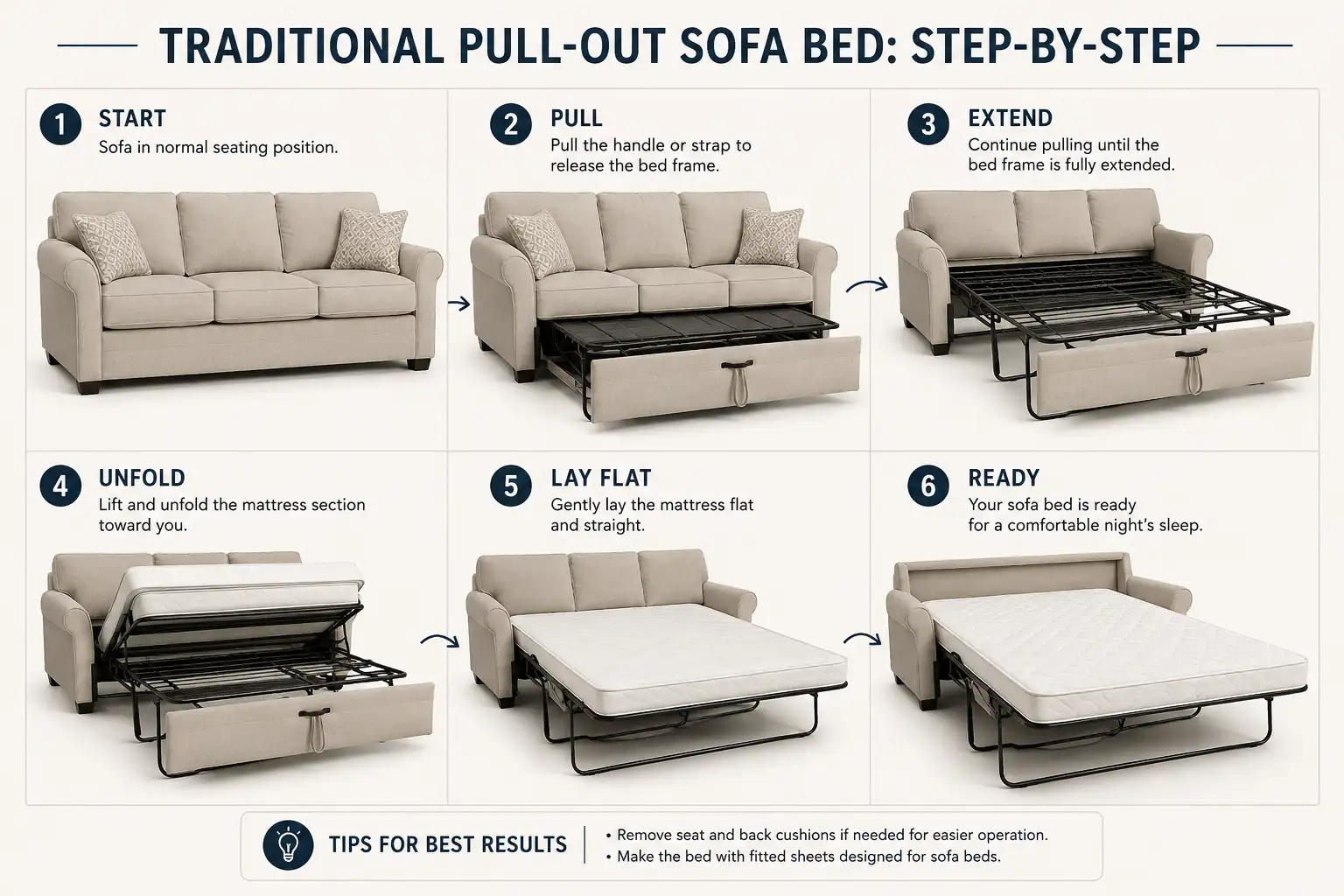
Pull-Out / Traditional Sleeper
This is the classic system most people imagine. The seating cushions lift or shift, revealing a folded mattress hidden inside the frame. A metal or wooden support structure extends outward to hold the mattress in place.
- Usually supports a thicker, more mattress-like sleeping surface
- Feels more like a “real bed” when fully opened
- Maintains a traditional sofa appearance when closed
- Heavier and more physically demanding to operate
- Conversion can feel awkward in tighter rooms
- Lower-quality versions may allow you to feel the frame through the mattress
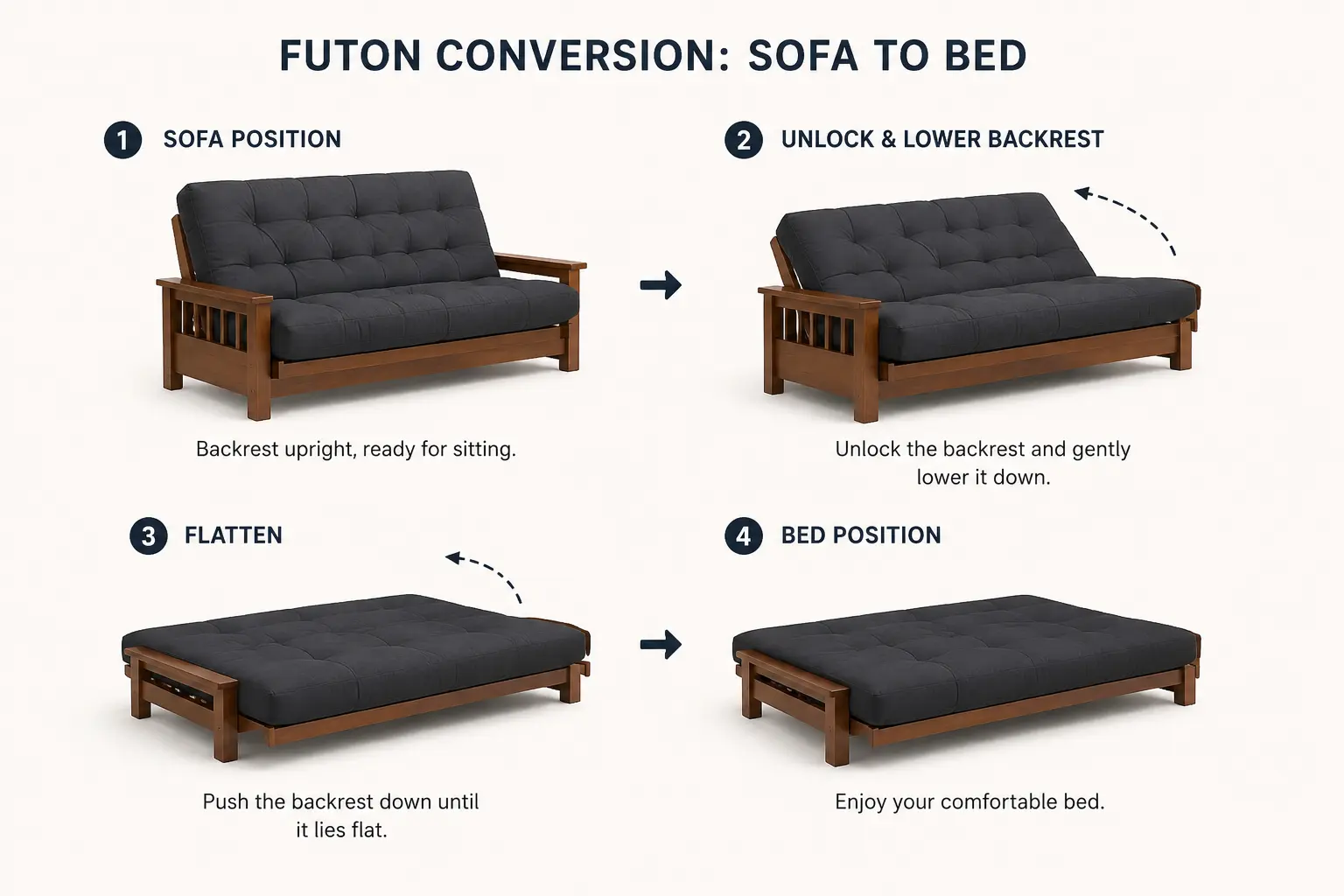
Futon-Style Sleeper
This is the simplest design. The backrest folds down to align with the seat, creating a flat sleeping surface. The entire structure usually relies on a basic hinge system.
- Very easy to operate, usually one smooth motion
- Lightweight and easy to move
- Often, the most affordable option
- A mattress is typically thinner and less supportive
- Less resemblance to a traditional sofa in comfort
- A more casual look that may not suit formal interiors
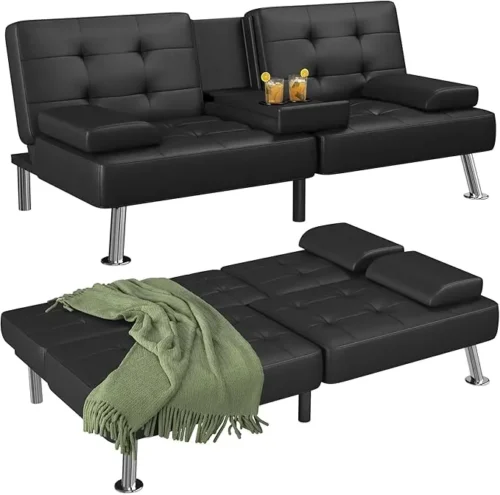
Click-Clack Sofa Beds
The backrest “clicks” through adjustable positions before locking flat into a bed. It uses a multi-stop hinge system that allows partial reclining as well.
- Extremely fast conversion
- Compact and modern design appeal
- Works well in tight, multi-use rooms
- A mattress is usually firm and relatively thin
- Noticeable seams where sections meet can affect comfort
- Long-term durability depends heavily on build quality
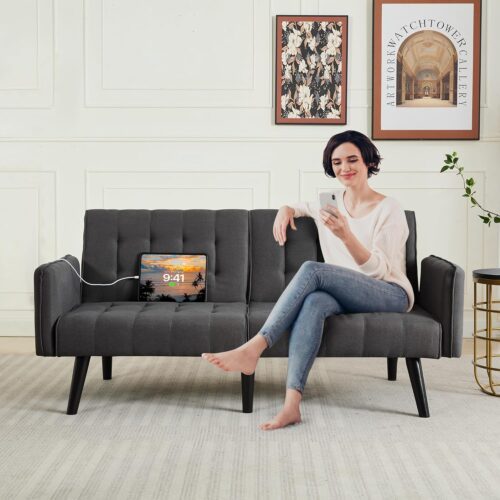
Convertible / Transformable Sofas
This category includes more advanced designs that slide, rotate, or reconfigure sections to create a sleeping surface. Some models use modular blocks or hidden sliding frames.
- Highly flexible seating and sleeping configurations
- Modern, design-focused aesthetics
- Often better space optimization than traditional systems
- More complex operation compared to basic designs
- Higher cost due to engineering and materials
- Maintenance can be more demanding over time
Key Considerations for Choosing a Mechanism
Before choosing any loveseat sleeper, ignore marketing claims and focus on how it will actually behave in your daily life.
- Frequency of Use: Occasional guest use, weekly sleeping, or daily reliance changes everything.
- Ease of Conversion: If setup feels like a chore, you will avoid using it properly.
- Durability & Longevity: Moving parts always introduce failure points; quality matters more than design complexity.
A simple truth most people ignore: the best-looking mechanism is not always the best-performing one. The right choice depends on how realistically it fits your routine, not how it looks in a showroom.
The Ultimate Buying Guide: What to Look For in a Loveseat Sleeper Sofa
Most people buy a loveseat sleeper the wrong way. They focus on looks, ignore measurements, underestimate mattress quality, and only discover the flaws after delivery. At that point, returns are expensive and stressful. A better approach is to evaluate it like a long-term investment, not a decorative purchase.
Size & Dimensions: Measuring for Your Micro-Space
Space mistakes are permanent once the furniture arrives.
Expert rule: measure twice, but more importantly, measure everything that affects movement, not just empty floor space.
You need three sets of measurements:
- Room space: width, depth, and height of the area
- Furniture size: seated dimensions vs. bed dimensions (they are not the same footprint)
- Movement clearance: space needed when the bed is fully extended
A loveseat sleeper that fits “visually” can still fail practically when it blocks walkways or dominates the room once opened.
Critical oversight most buyers make: they forget vertical clearance and wall spacing, especially in tight rooms where the backrest or pull-out frame needs extra room to operate.
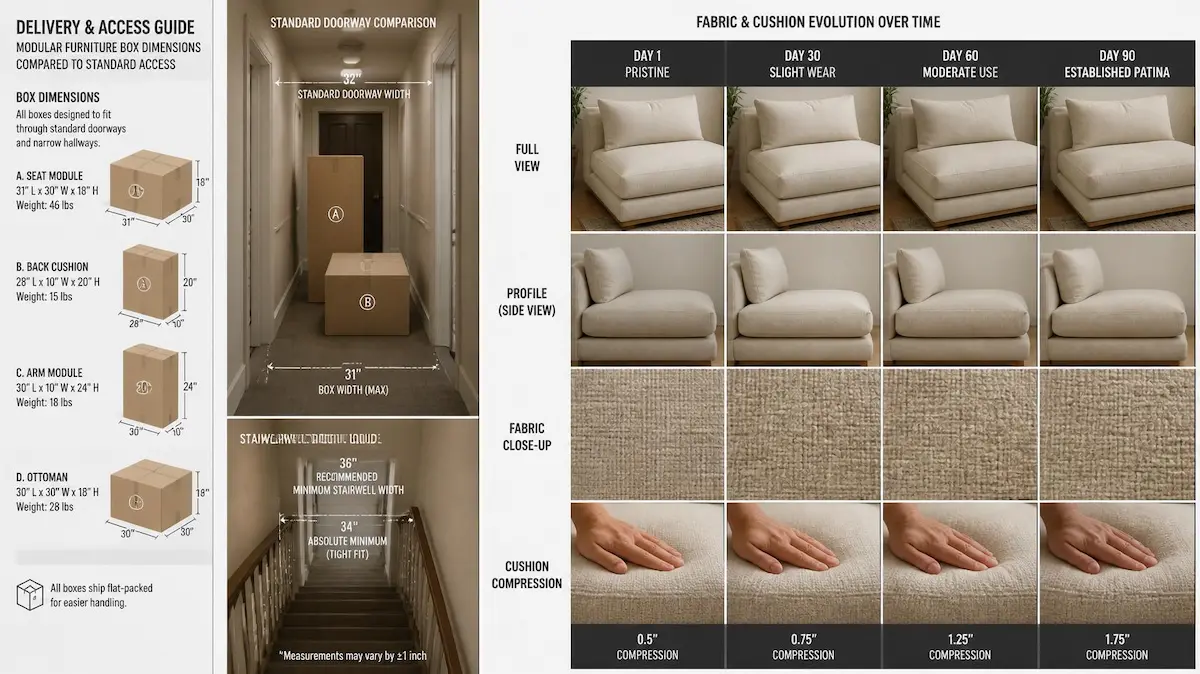
Delivery reality check:
Many buyers only measure the room and ignore entry constraints. Doorways, staircases, and narrow hallways can completely block delivery. If the sofa can’t physically enter your home, the design quality is irrelevant.
Micro-Space Layout & Styling Guide
Good placement is not decoration, it’s spatial control.
Studio Apartment Layout
- Push placement against a wall to preserve open walking paths
- Use the loveseat sleeper as a divider to separate “sleep” and “living” zones
- Avoid central placement unless the room is unusually wide
Narrow Living Room
- Keep one long side open to create visual depth
- Pair with vertical storage to avoid horizontal clutter
- Light-colored upholstery helps reduce the “boxed-in” feeling
Home Office Guest Room
- Place against a wall that does not face the desk directly
- Use neutral styling so the room stays professional during work hours
- Keep bedding stored in hidden or vertical storage solutions
Poor placement turns a compact sofa into a visual obstacle. Smart placement makes it disappear into the room until it’s needed.
Mattress Types: Your Key to Guest Comfort
Comfort complaints rarely come from the frame; they come from the mattress.
According to sleep health guidance (such as recommendations commonly emphasized by organizations like the National Sleep Foundation) and mattress safety standards like CertiPUR-US® certification, material quality directly affects sleep quality, pressure relief, and chemical safety.
Memory Foam
- Excellent body contouring, pressure relief, and reduces motion transfer
- Can retain heat, slower response feel, possible initial odor
Innerspring
- Better airflow, traditional bounce, firmer support
- Less comfortable in thin designs, possible pressure points
Gel Foam
- Improved cooling, balances softness with support
- Higher cost, quality varies widely between brands
Frame Construction: The Foundation of Durability
A loveseat sleeper is only as strong as what you cannot see.
Best materials:
- Kiln-dried hardwood frames
- Reinforced steel mechanisms
These materials resist warping, stress, and long-term mechanical failure.
Avoid:
- Particle board (breaks under repeated stress)
- Softwoods (prone to bending over time)
- Thin, low-grade metal frames
Joinery matters more than people think.
Look for:
- Mortise-and-tenon joints
- Reinforced corner blocks
- Dowel reinforcement in stress zones
Weak joinery leads to early wobbling, uneven sleeping surfaces, and mechanism failure.
Upholstery Materials: Where Style Meets Lifestyle
Fabric choice determines whether the sofa ages gracefully or becomes a maintenance problem.
Polyester / Microfiber
- Highly durable and stain-resistant
- Best for daily-use environments
Linen / Cotton
- Breathable and natural feel
- Wrinkles easily and stains faster
Velvet
- Visually premium and soft
- Requires careful maintenance and cleaning
Leather / Faux Leather
- Easy to clean and long-lasting
- Higher cost, can feel less breathable
Performance Fabrics
- Engineered for stain, fade, and wear resistance
- Best all-around choice for families or high-use spaces
Industry durability is often tested using abrasion standards like the Martindale rub test, which measures how well fabric holds up under repeated friction. Higher ratings generally indicate longer lifespan in real use conditions.
Ease of Conversion: Ensuring Smooth Transitions
A sleeper that is difficult to convert stops being used properly.
Key factors:
- Weight of the mattress
- Precision of the mechanism
- Overall structural alignment
If conversion requires force, awkward lifting, or multiple steps, users will avoid using it.
Style & Design: Blending with Your Existing Decor
Function alone is not enough; visual integration matters.
Common styles:
- Modern (clean lines, minimal detailing)
- Mid-century (tapered legs, simple geometry)
- Scandinavian (light tones, functional simplicity)
- Traditional (structured and upholstered form)
- Contemporary (mixed materials, flexible design language)
Color affects perception of space:
- Light tones expand visual space
- Dark tones create depth, but can shrink small rooms
Budget Considerations: Understanding True Value
Pricing typically falls into three tiers:
- Entry-level: basic mechanisms, thinner mattresses, shorter lifespan
- Mid-range: balanced durability and comfort
- High-end: premium materials, better ergonomics, longer-term reliability
Cheap options often cost more over time due to early replacement or guest dissatisfaction.
Smart buying rule:
You are not just paying for furniture, you are paying for sleep quality and mechanical reliability.
Also, check return policies carefully. Large furniture returns are often expensive or restricted once delivered.
Extra Features & Customization
Modern loveseat sleepers may include:
- Built-in storage compartments
- USB charging ports
- Adjustable armrests or modular seating
- Custom fabric and leg options
These features are useful, but not essential. They should never compensate for a weak mattress or poor frame quality.
Top-Rated Loveseat Sleeper Sofas: Our Expert Picks
This list is not based on marketing claims or popularity alone. Each recommendation is filtered through a consistent evaluation framework:
Our review criteria:
- Comfort (both sofa seating and sleep quality)
- Durability (frame strength + mechanism reliability)
- Ease of conversion (real-world usability, not showroom demo)
- Design integration (how well it fits modern interiors)
- Value for money (long-term cost vs. performance)
Every option below includes strengths, weaknesses, and realistic usage scenarios, because no sleeper sofa is perfect for everyone.
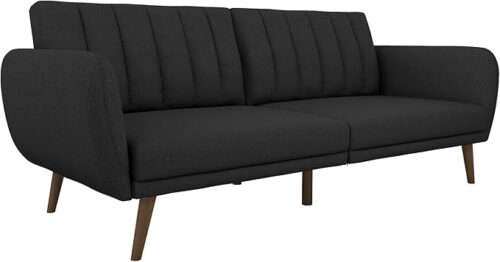
1. Novogratz Brittany Loveseat Sleeper Sofa
Overview:
A budget-friendly futon-style sleeper designed for compact, modern interiors. It focuses more on aesthetics and space efficiency than on premium sleep comfort.
Key Features:
- Tufted linen upholstery
- Wooden legs with mid-century styling
- Simple click-clack folding mechanism
- Affordable entry point
- Stylish, modern appearance
- Very compact footprint
- Firm sleeping surface
- Not suited for frequent overnight use
- Assembly required, and can feel basic
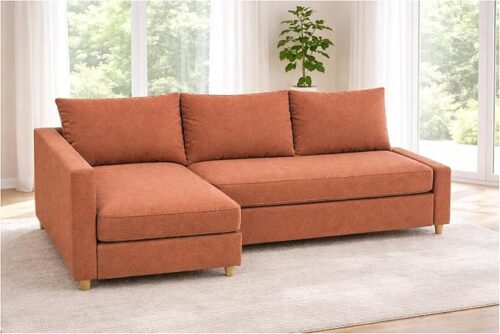
2. IKEA FRIHETEN Sleeper Sofa
Overview:
A highly practical pull-out design that combines sleeping space with built-in storage. It prioritizes function over luxury.
Key Features:
- Pull-out bed mechanism
- Large under-seat storage compartment
- Durable fabric options
- Strong value for money
- Storage is extremely useful in small homes
- Functional and reliable conversion system
- Assembly is time-intensive
- Mattress comfort is average and slightly firm
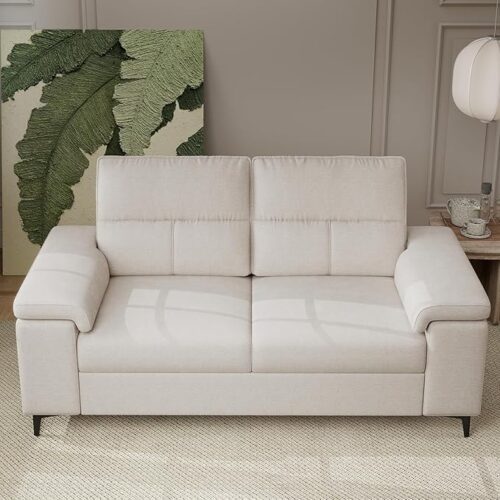
3. West Elm Harris 2-Seater Sleeper Sofa
A design-focused premium option that balances aesthetics with real sleeping comfort. This is closer to a guest bed experience than a typical sofa sleeper.
Key Features:
- High-resiliency foam cushions
- CertiPUR-US® certified memory foam mattress
- Wide customization options
- Excellent design and finish quality
- Comfortable mattress for long sleep sessions
- Strong build and premium materials
- Expensive compared to competitors
- Custom orders may take time
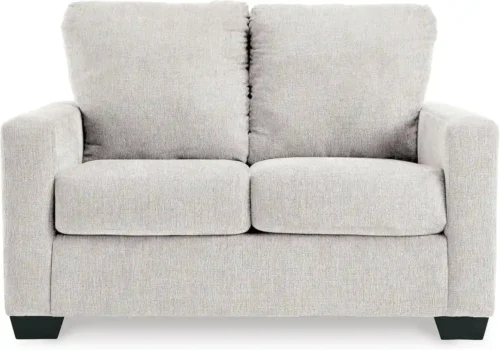
4. La-Z-Boy Leah Twin Sleeper Sofa
Overview:
A traditional, comfort-first design backed by a long-standing furniture reputation. Focuses on durability and dependable performance.
Key Features:
- La-Z-Boy comfort engineering system
- Innerspring mattress
- Wide fabric selection
- Strong reputation for comfort
- Durable mechanism suited for repeated use
- Reliable guest sleeping experience
- Bulkier than modern minimalist designs
- Less visually modern
5. Zinus Josh Loveseat Sofa Bed
Overview:
An ultra-compact, budget-focused solution designed for minimal spaces and light usage.
Key Features:
- Green Tea memory foam mattress
- Tool-free assembly
- Extremely small footprint
- Very space-efficient
- Easy to assemble
- Affordable for tight budgets
- Firm sleeping surface
- Limited sofa comfort for long sitting periods
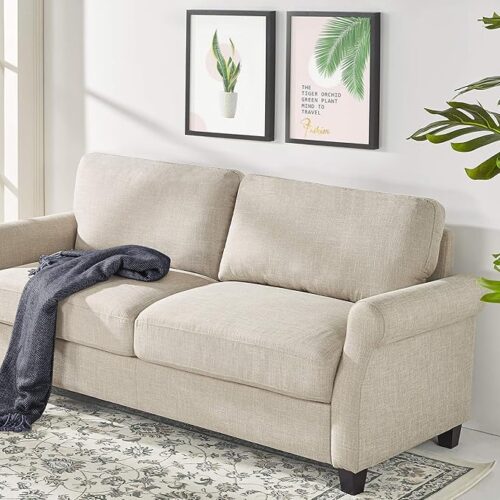
6. Room & Board Piper Loveseat Sleeper
Overview:
A high-end, craftsmanship-driven sleeper sofa designed for long-term investment buyers who prioritize quality and sustainability.
Key Features:
- Kiln-dried hardwood frame
- USA benchmade construction
- Premium mattress upgrade options
- Full customization available
- Exceptional durability and craftsmanship
- Superior comfort across seating and sleeping
- Sustainable, high-quality materials
- High price point
- Longer production and delivery timelines
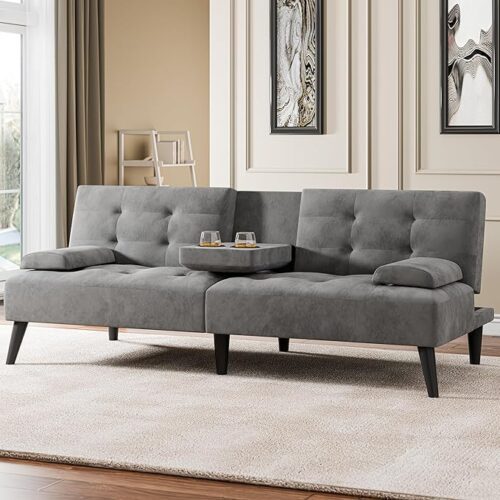
7. Yaheetech Loveseat Sofa Bed
Overview:
A budget-friendly click-clack style sofa bed is often chosen for flexibility and added basic features.
Key Features:
- Adjustable backrest positions
- Some models include storage or side pockets
- Simple conversion system
- Very affordable
- Quick conversion
- Lightweight and functional
- Durability varies significantly by usage
- Thin mattress and firm feel
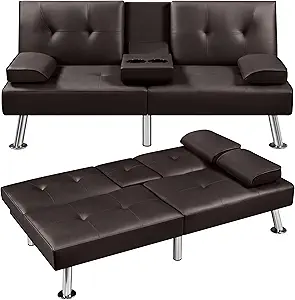
Loveseat Sleeper Sofa Comparison Table
Below is a structured comparison of top loveseat sleeper sofas based on verified product categories and commonly published manufacturer specifications. Minor variations may exist depending on retailer versions, fabric upgrades, or production year.
To make this more useful than a generic spec list, a Guest Comfort Score (GCS) has been added to reflect real-world usability (sleep comfort, stability, and ease of conversion combined).
|
Product Name |
Overall Rating |
Type/Mechanism |
Mattress Type |
Seated Dimensions (WxDxH) |
Bed Dimensions (WxD) |
Key Features |
Pros |
Cons |
Price Range |
Guest Comfort Score |
|
Novogratz Brittany Loveseat Sleeper Sofa |
4.0/5 |
Futon / Click-Clack |
Thin Memory Foam |
~71" x 34" x 34" |
~71" x 43" |
Tufted linen, wooden legs, modern design |
Affordable, stylish, compact |
Firm sleep surface, not for daily use, assembly required |
$300–$500 |
6.5/10 |
|
IKEA FRIHETEN Sleeper Sofa |
4.3/5 |
Pull-Out |
Polyfoam |
~88" x 38" x 31" |
~78" x 56" |
Storage compartment, full bed conversion |
Great value, storage space, functional design |
Time-consuming assembly, medium firmness mattress |
$600–$800 |
7.5/10 |
|
West Elm Harris 2-Seater Sleeper Sofa |
4.5/5 |
Pull-Out |
CertiPUR-US® Memory Foam |
~67" x 36" x 33" |
~75" x 55" |
High-resiliency foam, customizable fabrics |
Excellent comfort, premium build, stylish |
Expensive, long lead times |
$1600–$2500 |
9/10 |
|
La-Z-Boy Leah Twin Sleeper Sofa |
4.2/5 |
Pull-Out |
Innerspring |
~62" x 38" x 37" |
~72" x 39" |
Patented comfort system, durable frame |
Reliable, traditional comfort, strong mechanism |
Bulky design, less modern styling |
$1000–$1800 |
8/10 |
|
Zinus Josh Loveseat Sofa Bed |
3.8/5 |
Futon / Click-Clack |
Green Tea Memory Foam |
~54" x 30" x 30" |
~70" x 44" |
Tool-free assembly, ultra-compact design |
Space-saving, easy setup, low cost |
Very firm, basic comfort, limited durability |
$250–$400 |
6/10 |
|
Room & Board Piper Loveseat Sleeper |
4.7/5 |
Pull-Out |
Premium Foam / Innerspring |
~68" x 37" x 29" |
~75" x 56" |
Hardwood frame, USA craftsmanship, custom options |
Exceptional quality, long lifespan, high comfort |
Very expensive, long production time |
$2800–$4000+ |
9.5/10 |
|
Yaheetech Loveseat Sofa Bed |
3.9/5 |
Click-Clack |
Foam |
~55" x 30" x 30" |
~65" x 38" |
An adjustable backrest often includes storage |
Budget-friendly, quick conversion |
Weak durability, thin mattress |
$200–$350 |
6.2/10 |
Key Insight from the Comparison
A pattern becomes obvious when you look at the data objectively:
- Budget models (under $500) prioritize space and price, not sleep quality.
- Mid-range models ($600–$1800) offer the best balance of usability and comfort.
- Premium models ($1600+) focus on long-term durability, real mattress comfort, and design integrity.
The biggest mistake buyers make is assuming all sleeper sofas deliver similar sleep quality. They don’t. The difference between a 6/10 and a 9/10 Guest Comfort Score is the difference between “usable” and “actually comfortable.”
If your expectation is regular guest use, anything below mid-range performance is a compromise you will eventually notice.
Loveseat Sleeper Sofa FAQs
Conclusion: Finding Your Perfect Dual-Purpose Solution
Choosing a loveseat sleeper is not about picking the most attractive model or the cheapest option. It’s about balancing real needs, limited space, guest comfort, long-term durability, and daily usability.
The key factors never change:
- Space fit: It must work in your room, not fight it
- Comfort: Both sitting and sleeping should be acceptable, not compromised
- Durability: Frame and mechanism quality determine how long it actually lasts
- Ease of conversion: If it’s annoying to use, it will be ignored
- Style: It should blend into your space, not dominate it
When you evaluate based on these points instead of marketing claims, the decision becomes much clearer.
You now have the structure to filter out weak options and focus only on what actually performs in real life, not just in product photos or showroom setups.
If you apply this correctly, you won’t just buy furniture, you’ll solve a space problem that most people keep struggling with for years.