



The Ultimate Guide to the Best Fabric Protectors for Indoor Furniture Stain-Proof Your Home Safely & Effectively
December 28, 2025
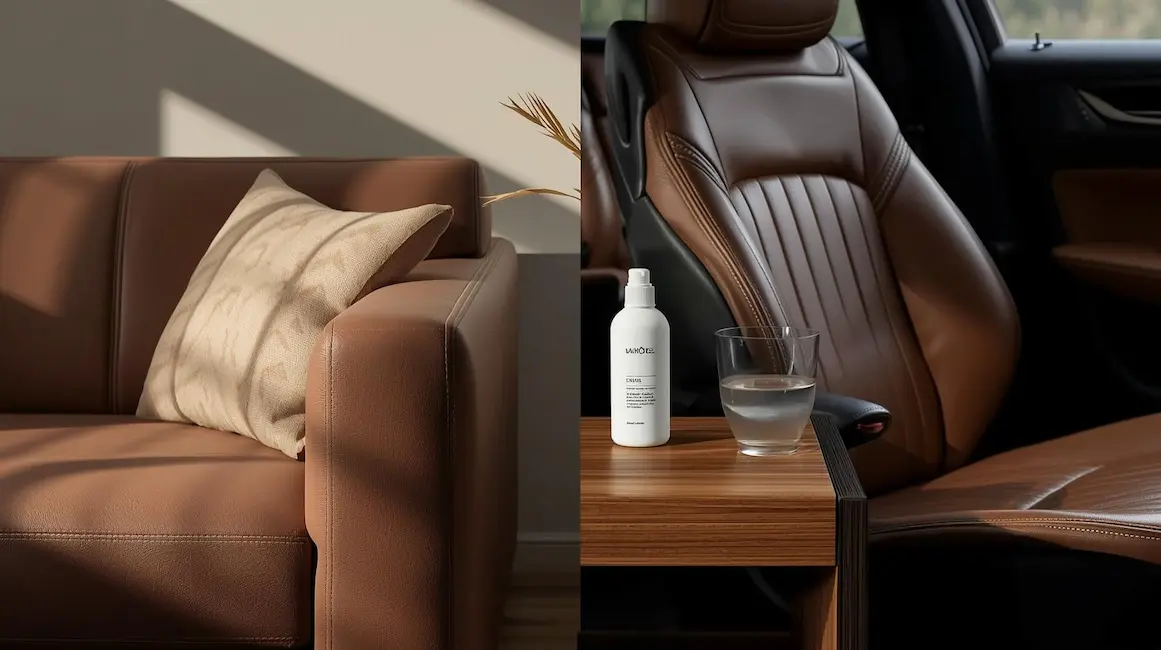
Leather has a way of elevating everyday items, from furniture and bags to jackets and car interiors. But over time, even the finest leather can lose its shine. Stains settle in, surfaces dry out, and small signs of wear begin to appear. Many owners hesitate to clean leather at all, worried that one wrong move or harsh product could cause permanent damage. That fear often leads to neglect, and neglected leather ages far faster than it should.
The truth is, quality leather not only deserves care, but it also requires it. With the right approach, leather can stay supple, rich in color, and visually striking for decades. The challenge is knowing what actually works. Conflicting advice, endless product options, and unclear instructions make leather care feel more complicated than it needs to be. This guide is designed to remove that uncertainty and replace it with clarity. You will learn practical, proven methods for cleaning leather safely, how to choose the right products for different leather types, and how to handle common issues without second-guessing yourself.
By the end of this guide, you will have a clear understanding of how to clean and maintain leather the right way. You will discover trusted products that restore and protect leather, including an in-depth look at Leather Honey and how it fits into a complete care routine. More importantly, you will gain the confidence to care for your leather properly, eliminate stains without stress, and preserve the elegance and value of your leather for years to come.
Before you reach for any cleaner, the most important step in leather care is knowing exactly what type of leather you are working with. This is where many people go wrong. One product does not suit all leather, and using the wrong cleaner can permanently alter the look, texture, or durability of the material. Leading furniture, automotive, and fashion leather manufacturers consistently stress that proper leather identification should always come before cleaning or conditioning. It is not a suggestion. It is a requirement for safe care.
Why Leather Type Matters
Leather behaves differently based on how it is finished. Some leathers absorb moisture quickly, while others are designed to resist spills and stains. This difference comes down to absorption versus protection. Highly protected leathers have a surface coating that acts as a barrier, making them more forgiving and easier to clean. Unprotected leathers, on the other hand, absorb liquids almost immediately, which is why stains appear so fast and can be difficult or impossible to remove.
Using the wrong product can cause dark spots, discoloration, stiffness, or even surface breakdown. A cleaner meant for coated leather can soak into absorbent leather and leave permanent marks. Likewise, applying liquid cleaners to suede or nubuck can flatten the nap and ruin the texture. Understanding your leather type eliminates this risk and ensures you are using the safest and most effective method from the start.
Protected or Pigmented Leather
Protected leather, often called pigmented leather, is the most common type used in furniture, car interiors, and everyday leather goods. It has a uniform color and a light protective coating on the surface, which makes it more resistant to stains, fading, and wear.
This type of leather is generally the most forgiving when it comes to cleaning. Mild leather cleaners and conditioners are usually safe when used correctly. The protective layer helps prevent liquids from soaking in immediately, giving you time to clean spills before they cause lasting damage.
Aniline or Unprotected Leather
Aniline leather is prized for its natural beauty. You can see the grain clearly, feel its softness, and notice variations in color that give it a rich, authentic look. However, this beauty comes with a trade-off. Aniline leather has little to no surface protection.
Because it is highly absorbent, it stains easily and reacts quickly to moisture, oils, and cleaning products. Cleaning requirements here are extremely gentle. Only products specifically designed for unprotected leather should ever be used, and even then, testing in an inconspicuous area is essential.
Semi-Aniline Leather
Semi-aniline leather sits between protected and aniline leather. It retains much of the natural appearance and softness of aniline leather but includes a light protective coating for added durability.
This balance means it is less prone to staining than aniline leather but still more delicate than fully protected leather. Cleaning should be done carefully with products suitable for lightly coated leather, avoiding anything harsh or overly wet.
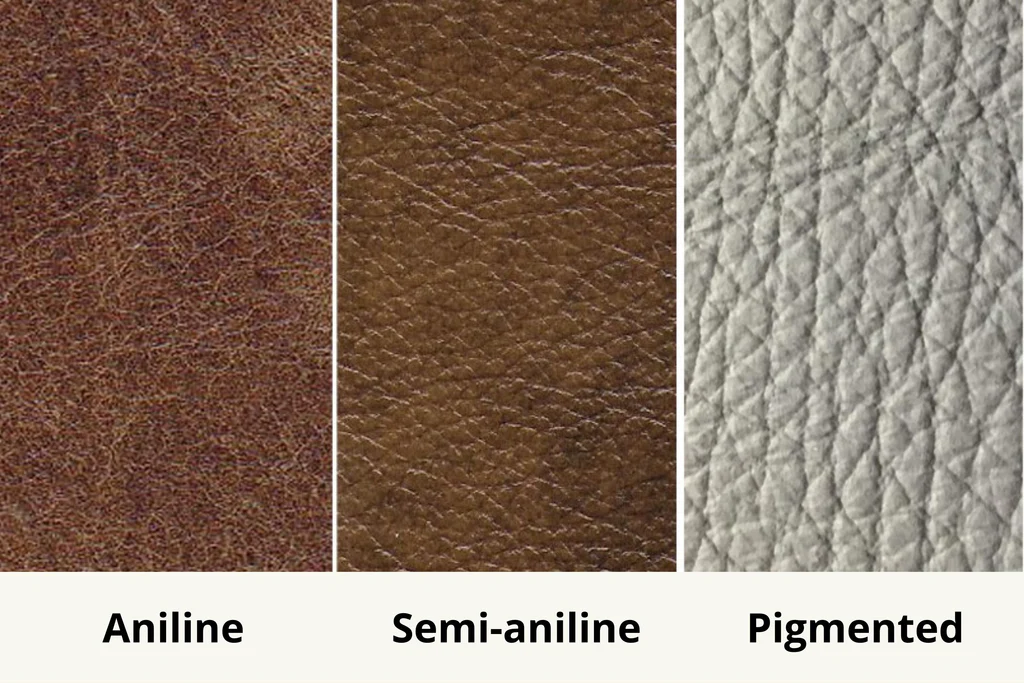
Different types of Leather
Nubuck and Suede
Nubuck and suede are instantly recognizable by their soft, velvety, napped surface. They are among the most absorbent and sensitive leather types available.
These leathers require specialized care and should never be cleaned with liquid cleaners designed for smooth leather. Water-based products can cause dark patches, stiffness, and irreversible texture damage. Dry cleaning methods, specialty brushes, and cleaners made specifically for nubuck and suede are the only safe options.
How to Test and Identify Your Leather
If you are unsure which type of leather you have, a simple at-home test can help.
Start with a visual inspection. Look at the surface. Uniform color and a slight sheen usually indicate protected leather. Visible grain patterns, natural markings, and a matte finish often point to aniline or semi-aniline leather. A fuzzy or velvety surface clearly indicates nubuck or suede.
Next, perform a small water drop test in an inconspicuous area. Place one tiny drop of water on the leather and watch how it behaves. If the water beads up and stays on the surface for a short time, the leather is likely protected. If it absorbs quickly and darkens the spot, you are dealing with unprotected or semi-aniline leather. Never perform this test on suede or nubuck.
Expert Tip
Always identify your leather type accurately before cleaning. Different leather finishes require very different products and techniques. Mis identification is one of the most common causes of irreversible leather damage.
Leather Type Identifier
Take this quick quiz to identify your leather type and get personalized cleaning recommendations
What is the texture of your leather?
How does water behave on the surface?
What is the surface finish like?
How old is the leather item?
What type of item is it?
Your Leather Identification Results
Based on your answers, here's your leather type and cleaning recommendations
Identified Leather Type: Full-Grain Leather
Full-grain leather is the highest quality leather available, featuring the complete grain layer with natural markings. It develops a beautiful patina over time.
Care Level: Moderate
Recommended Cleaning Products
Leather Honey Cleaner
pH-balanced formula safe for all leather types. Gently cleans without stripping natural oils.
Leather Honey Conditioner
Restores moisture and prevents cracking. Apply after cleaning for long-lasting protection.
Cleaning Instructions
1. Test any cleaner on a small, hidden area first
2. Use a soft cloth to apply cleaner in circular motions
3. Wipe away excess and allow to dry completely
4. Apply conditioner every 6-12 months for maintenance
Longevity and Durability
Leather is a natural material, and like skin, it needs balance. Dirt, dust, and body oils slowly work their way into the surface and fibers. Over time, this buildup weakens the leather structure, causing it to dry out, stiffen, and eventually crack. Regular, gentle cleaning removes these contaminants before they can cause lasting damage. This simple habit plays a major role in preventing premature wear, especially in high-use items such as furniture, bags, and car interiors.
Appearance and Aesthetics
Well-maintained leather looks better and feels better. Proper cleaning preserves the original color, maintains an even finish, and helps leather stay soft and supple. Without care, leather can become dull, blotchy, or faded. Once that happens, restoring its original appearance becomes far more difficult and costly. Cleaning paired with conditioning helps leather retain its natural sheen and smooth texture, keeping it visually appealing for years.
Hygiene and Health
Leather surfaces come into frequent contact with hands, clothing, and skin. As a result, they collect oils, sweat, dust, and airborne allergens. Over time, this buildup can lead to unpleasant odors and unhygienic conditions. Proper leather cleaning removes these contaminants safely, improving both cleanliness and indoor air quality. This is especially important for households with children, pets, or allergy sensitivities.
Preserving the Value of Your Leather
Quality leather goods are an investment. Whether it is a sofa, a jacket, or a designer bag, proper care directly affects its resale value and lifespan. Leather that is clean, conditioned, and free from cracks or stains holds its value far better than neglected pieces. Consistent maintenance protects that investment and delays the need for expensive repairs or replacement.
Why People Damage Leather Without Realizing It
One of the biggest pain points for leather owners is the fear of causing damage. Unfortunately, many of the most harmful mistakes are made with good intentions.
Household cleaners are a common culprit. Dish soap, baby wipes, and all-purpose sprays may seem gentle, but they often contain chemicals that strip leather of its natural oils. This leads to dryness, fading, and surface damage.
Over-saturating leather is another frequent mistake. Excess moisture can soak into the fibers, causing dark patches, stiffness, or internal weakening that shows up later as cracks.
Aggressive scrubbing does more harm than good. Rubbing hard to remove a stain can grind dirt deeper into the leather and damage the finish.
Skipping conditioning is equally damaging. Cleaning without replenishing moisture leaves leather vulnerable to drying and cracking over time.
Beyond the Bottle: The Science Behind Leather Care
At a microscopic level, leather is made up of interwoven fibers that rely on natural oils to stay flexible and strong. Dirt and body oils act like abrasives, slowly breaking down these fibers when left untreated. Effective leather cleaners are designed to lift and suspend this grime without stripping away the essential oils that keep leather healthy.
This is why proper leather care is not just about what product you use, but how and when you use it. The right cleaner, applied gently and followed by conditioning, works with the structure of the leather rather than against it. When you understand this process, leather care becomes far less intimidating and far more effective.
Cleaning leather properly is a skill, not a guessing game. Professionals rely on a consistent, repeatable process that minimizes risk while delivering visible results. If you were to document this method with before-and-after photos, such as a chair arm or seat cushion, the difference would be clear: cleaner color, smoother texture, and revived softness without damage. Follow the steps below to clean leather safely and effectively.
What You Will Need
Before you begin, gather the right tools. Using proper materials matters just as much as the technique.
Use high-quality microfiber cloths, and keep several on hand. You will need separate cloths for cleaning, wiping residue, and drying. Soft-bristled brushes are useful for textured or grained leather. A vacuum cleaner with a brush attachment helps remove loose debris. Have a small bucket of clean water ready, and consider wearing protective gloves if you have sensitive skin.
Expert Tip: Always use soft, lint-free microfiber cloths. Rough fabrics can scratch the surface, and lint can stick to the leather, leaving it looking dull or messy.
Step 1: Pre-Cleaning – Remove Dust and Debris
Start by removing surface dirt. Vacuum the leather using a brush attachment to lift dust from seams and creases. For textured leather, use a soft-bristled brush with light pressure. This step prevents grit from being rubbed into the leather during cleaning, which can cause abrasion.
Step 2: Spot Testing – The Golden Rule
Never skip this step. Before applying any cleaner to a visible area, test it on an inconspicuous spot such as the underside, back panel, or inner seam.
Apply a small amount of cleaner to a microfiber cloth and gently dab the hidden area. Wait a few minutes and check for color transfer, darkening, or texture changes. If the leather reacts negatively, do not proceed.
Expert Tip: Always test first. Even products labeled as safe can behave differently depending on the leather type and finish.
Step 3: Applying the Cleaner – Less Is More
Apply the cleaner to your microfiber cloth, not directly onto the leather. Lightly dampen the cloth so it is moist, not wet. Over-saturating leather can cause water spots, streaking, or deeper absorption that leads to damage, especially on more absorbent leather types.
Work with controlled amounts and reapply cleaner to the cloth only when needed.
Step 4: Gentle Cleaning – Section by Section
Clean the leather in small, manageable sections. This ensures even coverage and prevents the cleaner from drying on the surface before you can wipe it away.
Use gentle, circular motions or light wiping. There is no need to scrub aggressively. Let the cleaner do the work. Slightly overlap each section to avoid uneven patches.
Expert Tips:
Clean one section at a time to maintain control and consistency. Avoid aggressive scrubbing, as it can damage the finish and alter the color.
Step 5: Wipe Away Residue
Once a section is cleaned, use a separate clean cloth lightly dampened with water to wipe away any remaining product. This step is essential to prevent residue buildup, which can attract dirt or leave streaks.
Step 6: Drying Naturally
Allow the leather to air dry naturally. Do not use hair dryers, heaters, or fans. Forced heat speeds up moisture loss and can lead to cracking or fading.
Expert Tip: Keep leather away from direct sunlight and heat sources during drying. Even well-cleaned leather can suffer damage from excessive heat exposure.
Special Care for Delicate Leathers
For aniline or unprotected leather, use only ultra-mild cleaners and minimal moisture. Focus on gentle blotting rather than wiping, and avoid repeated passes over the same area.
For nubuck and suede, never use liquid cleaners meant for smooth leather. Use dedicated brushes and suede erasers instead. For stubborn stains, professional cleaning is often the safest option.
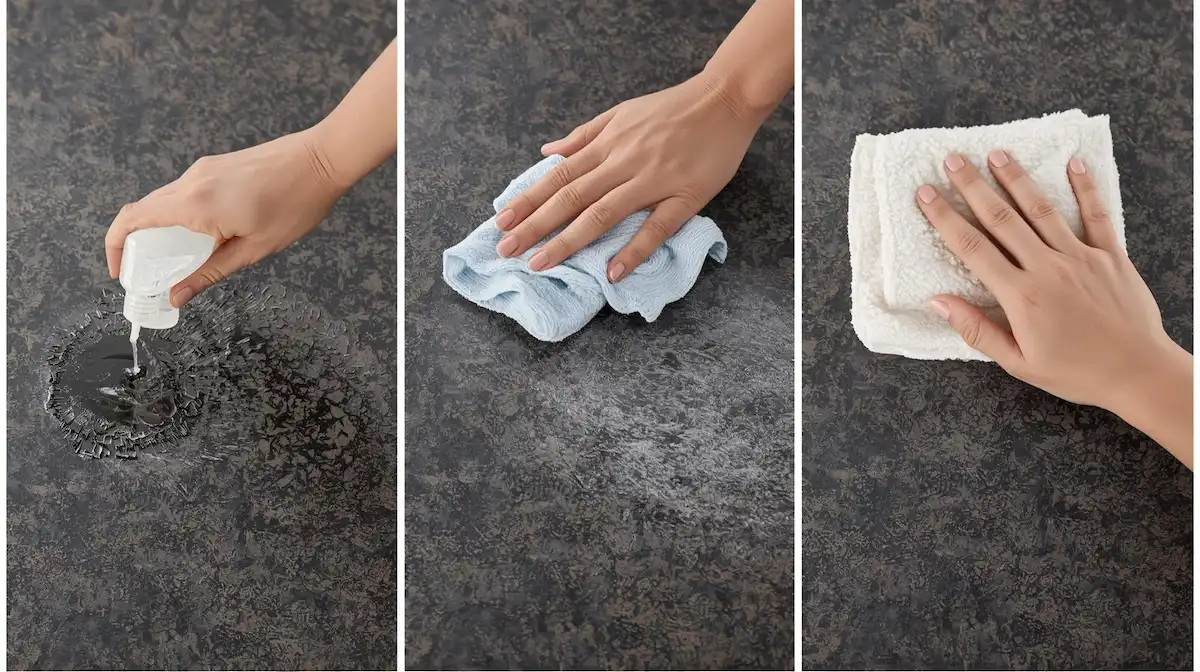
Dust removal, cleaner applied to a cloth
Leather Honey is one of the most talked-about names in leather care, and for good reason. To understand how well it actually performs, it is important to look beyond marketing claims and focus on real-world use, testing, and results.
Testing Approach and Transparency
To evaluate Leather Honey Leather Cleaner properly, testing should be done on multiple leather samples that reflect everyday use. This includes protected and semi-aniline leather commonly found in furniture and car interiors. Typical stains used for testing include body oils, light food residue, dust buildup, and surface grime from regular handling.
The cleaner is applied following the manufacturer’s instructions, using microfiber cloths and minimal moisture. Each test area is cleaned section by section, then allowed to air dry naturally. Before-and-after photos or short video clips help document visible changes in color, cleanliness, and texture.
For full transparency, it is always important to disclose testing conditions. If a product is purchased independently, that should be stated. If a product is provided by a manufacturer or reviewed using affiliate links, that information should be clearly shared with readers so they can assess the review without hidden bias.
Brand Background and Philosophy
Leather Honey has been around for decades and built its reputation around one core idea: leather care should be effective without being harsh. The brand focuses on simple, time-tested formulations rather than aggressive chemicals. Its products are designed to clean and protect leather while respecting its natural structure, which aligns closely with professional leather care principles.
Key Ingredients and What They Do
Leather Honey Leather Cleaner is water-based and free from harsh solvents. Instead of stripping oils or using heavy detergents, it relies on gentle surfactants that lift dirt and oils from the surface so they can be wiped away safely.
This approach allows the cleaner to break down grime without drying out the leather. Because the formula avoids unnecessary additives, it is easier to control and less likely to cause discoloration when used correctly.
Eco-Friendly and Non-Toxic Formulation
One of Leather Honey’s strongest differentiators is its non-toxic and environmentally conscious formulation. The cleaner is free from harmful chemicals such as silicones, petroleum solvents, and harsh abrasives. This makes it safer for use in homes with children and pets and reduces environmental impact during regular maintenance.
By focusing on biodegradable and mild ingredients, the cleaner supports both leather longevity and responsible use. This balance is especially important for users who clean leather frequently and want a safer long-term solution.
Where Leather Honey Performs Best
Leather Honey Leather Cleaner works particularly well on protected and semi-aniline leather. During testing, it effectively removed surface dirt, body oils, and light stains without altering color or texture. The leather remained soft and even in appearance after drying.
The concentrated formula also offers good value. A small amount goes a long way, making it cost-effective for regular cleaning. Application is straightforward, and the cleaner spreads easily when applied to a cloth rather than directly onto the leather.
Limitations to Be Aware Of
This cleaner is not suitable for suede, nubuck, or highly delicate aniline leather. These materials require specialized care and can be damaged by even mild liquid cleaners.
Another consideration is that Leather Honey Leather Cleaner is strictly a cleaner. It does not condition the leather, so a separate conditioning step is necessary to maintain moisture and flexibility. Drying time can also vary depending on leather type and climate, so patience is required.
Ideal Use Cases
Leather Honey Leather Cleaner is well suited for automotive interiors, including seats and door panels made from coated leather. It performs reliably on leather furniture such as sofas and chairs, as well as bags, jackets, and accessories made from protected leather.
It is especially effective for routine maintenance cleaning, where gentle but consistent care is the goal rather than aggressive stain removal.
Best Practices for Use
For optimal results, dilute the cleaner only if recommended by the manufacturer and follow the suggested ratios. Always apply the product to a microfiber cloth and use light, even wiping motions. Avoid over-wetting the surface.
Pairing the cleaner with Leather Honey Conditioner after the leather has fully dried helps restore moisture and maintain long-term softness. This two-step approach mirrors professional leather care routines and delivers the best overall results.
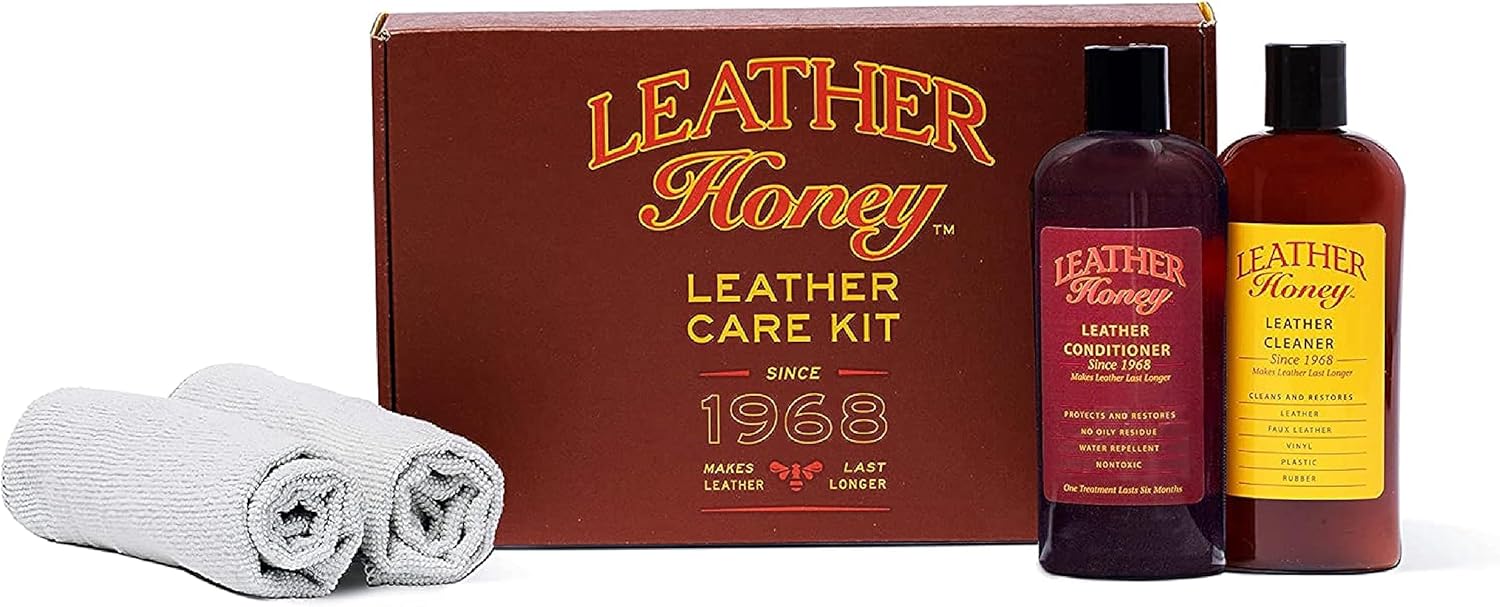
Leather Honey Complete Leather Care Kit
Leather Honey is a premium leather care solution designed to deeply condition, restore, and protect leather without harsh chemicals. Trusted by professionals for over 50 years, its proven formula penetrates deep into leather fibers to rejuvenate dry, aging, and worn leather helping extend its life and maintain its natural beauty.
Why It Stands Out
-
Deep Conditioning Power Penetrates leather to restore softness and flexibility while protecting new and old leather alike.
-
Non-Toxic & Fragrance-Free Made without silicone, solvents, PFAS, or animal products; safe for people, pets, and everyday indoor use.
-
Cleans & Conditions in One Step Gently removes dirt and buildup while nourishing leather, leaving no greasy residue.
-
Works on Most Leather Types Ideal for furniture, car seats, shoes, belts, bags, saddles, and tack. Safe for all colors, including white.
-
American-Made Quality Manufactured in the USA since 1968 and trusted by leather experts, furniture makers, and automotive enthusiasts.
How These Products Were Evaluated
Each cleaner is best assessed through controlled testing on the leather types it is designed for. Typical scenarios include automotive seats with body oil buildup, furniture leather with surface grime, and frequently handled items showing light stains. Cleaners are applied according to manufacturer instructions, tested on protected or semi-aniline leather where appropriate, and evaluated based on cleaning effectiveness, residue, scent, and ease of use. Professional detailers and leather care specialists commonly emphasize using the right product for the right surface rather than relying on one universal solution.
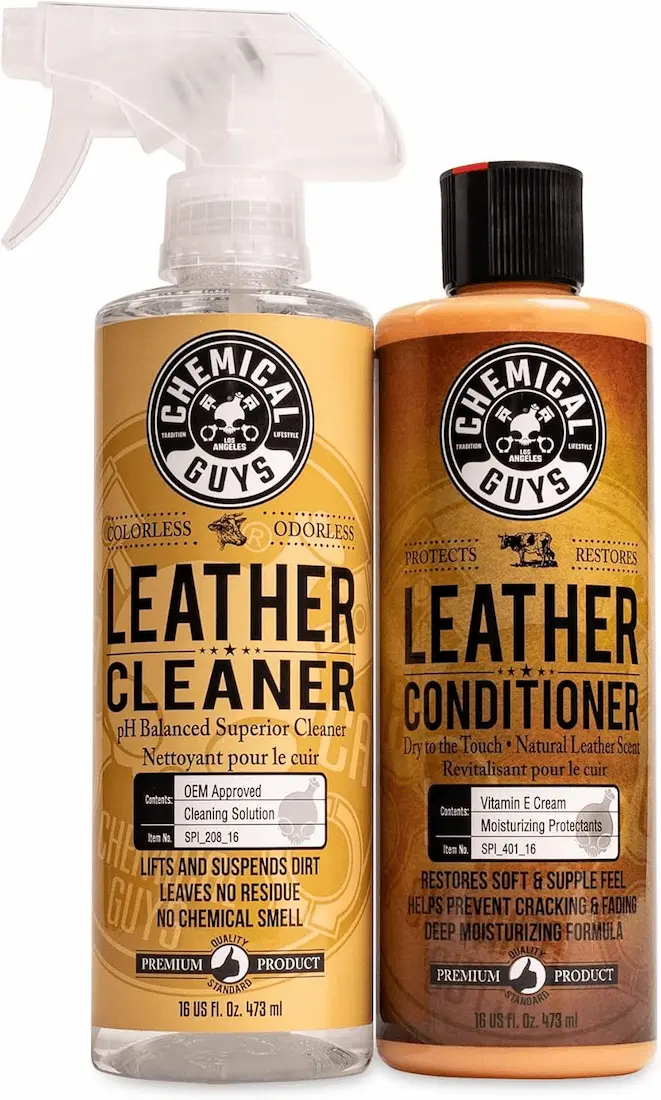
Chemical Guys Leather Cleaner and Conditioner Kit - Car Cleaner and Conditioner, Safely Cleans & Conditions Leather Car Interiors, Furniture, Shoes, Boots, Bags, Apparel & More, 2 Bottles (16 oz Each)
This product is often favored by automotive detailers for routine car interior care. Testing usually involves protected automotive leather with light dirt and body oils.
Pros:
It offers an all-in-one solution, combining cleaning and conditioning in a single step. The scent is pleasant and leaves interiors smelling fresh. It performs well for light to moderate cleaning and is very easy to apply.
Cons:
It may struggle with heavier stains or embedded grime. The conditioning aspect is lighter compared to dedicated conditioners, which may not be sufficient for older or drier leather.
Ideal for:
Regular maintenance of automotive leather interiors where convenience and speed matter.
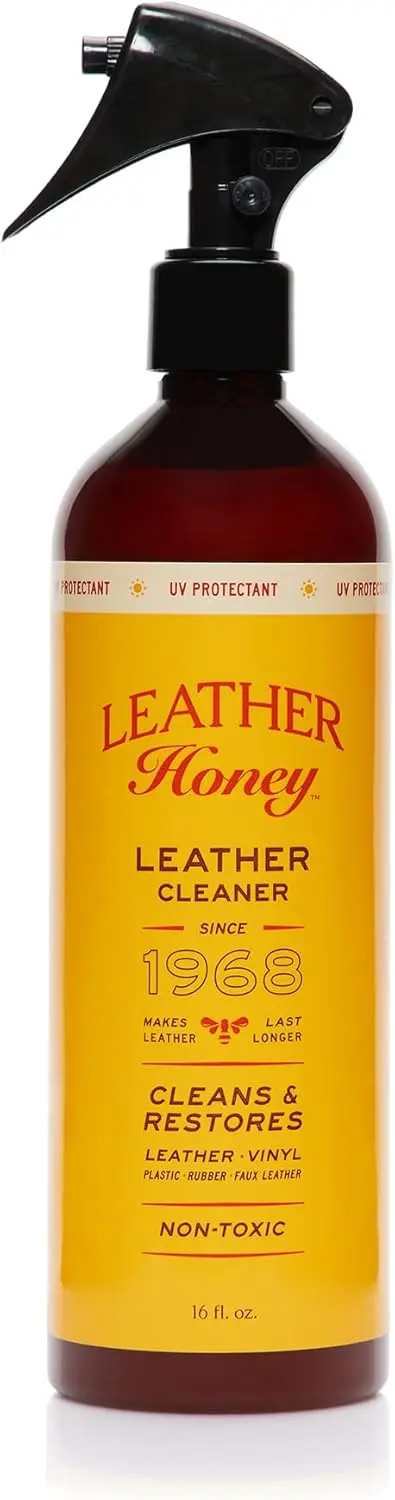
Leather Honey Leather Cleaner Spray: UV Protectant, Non-Toxic & Made in the USA Since 1968.
Leather Honey Leather Cleaner Spray combines powerful, non-toxic cleaning with advanced UV protection to help keep leather looking new for longer. This fragrance-free, pH-balanced formula gently removes dirt, oil, and grime while protecting surfaces from sun damage that can cause fading, cracking, and drying.
Why It’s a Smart Choice
-
Non-Toxic Cleaner + UV Protectant – Cleans effectively while shielding leather from harmful UV rays, ideal for sun-exposed areas like car interiors and furniture near windows.
-
Multi-Surface Safe – Designed for leather, faux leather, vegan leather, vinyl, rubber, and plastic. Safe for all colors, including white and exotic leather.
-
Gentle but Effective – Quickly lifts dirt, oils, and tough buildup without harsh chemicals or strong odors.
-
Safe for Everyday Use – pH-balanced, PFAS-free, and made with high-quality ingredients that are safe for people, pets, and leather.
-
Made in the USA – Trusted American-made leather care since 1968, used by professionals and enthusiasts alike.
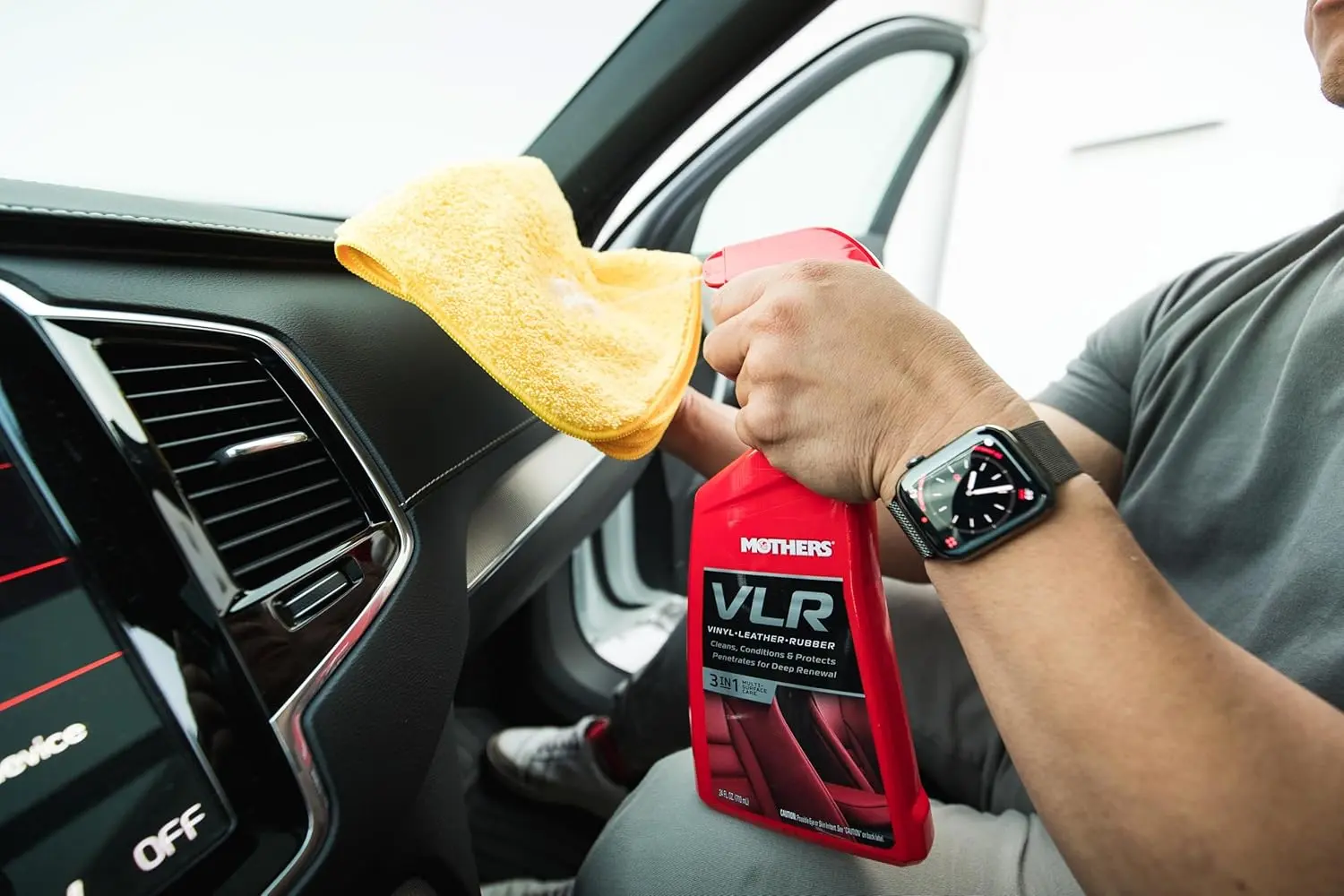
Mothers VLR (Vinyl, Leather, Rubber) Cleaner
This product is designed for versatility and is often tested on mixed-surface automotive interiors.
Pros:
It is convenient for items that combine leather, vinyl, and rubber. Application is quick, and it works well for light cleaning and surface refreshment.
Cons:
Because it is multi-surface, it is not as effective as specialized leather cleaners for deep or restorative cleaning.
Ideal for:
Quick, multi-surface maintenance in vehicles rather than intensive leather care.
Colourlock Mild Leather Cleaner
Colourlock is frequently recommended by professional leather restorers, especially for delicate or high-end leather. Testing focuses on aniline and semi-aniline leather with light soiling.
Pros:
It is extremely gentle, pH-neutral, and safe for sensitive leathers. It cleans without altering color or texture, making it ideal for premium items.
Cons:
The price point is higher, and it is not aggressive enough for tough or neglected stains.
Ideal for:
High-end furniture, delicate fashion items, and lightly soiled premium leather.
Comparative Overview
Below is a practical comparison to help you choose the right cleaner based on your needs. Pricing, features, and recommendations should always be verified against current manufacturer guidelines.
|
Product Name |
Leather Types |
Cleaning Power |
Ease of Use |
Scent |
Price Range |
Key Features |
Best For |
|
Leather Honey Leather Cleaner |
Protected, Semi-Aniline |
High |
Easy |
Mild |
Mid-High |
Concentrated, deep cleaning, non-toxic, requires separate conditioner |
Thorough cleaning and long-term care |
|
Chemical Guys Leather Cleaner & Conditioner |
Protected, Automotive |
Medium-High |
Very Easy |
New Leather |
Mid |
All-in-one formula, UV protection, maintenance-focused |
Routine car interior cleaning |
|
Lexol Leather Cleaner & Conditioner |
Protected, Semi-Aniline |
Medium |
Easy |
Minimal |
Mid |
Traditional two-step system, maintains suppleness |
Furniture and general leather goods |
|
Mothers VLR Cleaner |
Protected, Vinyl, Rubber |
Medium |
Very Easy |
Clean |
Low-Mid |
Multi-surface use, quick application |
Mixed-material automotive interiors |
|
Colourlock Mild Leather Cleaner |
Aniline, Semi-Aniline, Protected |
Mild |
Easy |
Neutral |
High |
pH-neutral, extremely gentle |
Delicate and high-end leather |
Final Perspective
Each of these cleaners has a clear place depending on your leather type and expectations. Professionals consistently stress that matching the cleaner to the leather is more important than brand loyalty. For deep, focused cleaning, specialized leather products tend to outperform multi-surface options. For delicate or premium leather, gentleness matters more than raw cleaning power. Understanding these differences allows you to clean with confidence and avoid unnecessary damage.
Even with the right products and techniques, leather cleaning does not always go smoothly. Certain stains and issues require targeted solutions, and knowing how to respond can mean the difference between saving the leather and causing permanent damage. Professional leather repair technicians consistently emphasize two rules: act quickly and match the solution to both the leather type and the stain.
Think of this section as the logic behind a visual flowchart. Start by identifying the leather type, then identify the stain, and only then choose the appropriate solution.
Ink Stains
Ink is one of the most feared leather stains, especially on light-colored leather. Professionals recommend addressing ink as soon as possible, before it penetrates deeply into the leather fibers.
For protected leather, a small amount of alcohol-based solution or a specialized leather ink remover can be effective. Apply it sparingly to a cotton swab or microfiber cloth and gently dab the stained area. Never pour alcohol directly onto the leather.
Expert Tip: Fresh ink stains are far easier to remove than dried ones. The longer ink sits, the higher the risk of permanent discoloration.
Ink removal is not recommended as a DIY process for aniline, suede, or nubuck leather. These materials absorb ink quickly and often require professional treatment.
Grease and Oil Stains
Grease and oil behave differently than water-based stains. Instead of spreading them, the goal is to draw them out.
Sprinkle an absorbent powder such as cornstarch or talcum powder over the stain and let it sit for several hours or overnight. The powder helps pull oil from the leather. Afterward, gently brush or wipe it away.
For protected leather, a leather-safe degreasing agent may be used if the stain persists, but only after testing in a hidden area. Avoid water-heavy cleaners, which can spread oil deeper into the leather.
Water Spots
Water spots often appear as rings or dark patches, especially on absorbent leather. Rather than treating only the spot, lightly dampen a clean cloth and gently feather the surrounding area to blend the moisture evenly.
Allow the leather to air dry naturally, away from heat or sunlight. This technique helps reduce visible edges and restores a uniform appearance.
Dye Transfer (Such as Denim)
Dye transfer is common on light-colored leather, especially from dark jeans. Professional leather technicians recommend using specialized dye transfer removers designed for leather.
Always test first. Apply the remover gently and work slowly, stopping if you notice color loss from the leather itself. Aggressive rubbing can remove both the stain and the leather’s original dye.
Food and Beverage Spills
For food and drink spills, speed matters. Blot the spill immediately with a dry cloth. Do not rub.
Once the excess is absorbed, clean the area using a leather cleaner appropriate for your leather type. Sticky residues attract dirt and should be removed carefully to prevent long-term discoloration.
Eliminating Unpleasant Odors
Leather can absorb odors from smoke, pets, food, and moisture. For surface odors, lightly sprinkling baking soda nearby, not directly on the leather, can help neutralize smells.
Activated charcoal is more effective for deeper odor absorption and can be placed near the leather item in a closed space. Ensure good ventilation and allow the leather to air out naturally.
For severe odors, professional ozone treatment is often the safest and most effective solution, especially for automotive interiors.
Restoring Dry or Stiff Leather
After cleaning, conditioning is essential. Deep conditioning treatments replenish lost oils and restore flexibility.
Trusted options include Leather Honey Leather Conditioner and Lexol Conditioner. Apply conditioner after the leather is completely dry and follow product instructions closely.
Conditioning also plays a preventative role. Regular treatment reduces the risk of cracking, fading, and stiffness over time.
When to DIY and When to Call a Professional
DIY cleaning is suitable for surface dirt, light stains, and routine maintenance on protected leather. However, professional help is essential for deep tears, extensive damage, antique leather, severe dye issues, and highly absorbent or delicate leather types.
Professional cleaning and restoration offer controlled techniques, specialized tools, and color-matching expertise that home methods cannot replicate. Knowing when to step back and seek expert help protects both the appearance and value of your leather.
By following a clear decision-making process based on leather type and stain type, you can troubleshoot most leather cleaning challenges confidently and avoid costly mistakes.
Cleaning leather is only half the job. Professional tanneries and leather manufacturers consistently point out that conditioning is what determines how well leather ages over time. Cleaning removes dirt and contaminants, but it also strips away a small amount of the natural oils that keep leather flexible. Conditioning restores that balance and protects the leather from long-term damage.
Why Conditioning Is Essential
Leather relies on natural oils to stay soft and resilient. Without replenishment, it slowly dries out, becoming stiff and prone to cracking. Conditioning replaces lost moisture, maintains suppleness, and helps the leather move and flex without stress. It also enhances the look and feel of the surface, bringing back depth of color and a smooth, rich texture.
Expert Tip: Always follow cleaning with conditioning. This step is not optional. Conditioning extends the leather’s lifespan and significantly reduces the risk of drying, cracking, and premature aging.
Step 1: Choose the Right Conditioner
Not all conditioners are the same, and matching the product to your leather type matters.
Leather Honey Leather Conditioner is designed to pair with their cleaner and works well on protected and semi-aniline leather, especially when deep hydration is needed. Lexol Conditioner is a trusted option for regular maintenance and balanced conditioning. Chemical Guys Leather Conditioner is commonly used for automotive leather and includes added protection for frequently exposed surfaces.
For aniline or highly delicate leather, always choose conditioners specifically formulated for unprotected leather and test first in a hidden area.
Step 2: Apply Sparingly and Evenly
Use a clean microfiber cloth and apply a small amount of conditioner. Spread it evenly across the surface using gentle, overlapping motions. More product does not mean better results. Over-application can lead to uneven absorption or a greasy feel.
Light buffing helps work the conditioner into the leather without forcing it into the fibers too aggressively.
Step 3: Allow Absorption and Buff Off Excess
Let the conditioner absorb naturally. Drying time can vary depending on leather type, thickness, and room conditions, but patience is key. Once absorbed, lightly buff off any excess residue with a clean cloth to prevent stickiness and dirt attraction.
The Long-Term Impact of Proper Care
Over time, the difference between gentle, pH-balanced products and harsh cleaners becomes very clear. Harsh agents strip essential oils and weaken leather fibers, leading to color fading, stiffness, and cracking. Gentle cleaners, paired with regular conditioning, preserve flexibility, color stability, and structural strength.
pH-balanced products are especially important. Leather has a naturally acidic balance, and products that respect this help maintain fiber integrity and surface finish.
Regular conditioning also protects against environmental stress. UV exposure, humidity changes, and dry air all accelerate leather aging. Conditioned leather is better equipped to resist these factors and recover from daily use.
Expert Tip: Regular, light maintenance is far more effective than infrequent, heavy cleaning. Consistent care prevents deep dirt buildup and keeps leather in good condition with minimal effort.
Additional Protection Measures
For automotive interiors and furniture, UV protectants can help reduce fading and surface breakdown caused by sunlight. Water and stain repellents may be suitable for certain leather types, but they should be used cautiously and only when recommended by the manufacturer.
Proper storage also matters. Store leather goods in cool, dry spaces away from direct sunlight. Avoid plastic covers, which trap moisture, and allow leather to breathe.
When conditioning becomes part of your routine, leather stays comfortable, attractive, and durable. The result is leather that not only looks clean, but remains strong and beautiful for years to come.
Frequently Asked Questions (FAQs) on Leather Care
Conclusion: Embrace a Lifetime of Beautiful Leather
Leather is more than just a material—it’s an investment, a style statement, and in many cases, a cherished part of daily life. The key to preserving its beauty and longevity begins with understanding exactly what type of leather you own. Whether it’s protected, semi-aniline, aniline, or even nubuck and suede, knowing your leather ensures that every cleaning and conditioning step is safe, effective, and tailored to its unique needs.
Consistent, gentle care is the cornerstone of leather maintenance. Regular cleaning removes dirt and oils before they can damage fibers, while proper conditioning replenishes natural oils, maintains suppleness, and protects against drying, cracking, and fading. Products like Leather Honey offer reliable results for many leather types, while specialized alternatives are invaluable for delicate or high-end leathers. The combination of the right knowledge, products, and techniques empowers you to tackle leather care confidently, eliminating guesswork and fear of damage.
By following these guidelines, you are doing more than cleaning—you are protecting an investment, preserving elegance, and ensuring that your leather items can be enjoyed for decades. Regular maintenance, informed product choices, and mindful handling transform leather care from a chore into a rewarding ritual.
Final Call to Action: Take control of your leather’s future. Identify your leather, select the right products, and establish a routine that includes both cleaning and conditioning. In doing so, you secure not just the appearance of your leather, but its comfort, durability, and timeless appeal.