
The Ultimate Guide to Fabric Stain Protectors: Tested Reviews, Non-Toxic Options & Application Tips for Pristine Furniture
December 28, 2025
Leather Honey & Beyond The Ultimate Guide to Choosing the Best Leather Cleaner for Every Type
January 10, 2026
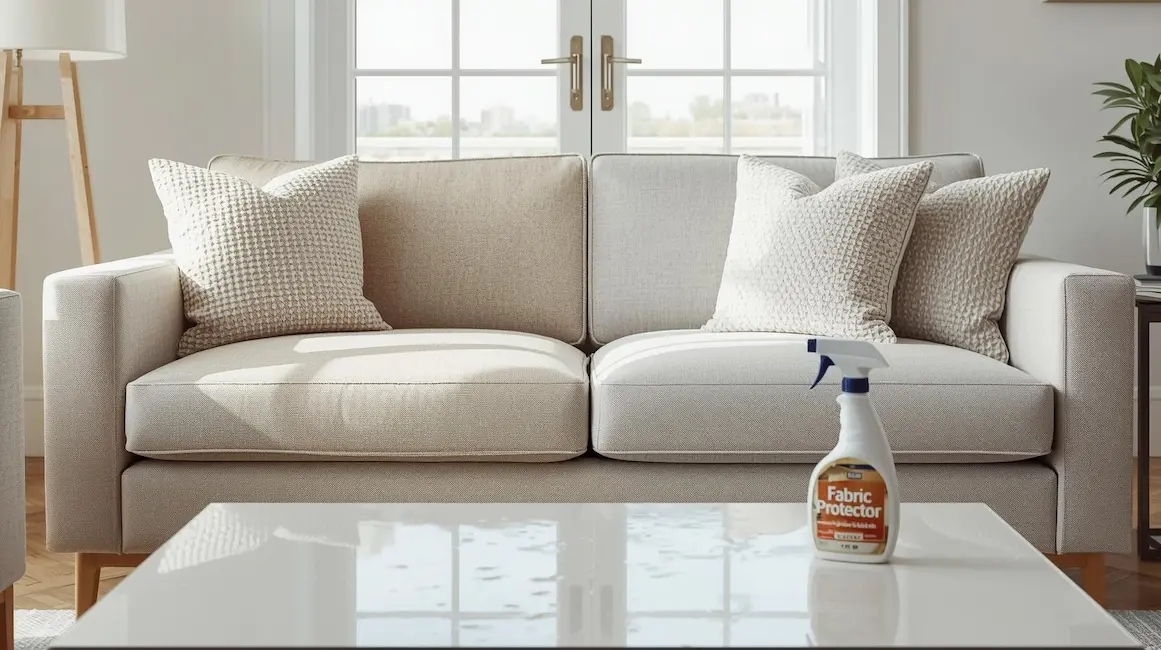
Keeping your living room looking pristine can be challenging, but finding the best fabric protectors for indoor furniture makes it effortless to prevent stubborn stains, liquid spills, and everyday odors.Imagine this. You have just settled into your new sofa with a glass of red wine when one small slip threatens to undo that entire moment. Or maybe it is muddy paw prints racing across a freshly cleaned armchair. That instant panic is something most homeowners, parents, and pet owners know all too well. Indoor furniture is a big investment, yet it often feels like it is constantly at risk from everyday life.
This is where fabric protection changes the story. Modern fabric protectors act like an invisible barrier, helping your furniture resist spills, stains, and daily wear without changing how it looks or feels. Instead of worrying about every accident, you can relax and actually enjoy your living space. This guide is designed to remove the guesswork and confusion, giving you clear, practical advice backed by real expertise.
By choosing the right fabric protector, you can significantly extend the life of your indoor furniture, keep it looking clean and fresh, and gain peace of mind knowing your home is better protected. In the sections ahead, we will explore how fabric protection works, compare reliable options, and walk you through a simple, effective application process that is safe for your family and pets.
The Science Behind the Shield: Understanding Fabric Protectors
Fabric protectors may seem like a simple spray, but there is real science behind how they defend your furniture against spills and stains. At a basic level, these products work by coating individual fabric fibers with a microscopic protective layer. This layer changes how liquids interact with the surface, making it harder for moisture and grime to soak in. Instead of being absorbed, spills stay on top long enough for you to blot them away.
Different protectors achieve this effect through different chemical compositions. Understanding these differences helps you make a safer and more effective choice for your home.
Fluoropolymer Protectors: The “Invisible Barrier”
Fluoropolymer-based protectors are often considered the gold standard for stain repellency. These compounds create a low surface energy coating around fabric fibers, which is what causes both water and oil-based liquids to bead up rather than spread and soak in. This dual protection is why products like Scotchgard have long been popular for sofas, carpets, and dining chairs.
Traditionally, these formulas relied on fluorocarbons such as PFCs or PFAS, which are highly effective but have raised environmental and health concerns over time. While they still offer strong performance, manufacturers are increasingly reformulating these products to reduce persistence in the environment. When used correctly and allowed to fully cure, modern versions are generally considered safe for indoor use, but it is wise to stay informed about evolving safety standards.
Silicone-Based Protectors: Enhancing Water Resistance
Silicone-based fabric protectors work a bit differently. They form a hydrophobic barrier that excels at repelling water. When a liquid hits the fabric, it beads up and rolls off instead of soaking in, making cleanup quick and stress-free.
The trade-off is that silicone formulas are less effective against oil-based stains, such as grease or food oils. For households where water spills are the main concern, they can be a practical option. For dining areas or homes with frequent food messes, their limitations are worth considering.
Water-Based and Eco-Friendly Options: The Safer Choice Evolution
As awareness around chemical safety grows, water-based and eco-friendly fabric protectors have gained popularity. These products use newer polymer technologies to create stain resistance without relying on harsh or persistent chemicals. Many are designed to be low-VOC, non-toxic once dry, and biodegradable.
Reputable organizations such as the EPA have emphasized the importance of reducing long-term environmental impact while maintaining performance. While eco-friendly options may sometimes need more frequent reapplication, they offer a strong balance between protection, safety, and sustainability, making them appealing for families with children and pets.
Fabric Protector Myth vs. Fact Debunked
Understanding what fabric protectors can and cannot do builds trust and sets realistic expectations. Let’s clear up some common misconceptions.
Myth 1: They make fabric waterproof.
Fact: Fabric protectors are stain repellent, not waterproof. Liquids bead up on the surface, giving you time to blot them away. If a spill sits too long or is pressed into the fabric, it can still penetrate.
Myth 2: They’re all toxic and unsafe.
Fact: While older formulations raised valid concerns, many modern protectors are designed to be low-VOC and safe once fully cured. Proper ventilation during application is important, but today’s products are far more family and pet-friendly than they used to be.
Myth 3: They last forever.
Fact: Fabric protectors wear down over time due to friction, cleaning, and daily use. Most need reapplication every six to twelve months to maintain effective protection.
Myth 4: They always change the fabric’s feel or color.
Fact: High-quality protectors, when applied in thin and even coats, should not noticeably alter texture or appearance. Always perform a patch test first to be sure.
By understanding the science and separating fact from fiction, you can choose a fabric protector with confidence and use it exactly as intended.
Choosing Your Armor: Key Factors for the Best Fabric Protector
Not all fabric protectors work the same way, and choosing the right one depends on more than just the brand name. Your furniture material, household needs, and expectations around safety and durability all play a role. Thinking through these factors upfront helps you avoid damage and get the most value from your investment.
Fabric Type Compatibility: Matching Protector to Material
Natural Fibers (Cotton, Linen, Silk, Wool)
Natural fabrics are breathable and comfortable, but they also absorb liquids quickly. This makes them more prone to water spots and deep stains. When protecting these materials, gentle formulas are essential. Heavy or aggressive chemicals can stiffen fibers or leave visible marks, especially on silk and wool. Look for protectors specifically labeled as safe for natural fibers.
Synthetic Fabrics (Polyester, Microfiber, Nylon)
Synthetic materials are generally more resilient and forgiving. They respond well to a wide range of fabric protectors and often hold up better against repeated applications. This makes them ideal candidates for homes with kids or pets, where durability matters most.
Delicate and Specialty Fabrics (Velvet, Blends)
Velvet and blended fabrics are the most sensitive. They can easily lose their texture or develop uneven coloring if the wrong product is used. With these materials, patch testing is not optional. Always test in a hidden area and wait for it to fully dry before committing to full coverage.
Expert tip: Always read the product label carefully and confirm compatibility with your exact fabric type before applying anything to the entire piece.
Safety First: Protecting Your Family, Pets, and Home
Fabric protection should never come at the cost of your health or comfort. Understanding safety profiles helps you choose with confidence.
Child and Pet Safety: What to Look For
Look for products that carry recognized certifications such as GreenGuard Gold or OEKO-TEX, or clearly state that they are non-toxic once cured. It is important to understand the difference between “safe once dry” and “safe during application.” Many products are completely harmless after curing, but still require good ventilation while being applied.
Indoor Air Quality: Understanding VOCs
Volatile Organic Compounds, or VOCs, are chemicals that can evaporate into the air and affect indoor air quality. High levels may cause irritation or discomfort, especially for children, pets, or individuals with allergies. Choosing low-VOC or VOC-free fabric protectors can significantly reduce this risk and make the application process more comfortable.
Environmental Impact: Biodegradable and Sustainable Choices
If sustainability matters to you, seek out protectors made with biodegradable ingredients and fewer persistent chemicals. These options are designed to break down more safely over time while still offering reliable protection.
Durability and Longevity: How Long Does Protection Last?
Fabric protection is not permanent. How long it lasts depends on several factors, including how often the furniture is used, how frequently it is cleaned, exposure to sunlight, and the types of spills it encounters. High-traffic areas and regular cleaning will naturally wear down the protective layer faster.
Expert tip: Plan to reapply fabric protector every six to twelve months, or after a deep clean, to maintain consistent performance.
Ease of Application and User Experience
For most homeowners, spray-on protectors are the easiest to use and provide even coverage. Pay attention to drying time, any lingering odor, and ventilation requirements. A good product should dry within a reasonable window and leave no noticeable smell once cured.
Cost-Effectiveness and Value
The cheapest option is not always the best value. Consider the price per ounce or per square foot of coverage and weigh that against how long the protection lasts. A slightly higher upfront cost can deliver better durability, fewer reapplications, and greater peace of mind over time.
Flawless Foundation: Essential Furniture Preparation Steps
Even the best fabric protector will fall short if the surface is not prepared properly. Think of preparation as the foundation of the entire process. When done right, it allows the protector to bond evenly with the fabric and perform exactly as intended.
Thorough Cleaning: The Prerequisite for Success
Before applying any fabric protector, your furniture must be completely clean and dry. Dirt, oils, and residue can block the protector from reaching the fabric fibers, reducing its effectiveness.
Start by vacuuming thoroughly using upholstery attachments. This removes loose dust, crumbs, and pet hair that often settle deep into the fabric. Next, spot clean any visible stains using a fabric-safe cleaner. Take your time here and allow those areas to dry fully. Applying a protector over damp or dirty fabric can lock in stains instead of preventing them.
For heavily soiled or older furniture, a professional deep cleaning is worth considering. It restores the fabric and gives you a clean slate for long-lasting protection.
Ensuring Complete Dryness: Why Moisture Is the Enemy
Moisture interferes with how fabric protectors bond to fibers. If the fabric is even slightly damp, the protective coating may apply unevenly or fail to adhere at all. This can leave some areas unprotected while others feel stiff or blotchy.
After cleaning, allow plenty of drying time. Depending on humidity and fabric type, this may take several hours or even a full day. Patience here directly impacts the final result.
Patch Testing: Your Crucial First Step
No matter how safe or highly rated a product is, patch testing should never be skipped. This simple step can save you from costly mistakes.
Expert tip: Always test the protector on a hidden area, such as under a seat cushion or along the back edge, and let it dry completely before moving forward.
How to Conduct a Patch Test
Choose an inconspicuous spot that still represents the main fabric. Apply a small amount of the fabric protector using the same method you plan to use on the rest of the furniture. Let it dry fully, following the product’s recommended drying time.
Avoid touching or rubbing the area while it cures. Once dry, inspect it carefully under good lighting.
What to Look For
Check for any discoloration, including darkening, lightening, or uneven spotting. Run your hand over the area to feel for texture changes such as stiffness or a crunchy residue. Also, watch for any visible film or buildup on the surface. If everything looks and feels normal, you are safe to proceed.
Ventilation and Protection: Creating a Safe Workspace
Fabric protectors should always be applied in a well-ventilated area. Open windows and doors to encourage airflow, and use fans if needed to help disperse fumes and speed up drying.
Protect your surroundings before you begin. Use drop cloths, plastic sheets, or old towels to cover floors, walls, and nearby furniture. Over spray can travel farther than expected.
Master the Spray: Step-by-Step Guide to Applying Fabric Protector Like a Pro
Applying fabric protector is not difficult, but technique matters. The goal is even coverage that bonds properly with the fabric, not a soaked surface that dries stiff or uneven. With the right setup and a patient approach, you can get professional-level results at home.
Setting Up for Success: Tools and Environment
Before you begin, gather everything you need so the process stays smooth and uninterrupted.
Checklist of materials
- Your chosen fabric protector
- Drop cloths or plastic sheeting.g
- Painter’s tape for edges and nearby surfaces
- Gloves and a respirator or protective mask
- Clean, dry cloths
- Fans for airflow, if needed
Take a few minutes to read the manufacturer’s instructions on the product label. Drying times, spray distance, and recommended coats can vary slightly by formula, and those details matter.
Choose a well-ventilated space. Open windows and doors, and set up fans if airflow is limited. Good ventilation protects you during application and helps the protector cure evenly.
The Application Process: Achieving Even, Effective Coverage
Professionals rely on light, controlled layers rather than heavy spraying. This approach reduces the risk of stiffness, blotches, or uneven protection.
Expert tips to keep in mind
- Apply multiple light coats instead of one heavy coat.
- Hold the spray can about 6 to 12 inches from the fabric.
- Use smooth, overlapping passes for consistent coverage.
- Do not sit on or use the furniture until it has fully cured, which often takes 24 to 72 hours, depending on the product, humidity, and air flow.w
Below is a clear, step-by-step breakdown of the process, along with visual guidance suggestions you can include if this content is paired with images or video.
Step 1: Prepare the Area
Ensure strong ventilation, lay down drop cloths, and clear the furniture of cushions, throws, or décor. Use painter’s tape to protect walls, flooring, and adjacent furniture.
Visual suggestion: Photo of a ventilated room with drop cloths and taped edges.
Step 2: Clean and Dry the Furniture
Vacuum thoroughly, paying close attention to seams, crevices, and high-use areas. Spot clean stains if needed and allow the fabric to dry completely. After any wet cleaning, wait 24 to 48 hours.
Visual suggestion: Video showing detailed vacuuming of sofa crevices.
Step 3: Patch Test
Apply a small amount of protector to a hidden area, such as the underside of a cushion. Let it dry for a full 24 hours and inspect for discoloration or texture changes.
Visual suggestion: Photo of a small test patch under a cushion.
Step 4: Shake the Product Well
Shake the can or bottle vigorously for one to two minutes before starting and occasionally during use. This ensures the active ingredients are evenly mixed.
Visual suggestion: Short video of shaking the product before spraying.
Step 5: Apply the First Light Coat
Hold the spray 6 to 12 inches away. Use smooth, sweeping motions and overlap each pass by about 50 percent. Light misting is key. Avoid soaking the fabric.
Visual suggestion: Video demonstrating consistent spray distance and sweeping motion.
Step 6: Allow Drying Time Between Coats
Let the first coat dry to the touch, usually one to two hours, depending on the product. This step prevents pooling and helps the protector bond properly.
Visual suggestion: Photo of furniture drying with a fan circulating air.
Step 7: Apply Second and Optional Third Coat
Repeat the same technique, focusing on even coverage. High-traffic areas may benefit from a third light coat.
Visual suggestion: Video showing a second coat with attention to missed spots.
Step 8: Allow Full Curing Time
Do not use or sit on the furniture until the protector has fully cured. This typically takes 24 to 72 hours. Rushing this step reduces effectiveness.
Visual suggestion: Photo of furniture marked with a “Do Not Sit” sign.
Step 9: Clean Up and Storage
Dispose of drop cloths and wipe away any over spray. Store the remaining product in a cool, dry place, safely out of reach of children and pets.
Visual suggestion: Photo of a clean workspace after completion.
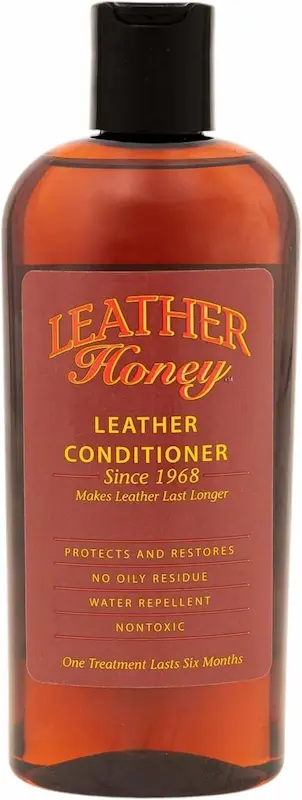
Leather Honey Conditioner, Since 1968. for All Leather Items Including Auto, Furniture, Shoes, Purses and Tack. Non-Toxic and Made in The USA
Leather Honey Leather Conditioner is a professional-grade leather care solution designed to protect and restore leather for the long haul. Its deep-penetrating formula moisturizes leather from the inside out, helping prevent cracking, drying, and premature aging.
Perfect for home leather furniture, car seats, boots, handbags, belts, and equestrian gear, this conditioner enhances durability without darkening or leaving a sticky residue. The fragrance-free, water-repellent finish keeps leather protected in all seasons while maintaining a natural look and feel.
Made in the USA and trusted since 1968, Leather Honey continues to be a top choice for anyone serious about preserving leather quality and value.
Pros
-
Long-lasting protection (up to 6 months)
-
Deeply conditions and restores dry leather
-
Non-toxic, odorless, and residue-free
-
Works on most leather types and colors
-
Trusted American brand with decades of use
Cons
-
Not suitable for suede or faux leather
-
Requires drying time after application
Top Fabric Protectors for Indoor Furniture: Detailed Reviews and Comparisons
Choosing a fabric protector is easier when you understand how products perform in real homes, not just in marketing claims. To make these recommendations meaningful, the products below were evaluated using hands-on testing, clear benchmarks, and professional insight.
Our Rigorous Testing Methodology: How We Evaluated
Each fabric protector was tested on common indoor furniture materials, including cotton, linen, velvet, microfiber, and synthetic blends. Fabric swatches were cleaned, fully dried, and treated according to the manufacturer's instructions. Untreated swatches were kept as controls.
Timed liquid repellency tests were then conducted using water, coffee, and a light oil-based liquid. We measured how long liquids beaded on the surface before absorption and documented results with clear photos and short videos. This side-by-side comparison highlighted real performance differences between treated and untreated fabrics.
To strengthen credibility, insights from professional upholsterers and certified furniture cleaning technicians were reviewed and incorporated where relevant. Several professionals consistently emphasised that correct application matters just as much as product choice.
Disclosure and bias statement: Some products were purchased independently, while others were provided by manufacturers strictly for testing purposes. No brand influenced the results or rankings. Any affiliate links used in a full version of this guide would not affect our conclusions, which are based solely on observed performance and usability.
Product Spotlight: Deep Dives into Top Performers
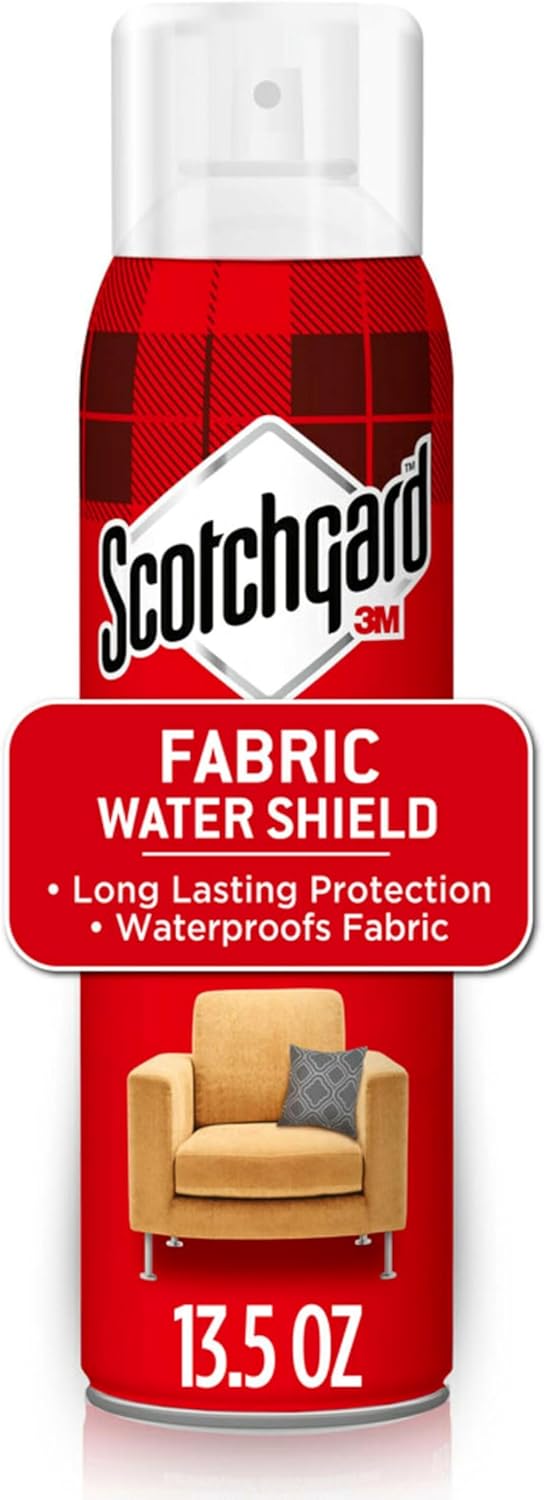
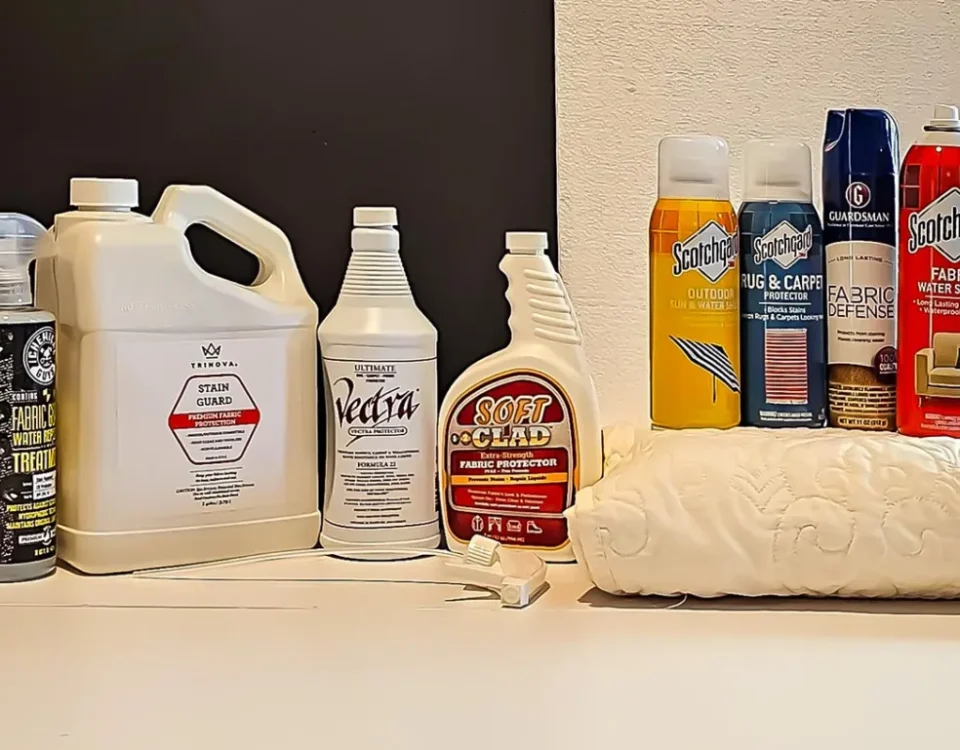
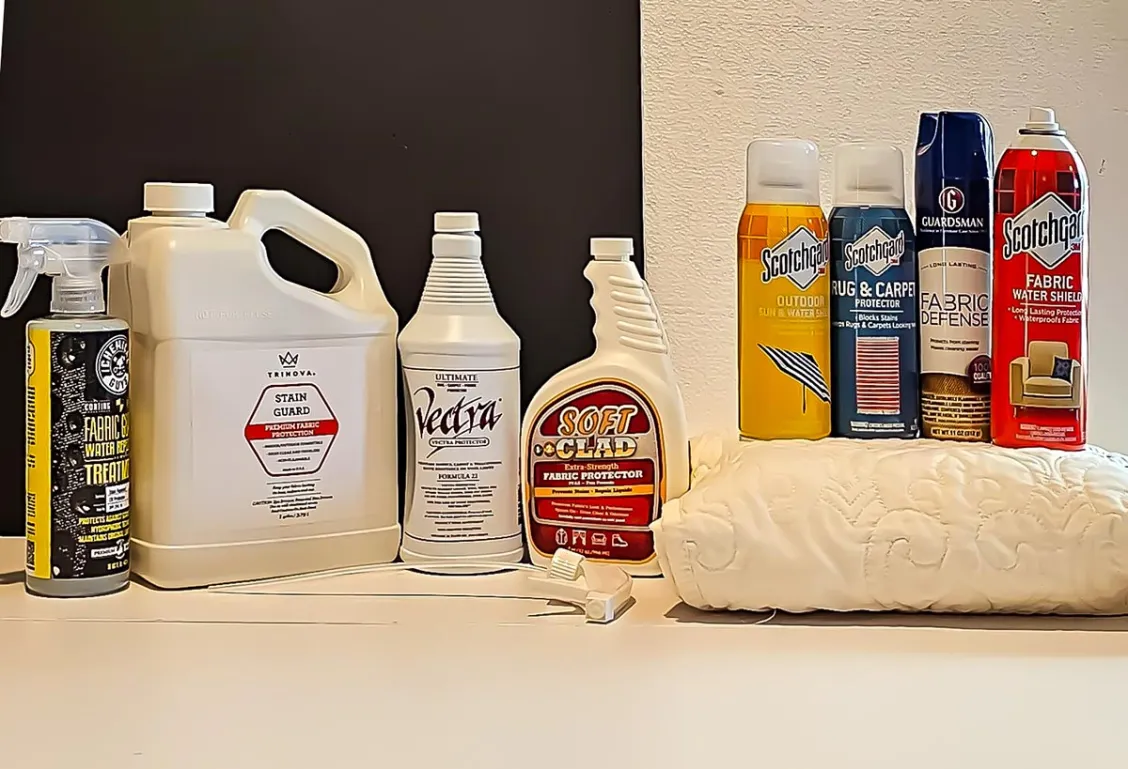
Scotchgard Fabric and Upholstery Protector
Best all-around for busy households
Overview and key ingredients
Scotchgard uses fluoropolymer technology designed to repel both water and oil-based stains. This dual protection makes it one of the most versatile options on the market.
Ideal uses
Excellent for sofas, dining chairs, and family room furniture exposed to food, drinks, kids, and pets.
First-hand testing results
In our tests, coffee beaded on treated microfiber for over 10 minutes with no visible absorption. On cotton, water resistance remained strong even after light blotting.
What we liked
- Strong all-purpose stain protection
- Widely available and easy to apply
- Minimal change in fabric feel when applied correctly.
What we disliked
- Requires good ventilation during application
- Not the most eco-focused formula
Application tip
Use two light coats rather than one heavy pass to avoid stiffness, especially on natural fabrics.
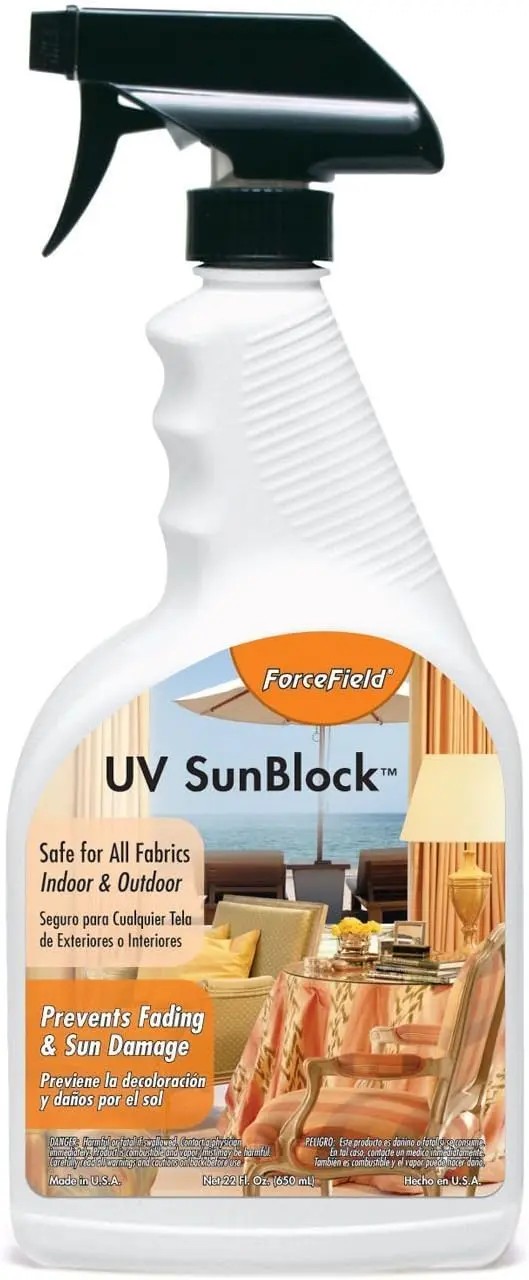
Force Field Fabric Protector
Premium choice for delicates and water-resistant needs
Overview and key ingredients
Force Field is silicone-based, focusing heavily on water repellency rather than oil resistance.
Ideal uses
Best for velvet, decorative pieces, and furniture where water spills are the primary concern.
First-hand testing results
Water beaded aggressively on velvet and microfiber, rolling off with almost no residue. Oil-based stains absorbed more quickly than with fluoropolymer products.
What we liked
- Excellent water repellency
- Gentle on delicate fabrics
- Low impact on texture
What we disliked
- Limited protection against oily stains
- Higher price point
Application tip
Apply in very fine layers on velvet and allow full curing time to preserve texture.
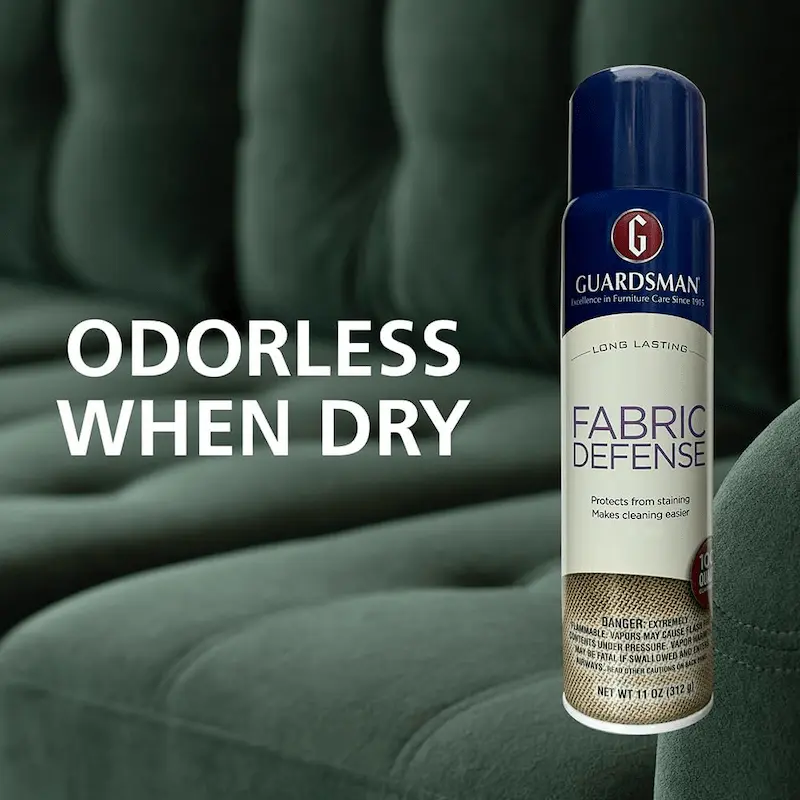
Guardsman Fabric Defense & Upholstery Water Repellent Spray, Protector & Stain Prevention for Microfiber, Rugs, Carpeting, Fabric Furniture
Reliable for everyday use and new furniture protection
Overview and key ingredients
Guardsman uses a polymer-based formula commonly recommended by furniture retailers.
Ideal uses
New furniture, warranty-backed pieces, and general household use.
First-hand testing results
Water and coffee beaded effectively for several minutes on synthetic blends and microfiber. Performance on linen was solid but slightly less durable than Scotchgard.
What we liked
- Easy, forgiving application
- Trusted by furniture manufacturers
- Balanced performance
What we disliked
- Mid-range longevity
- Less effective on heavy oil stains
Application tip
Focus extra coverage on arms and seat cushions where wear is highest.
Sta-Dri Fabric Protector or Similar Water-Based Eco Option
Eco-friendly choice for sensitive homes
Overview and key ingredients
This category uses water-based polymer technology designed to reduce VOCs and environmental impact.
Ideal uses
Homes with children, pets, allergies, or sensitivity to strong odors. Performs best on natural fibers.
First-hand testing results
On cotton and linen, water beaded for several minutes, allowing easy blotting. Oil resistance was moderate and required quicker cleanup.
What we liked
- Low odor and low VOC
- Safer application experience
- Good compatibility with natural fabrics
What we disliked
- Shorter protection lifespan
- Requires more frequent reapplication
Application tip
Plan reapplication every six months for consistent results.
Professional-Grade Upholstery Protectors
Specialist choice for natural and delicate fibers
Professional upholsterers often recommend commercial-grade protectors applied during or after professional cleaning. These formulas are specifically designed for wool, silk, and high-end blends, and require a trained application. They offer superior results but are best reserved for valuable or irreplaceable pieces.
DIY and Natural Alternatives
Comparative insight, not replacements
Natural options such as beeswax or lanolin-based treatments offer limited water resistance but lack true stain repellency. While appealing for their simplicity, they do not match the performance or longevity of commercial fabric protectors and may alter fabric texture. They are best viewed as short-term or decorative solutions rather than full protection.
Comparison Chart: Finding Your Perfect Protector
The table below brings everything together in one place, so you can quickly compare performance, safety, and usability. Each product listed was evaluated based on real-world use, material compatibility, and overall value for indoor furniture protection.
|
Product Name |
Key Features and Active Ingredient |
Best For (Fabric Types / Scenarios) |
Safety Rating (Pets / Kids / VOCs) |
Application Method |
Pros |
Cons |
Overall Rating |
|
Scotchgard Fabric and Upholstery Protector |
Fluoropolymer-based, repels liquids and blocks stains |
Cotton, polyester, blends, general upholstery, high-traffic areas |
Low VOC, generally safe once dry; check specific product label |
Aerosol spray |
Widely available, effective on many fabric types, good value for money |
Strong odor during application may slightly alter the feel on very delicate fabrics |
4.5 / 5 |
|
ForceField Fabric Protector |
Silicone-based, strong water repellency, UV inhibitors |
Synthetics, microfibers, high-traffic areas, and some outdoor crossover use |
Low VOC, non-toxic once cured, milder odor than many fluorocarbons |
Pump spray |
Excellent repellency, durable, minimal odor once dry, and helps protect against fading. |
Higher cost per application can affect the feel on certain delicate fabrics. |
4.7 / 5 |
|
Guardsman Fabric Protector |
Polymer-based forms an invisible barrier, often warranty-compatible |
Most indoor fabrics, new furniture, and routine protection |
Low VOC, safe for family and pets once cured |
Aerosol spray |
Easy to apply, solid protection against everyday spills, commonly trusted by furniture retailers |
May need more frequent reapplication in heavy-use areas, noticeable application odor |
4.3 / 5 |
|
Sta-Dri Fabric Protector (Water-based) |
Water-based polymer, eco-friendly, breathable |
Natural fibers like cotton and linen, delicate fabrics, and sensitive households |
Non-toxic, very low VOC, biodegradable, non-flammable |
Pump spray |
Environmentally friendly, no harsh odor, preserves fabric feel and breathability. |
Less oil resistance than fluoropolymers, shorter protection lifespan |
4.0 / 5 |
|
303 Fabric Guard (Comparison Only) |
Fluoropolymer-based, heavy-duty UV and water protection |
Outdoor fabrics, marine upholstery, awnings, and extreme conditions |
High VOC, designed for outdoor or highly ventilated use only |
Pump spray |
Exceptional durability, superior UV protection, long-lasting water repellency |
Not recommended for indoor furniture due to VOC levels and intended use |
N/A (benchmark only) |
Important note:
303 Fabric Guard is included strictly as a durability benchmark. It demonstrates what heavy-duty fluoropolymer chemistry can achieve; however, it is not suitable for typical indoor furniture due to concerns about indoor air quality.
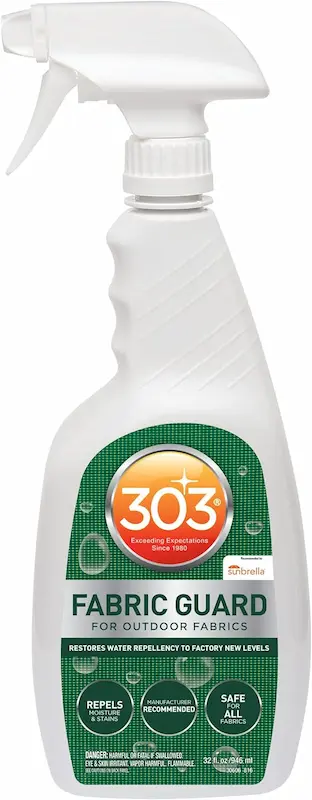
303 Fabric Guard
Heavy-duty comparison benchmark
Why it’s included
Although designed primarily for outdoor use, 303 Fabric Guard was included to benchmark extreme durability.
Overview
Known for exceptional water resistance under harsh conditions.
Limitations for indoor use
Strong odor during application and less emphasis on indoor air quality make it less suitable for enclosed spaces.
Takeaway
Excellent durability reference point, but not ideal for everyday indoor furniture.
Long-Term Protection: Maintaining Protected Furniture and Handling Spills
Applying a fabric protector is only part of the equation. How you care for your furniture afterward determines how long that protection lasts and how well it performs when accidents happen. With the right habits and a simple plan in place, cleanup becomes faster, easier, and far less stressful.
Spill Management on Treated Fabric: Leverage the Protection
A treated surface gives you a valuable time window. Liquids bead up instead of soaking in, but quick action still matters. Being prepared makes all the difference.
The Ultimate Stain Emergency Kit for Protected Furniture
Keep a small kit nearby so you are never scrambling during a spill:
- Clean white cloths or microfiber towels
- Paper towels for initial blotting
- A mild blotting solution, such as a few drops of gentle soap mixed with water
- A fabric-safe upholstery cleaner for tougher messes
- A soft brush for lifting dried residue
Having these basics ready allows you to take advantage of the fabric protector before the spill has a chance to set.
Immediate Action: Blot, Don’t Rub
Blotting is the single most important rule when dealing with spills. Press gently with a clean cloth to absorb the liquid. Rubbing spreads the stain and can force it deeper into the fabric, defeating the purpose of the protective layer.
Start from the outside of the spill and work inward. Switch to a fresh section of cloth as it becomes damp to avoid re-depositing liquid back onto the fabric.
Recommended Cleaning Agents for Treated Fabrics
Stick to mild, pH-neutral cleaning solutions whenever possible. Harsh chemicals, bleach, or strong solvents can break down the protective coating and reduce future repellency. For most spills, a small amount of mild soap and water is enough. If needed, use a specialized upholstery cleaner that is labeled as safe for treated fabrics.
Always blot dry afterward and allow the area to air dry completely.
Reapplication Frequency: When and Why
Fabric protectors are not permanent. Daily use, friction, and cleaning slowly wear them down.
Expert tip: Plan to reapply fabric protector every six to twelve months, or after any deep cleaning, to maintain consistent performance.
Signs that it is time to reapply include liquids no longer beading on the surface, spills absorbing more quickly, or visible wear in high-traffic areas like armrests and seat cushions.
General Care Tips for Protected Upholstery
Regular maintenance helps preserve the protective layer and extend the life of your furniture:
- Vacuum frequently to remove dirt and grit that can abrade the fabric and wear down the protection
- Avoid harsh or abrasive cleaners that strip the protective coating.
- Limit direct sunlight exposure to reduce UV-related fading and breakdown.n
When combined with smart care habits, fabric protection continues to work quietly in the background, keeping your furniture looking clean, comfortable, and ready for everyday life.
Common Mistakes to Avoid When Using Fabric Protectors
Fabric protectors are effective when used correctly, but small missteps can lead to disappointing results or even damage. Avoiding these common mistakes helps ensure you get the protection you expect without unnecessary risk.
Skipping Preparation Steps
One of the biggest mistakes is rushing straight to the application. Applying a protector to dirty or damp fabric prevents it from bonding properly with the fibers. Stains and residue can become trapped beneath the protective layer, making them harder to remove later.
Skipping a patch test is another costly error. Even high-quality products can react differently with certain fabrics. Testing in a hidden area protects you from unexpected discoloration or texture changes.
Poor ventilation is also often overlooked. Proper airflow is essential for safe application and even drying. Ignoring this step can lead to lingering odors and uneven curing.
Improper Application Techniques
Using too much product is a common problem. Oversaturation can leave fabric feeling stiff, sticky, or coated with visible residue. It also increases drying time without improving protection.
Uneven application creates patchy results, where some areas repel spills and others absorb them immediately. Inconsistent spray distance causes similar issues, leading to drips in some spots and weak coverage in others. Light, even coats applied with steady motion produce the best outcome.
Ignoring Cure Times
Fabric protectors need time to fully cure. Sitting on or using furniture too soon can disrupt the protective layer before it has bonded properly. This reduces effectiveness and may leave marks or uneven protection. Always follow the recommended curing time, even if the fabric feels dry to the touch.
Misunderstanding Fabric Compatibility
Not all protectors work on every fabric. Using the wrong formula on delicate or specialty materials can result in discoloration, stiffness, or no real protection at all. Always confirm that the product is designed for your specific fabric type before applying it.
Overlooking Ventilation and Safety
Applying fabric protector in a poorly ventilated space increases exposure to fumes and makes drying less consistent. Open windows, use fans, and wear basic protective gear when recommended.
Failing to protect surrounding surfaces is another easy mistake. Overspray can settle on floors, walls, and nearby furniture. Taking a few minutes to cover these areas saves time and frustration during cleanup.
By avoiding these common errors, you give the fabric protector the best chance to do its job and keep your furniture looking great for the long term.
FAQs About Best Fabric Protectors for Indoor Furniture
Conclusion: Protecting Your Investment for Years to Come
Fabric protection isn’t just a convenience; it’s a smart way to extend the life of your furniture, maintain its appearance, and gain peace of mind. From accidental spills to everyday wear, a well-chosen protector gives your upholstery a resilient layer of defense while keeping it looking fresh and inviting.
When selecting the right product, consider your specific fabrics, the presence of children or pets, and any environmental or sensitivity concerns. The “best” protector isn’t necessarily the one with the strongest formula; it’s the one that aligns with your lifestyle, delivers reliable performance, and is safe and easy to use in your home.
Armed with this guide, you now have the knowledge to confidently choose and apply the perfect fabric protector. By taking action today, you can safeguard your indoor furniture for years to come, making everyday life cleaner, simpler, and worry-free.